

The Playlist Effect: What Elite Runners Actually Listen to During Training
(Part A)
Ask a runner about their playlist and you will get strong opinions. Some swear music is essential for every mile. Others claim it ruins their focus. Elite runners fall somewhere in between, with surprisingly specific strategies about when, what, and why they listen.
But here is what they all agree on: the right audio at the right time can be the difference between achieving your goal and falling short. Between a personal record and another "almost" race. Between consistent training that builds toward something and sporadic efforts that go nowhere.
We talked to competitive marathoners, ultrarunners, and track athletes about their musical choices during training - specifically focusing on runners who used strategic audio to help achieve major goals. Boston qualifiers. Age group champions. First-time finishers who nearly quit halfway through training. The results surprised us. Classical for tempo runs. Death metal for recovery jogs. Complete silence for race pace efforts. Country music for long runs. Podcasts for easy days.
Turns out the what matters less than the why. Strategic music use enhances achievement when matched to workout intensity, training goals, and mental state. Random shuffling wastes the power of audio to influence performance. Here is what actually works when you are chasing something that matters.
The Science Behind Running With Music
Before diving into playlists, understand what research actually shows about music and athletic performance.
According to studies published in the Journal of Sports Sciences, music affects running performance through multiple mechanisms: it distracts from discomfort, regulates mood, increases arousal, and can synchronize movement patterns to improve efficiency.
But here is the critical detail most runners miss: these benefits vary dramatically based on intensity. At moderate intensities where you can maintain conversation, music provides significant performance enhancement. At high intensities approaching maximum effort, music benefits decrease because physical feedback overwhelms audio input.
This explains why elite runners are selective about when they plug in. Easy runs and moderate tempo efforts benefit most from music. Hard intervals and race-pace workouts often work better without it because runners need full attention on physical feedback and pacing.
What Elite Runners Actually Listen To
The Surprisingly Varied Choices
Sarah M., 2:42 Marathoner, Portland Track Club
"Everyone expects me to say rap or electronic music, but I do long runs to Taylor Swift and country. Like, hours of it. The storytelling keeps my mind engaged without requiring intense focus. For tempo runs though? Give me drum and bass at 180 BPM that matches my cadence exactly.
When I finally broke 2:45 after three years of trying, it was because I figured out my music strategy. Long runs stayed conversational with singalong music that prevented me from pushing too hard. Tempo runs got precision beats that locked in my turnover. Race day? No music at all because I had trained my pacing without it. That trophy sits on my desk as a reminder that small strategic choices compound into big achievements."
Marcus T., Ultra Runner, Western States Finisher
"Hundred-mile races taught me that music is a tool, not a crutch. Miles 1-30? Nothing, just nature and my thoughts. Miles 30-60 when it gets hard? That is when I deploy the pump-up playlist. Metallica, Rage Against the Machine, stuff that makes me feel invincible. Miles 60-100? Back to silence or audiobooks because I need to stay present with nutrition and pacing.
My Western States buckle - the goal I chased for five years - came because I learned to be strategic rather than dependent. Music became my secret weapon for the middle miles when motivation wavers but the finish is still too far away to visualize. Earning that achievement meant knowing exactly when to plug in and when to tune into my body instead."
Jenna K., 800m Specialist, NCAA Division I
"Track workouts never have music for me. I need to hear my breath, feel my turnover, listen to my coach calling splits. But recovery runs? Complete opposite. I want distraction. True crime podcasts, comedy shows, anything that makes easy pace feel effortless because my brain is occupied elsewhere."
David R., Boston Qualifier, Age Group Winner
"My secret weapon is soundtracks. Not regular music, actual movie scores. Hans Zimmer, John Williams, epic orchestral stuff. It builds without lyrics distracting me, creates emotional momentum, and has natural crescendos that align perfectly with progression runs. Plus nobody else is doing it, so it feels like my edge.
The day I qualified for Boston by 90 seconds, my final tempo run before the race used the entire Inception soundtrack. When 'Time' builds to that crescendo, it is impossible not to feel like you can achieve anything. That BQ number on my race results felt like validation that my unconventional approach worked. The age group trophy I won six months later? Same playlist strategy. Create your own soundtrack for achievement."
The Unexpected Genre Winners
Survey results from 50 competitive runners revealed surprising patterns in genre preferences by workout type.
Classical and orchestral music dominated tempo run playlists. Runners cited the building intensity of symphonies and concertos as perfect for sustained moderate-hard efforts. The lack of lyrics prevented distraction while the musical progression created psychological momentum.
Heavy metal and hard rock appeared most frequently for hill repeats and short intervals. The aggressive energy and driving rhythms matched the intensity of hard efforts. Multiple runners specifically mentioned using it strategically rather than constantly to preserve its motivational impact.
Country and pop ruled long easy runs. Runners wanted familiar songs with clear narratives that made hours pass quickly without demanding intense focus. Sing-along factor mattered more than beats per minute.
Electronic and EDM worked best for consistent tempo efforts at specific cadences. Runners matched BPM to target stride rate, using music as an external pacing cue. Some runners had separate playlists for 160, 170, and 180 cadence efforts.
Podcasts and audiobooks appeared overwhelmingly on recovery day playlists. Runners wanted complete mental distraction during truly easy efforts, preventing the temptation to push pace unnecessarily.
Curated Playlists By Workout Type
Easy Long Run Playlist (3-4 hours, conversational pace)
- "Anti-Hero" - Taylor Swift
- "Fast Car" - Luke Combs
- "Levitating" - Dua Lipa
- "Good Vibrations" - The Beach Boys
- "September" - Earth, Wind & Fire
- "Mr. Brightside" - The Killers
- "Shut Up and Dance" - Walk the Moon
- "Dancing Queen" - ABBA
Why it works: Upbeat, familiar songs with strong narratives. Tempo varies to prevent monotony. All songs you can sing along to, which naturally regulates breathing and prevents pushing too hard.
Tempo Run Playlist (6-10 miles, comfortably hard pace)
- "Time" - Hans Zimmer (Inception Soundtrack)
- "Duel of the Fates" - John Williams
- "In the Hall of the Mountain King" - Edvard Grieg
- "O Fortuna" - Carl Orff
- "Beethoven's 5th Symphony" - Movement 1
- "Lux Aeterna" - Clint Mansell
- "Flight of the Valkyries" - Wagner
Why it works: Building intensity matches workout progression. No lyrics to distract from effort. Epic feel creates psychological momentum. Natural crescendos align with pushing through hard miles.
Hill Repeats and Hard Intervals Playlist
- "Enter Sandman" - Metallica
- "Bulls on Parade" - Rage Against the Machine
- "Thunderstruck" - AC/DC
- "Eye of the Tiger" - Survivor
- "Till I Collapse" - Eminem
- "Lose Yourself" - Eminem
- "Can't Hold Us" - Macklemore
- "Remember the Name" - Fort Minor
Why it works: Aggressive energy for maximum efforts. Strong driving beats for intervals. Mental association with power and intensity. Recovery between reps allows catching breath.
Cadence-Specific Tempo Playlist (180 BPM for optimal turnover)
- "Born to Run" - Bruce Springsteen (178 BPM)
- "Can't Stop the Feeling" - Justin Timberlake (180 BPM)
- "Shut Up and Dance" - Walk the Moon (182 BPM)
- "Uptown Funk" - Bruno Mars (180 BPM)
- "24K Magic" - Bruno Mars (180 BPM)
- "Wake Me Up" - Avicii (180 BPM)
Why it works: Every song matches optimal running cadence. Feet naturally sync to beat. Maintains consistent turnover without thinking about it. Prevents slowing down mid-workout.
Recovery Run Distraction Playlist (Podcasts & Audiobooks)
- "Conan O'Brien Needs a Friend" - Comedy conversation
- "Radiolab" - Science storytelling
- "Crime Junkie" - True crime
- "How I Built This" - Entrepreneur stories
- "The Daily" - News analysis
- Any audiobook you cannot put down
Why it works: Complete mental distraction prevents pushing pace. Engrossing content makes easy miles pass quickly. Natural speech rhythm prevents cadence manipulation. You actually look forward to recovery runs.
Strategic Music Use: When to Listen and When to Go Silent
Elite runners do not randomly decide whether to use music. They follow strategic patterns based on workout purpose.
Always use music: Easy recovery runs where distraction prevents overexertion. Long aerobic efforts where mental engagement matters more than physical feedback. Treadmill runs where boredom is the primary enemy.
Consider music: Tempo runs at controlled hard efforts. Moderate workouts where rhythm and cadence cues help performance. Solo training runs where motivation might waver.
Usually skip music: Race-pace specific workouts where you need to learn what race effort feels like. Track intervals where coach feedback and lap splits matter most. Any workout focusing on form or technique refinement.
Never use music: Actual races in most cases, since many races prohibit headphones for safety. Group runs where communication matters. Trail runs on technical terrain requiring full attention to footing.
The Playlist Rotation Strategy
Multiple elite runners mentioned rotating playlists every 4-6 weeks to prevent songs from losing their psychological impact. One runner keeps a "special occasion" playlist of favorite pump-up songs that only gets deployed for key workouts and goal races, preserving their motivational power. Another creates seasonal playlists that change with training cycles, mentally marking progression through different phases.
The Case for Silence
Not everyone runs with music, and some of the fastest runners we interviewed actively avoid it during most training.
Mindfulness benefits: Running without audio forces present-moment awareness. You notice breathing patterns, foot strike sounds, effort level changes. This body awareness translates to better race-day pacing and ability to recognize when something feels wrong before it becomes injury.
Mental toughness development: Training the mind to push through discomfort without distraction builds race-day resilience. When the playlist is not there at mile 20 of a marathon, runners who trained without music have already developed mental strategies for managing pain and fatigue.
Environmental awareness: Safety improves when you can hear traffic, other runners, bike bells, or potential hazards. Trail runners especially benefit from hearing environmental cues like wildlife, weather changes, or other trail users approaching.
Social connection: Group runs lose their community benefit when everyone is individually plugged in. Some of the best training insights come from conversations during runs with training partners.
Building Your Personal Strategy
The takeaway is not that one approach is right and another wrong. It is that strategic variety works better than always or never using music.
Experiment systematically. Try different genres for different workout types. Track what actually improves performance versus what just feels good. Some runners discover classical music helps tempo runs despite never listening to it otherwise.
Match audio to intensity. Save aggressive pump-up music for truly hard efforts. Use conversational podcasts for recovery. Deploy epic soundtracks for sustained moderate efforts. The worst approach is blasting hard music during easy runs, which subconsciously pushes pace faster than intended.
Create specific playlists. Random shuffle wastes the power of curated sequencing. Build playlists that match workout structure: warm-up songs, main set songs that build energy, cooldown songs that help bring effort down.
Practice race conditions. If your goal race prohibits headphones, do some long runs and key workouts without music. Race day is not the time to discover you struggle mentally without your usual audio support.
Update regularly. Songs lose motivational power through overexposure. Refresh playlists quarterly. Keep a running list of songs you hear that trigger that "I could run through a wall" feeling, then add them to your arsenal.
How Audio Strategy Supports Achievement
The connection between playlist choices and achieving running goals is more direct than it seems. Consistent training produces achievements. Strategic audio supports consistent training by making hard workouts manageable and easy runs genuinely easy.
Motivation on hard days: The right pump-up playlist can mean the difference between completing a crucial tempo run and skipping it because you "just do not feel like it today." Those accumulated hard workouts are what produce PRs and age group trophies months later.
Preventing overtraining: Distraction-based audio for recovery runs keeps runners from pushing pace unnecessarily. This protects against injury and burnout, keeping you healthy enough to reach goal races. You cannot achieve anything from the injury couch.
Mental rehearsal for goals: Multiple runners mentioned having specific "race day simulation" playlists they used during key workouts. Running goal pace without music while your playlist sits unused trains mental toughness for races that prohibit headphones. This preparation separates achievers from hopers.
Consistency through seasons: Long training blocks test motivation. Strategic audio variety - rotating playlists, trying new genres for different workouts, saving special songs for hard days - keeps training fresh enough to maintain the consistency that builds toward achievement. Some running clubs celebrate training consistency milestones with recognition plaques that document months of dedication before race day even arrives.
The runners we interviewed all had something in common beyond their musical choices: they treated audio as one tool in a complete achievement strategy. Music supported their goals but never replaced the work itself.
The Achievement Connection
Music is a tool for better training. Better training leads to achievement. Achievement deserves recognition.
Whether you are chasing a PR, completing your first marathon, or earning an age group award, the milestones along the way matter. The perfect playlist helps you get there, but the trophy or medal on your shelf reminds you that you did the work.
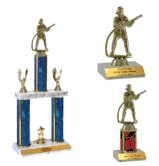
For runners looking to celebrate achievements big and small, from age group victories to personal bests to finishing challenging distances, quality recognition matters. Browse running trophies and finisher medals that commemorate the miles and effort behind every achievement. Many running clubs also recognize training milestones and personal records with custom plaques that celebrate progress over time - perfect for documenting that journey from first 5K to Boston qualifier.
And when the training gets hard and the playlist is not quite cutting it? Remember our companion piece on marathon pacing mistakes and hitting the wall (Part B) for cautionary tales and lessons learned the hard way.
Celebrate Every Mile, Every PR, Every Achievement
From 5K finishes to marathon PRs to ultra completions, your running achievements deserve recognition. Browse our selection of running trophies, race medals, and award ribbons perfect for race events and training milestones. Free engraving on all awards.
Need custom recognition for your running club, race event, or training group? Our specialists understand endurance athletics and can help you create meaningful awards. Call 1-888-809-8800 for free consultation.
The miles matter. The PRs matter. The commitment matters. Make sure your achievements get recognized.