
Marathon Pacing Gone Wrong: Tales from the Wall (Part B)
Every marathoner has a wall story. That moment when legs turn to concrete, brain fog descends, and forward movement becomes negotiation between mind and body. Some hit it at mile 20. Others make it to 23. A few spectacular implosions happen at mile 18.
But here is what separates runners who quit from runners who achieve: the ones who learn from bonking usually come back and crush their goals. The Boston qualifier who hit the wall in their first attempt. The age group champion who walked the last 10K before figuring out pacing. The sub-three marathoner who once finished in 3:52 because they started too fast.
We collected stories from runners who learned pacing lessons the hard way and then used those lessons to achieve what they were chasing. These are cautionary tales told with humor by people who survived to earn their PRs, qualifications, and awards later. Names have been changed to protect the pridefully stupid, but the lessons remain brutally educational.
If you are training for your first marathon or chasing a PR, learn from these mistakes instead of making them yourself. The path to achievement often includes failure. Smart runners turn bonks into education and come back stronger.
What Actually Causes "The Wall"
Before diving into entertaining failure stories, understand what hitting the wall actually means physiologically.
According to Runner's World and exercise physiology research, the wall occurs when your body depletes glycogen stores and shifts to burning fat as primary fuel. This transition feels terrible because fat burns less efficiently than glycogen, requiring more oxygen for the same energy output.
Most runners carry enough glycogen for about 20 miles at marathon pace. Go out too fast, burn through glycogen early, and the wall arrives sooner. Skip proper fueling, same result. Undertrain your endurance systems, same outcome. The wall is not mysterious - it is biochemistry punishing poor planning.
But knowing this intellectually and actually pacing yourself properly are very different things. Here is what happens when theory meets ego at the start line.
Cautionary Tales: When Pacing Goes Spectacularly Wrong
The "Feeling Good" Disaster - Mike's Story
"I trained for a 3:30 marathon, which meant 8:00 pace. Start line adrenaline hit different though. Miles 1-6 were all in the 7:20s and I felt AMAZING. Like I could run forever. My watch kept beeping at me to slow down. I ignored it.
Mile 13 was still 7:35. Halfway point at 1:38 - ahead of schedule! I high-fived spectators and took selfies. This was MY day.
Mile 18 is when it started. My legs just... stopped responding to commands. Mile 19 was 9:15. Mile 20 was 9:45. Mile 21 I walked. Miles 22-26 were a blur of suffering, cramping, and seriously questioning my life choices. Crossed the finish line in 3:52, twenty-two minutes slower than my goal. If I had just run 8:00 pace like I trained, I would have broken 3:30 easily."
The Bathroom Strategy Fail - Jessica's Story
"Look, I knew I should have used the porta-potty before the race. But the lines were LONG and I did not want to miss my corral. I figured I could hold it or find one on the course.
Mistake. By mile 8 I was in serious distress. Found a porta-potty at mile 10 but five people were ahead of me. Finally got in, lost four minutes. Came out and panicked about time lost, so I started running way faster than planned to make it up.
That worked great until mile 16 when my legs started cramping from the combination of dehydration (I skipped water stops while racing the clock) and pace surge. Hit the wall at mile 19. Finished in 4:18 instead of my 3:50 goal. A four-minute bathroom break cost me twenty-eight minutes total."
The Weather Denial - Carlos's Story
"Race day was 78 degrees at the start, climbing to mid-80s. My entire training had been in cool fall weather - 50s and 60s. Everyone said adjust your goal for heat. I said I trained hard and I am racing my goal.
That confidence lasted exactly 13.1 miles. The heat compounds everything. You sweat more, need more water, heart rate climbs, effort increases for the same pace. By mile 15 I felt dizzy. Mile 18 I was seeing spots. Medical tent at mile 20.
DNF. Did Not Finish. Because I refused to acknowledge that physics applies to me too. The race director literally warned us to adjust goals by 30-60 seconds per mile in the heat. I thought I was different."
The "Run with the Fast Group" Decision - Amanda's Story
"I was shooting for 4:00:00, which meant the 4:00 pace group. But at the start, the 3:45 group looked fun - like a party moving down the street. Music, energy, cool people. I thought 'maybe I can hang with them for a few miles, see how it feels.'
Fifteen seconds per mile faster does not sound like much. But over 26.2 miles, that is 6.5 minutes of extra effort. I hung with the 3:45 group until mile 16. Then I did not just slow down - I collapsed. The difference between 9:09 pace and 8:35 pace is enormous when sustained for hours.
Finished in 4:32, thirty-two minutes slower than if I had just stuck with my group. The 4:00 pace group passed me at mile 22, still together, still running steady. That was painful to watch."
The Nutrition Experiment - Tyler's Story
"I had used the same gels throughout training - ones I knew worked for my stomach. Race morning I stopped at a convenience store because I forgot to pack them. They had a different brand on sale. 'Gel is gel,' I thought.
Wrong. So incredibly wrong. Mile 12, stomach cramps started. Mile 14, I knew I was in trouble. Miles 15-19 were basically me trying not to have a gastrointestinal emergency in public. Every porta-potty had lines.
By the time my stomach settled around mile 20, I had no energy left. Bonked hard from under-fueling because I couldn't keep anything down. Walked most of the last 10K. Race day is NOT the time to try new nutrition."
The Most Common Pacing Mistakes (And How to Avoid Them)
Starting too fast because of adrenaline. Everyone feels incredible at mile 1. The challenge is restraining yourself when your body is screaming "we could maintain this forever!" No, you cannot. Run negative splits - second half faster than first half - by starting conservatively.
Trying to bank time early. The misguided strategy of going faster than goal pace for the first half to build a cushion. This never works. Your legs do not care about your banking strategy. They know their limit and will enforce it around mile 20.
Forgetting to account for weather. Every 10 degrees above 60 adds roughly 30-60 seconds per mile to equivalent effort. Racing in heat or humidity without adjusting goals is choosing to suffer unnecessarily.
Comparing yourself to people around you. That person who passed you at mile 5 might be going for a PR or might be about to implode. Run your race based on your training, not their pace.
Skipping fuel or water to save time. Aid stations cost 10-15 seconds each. Proper fueling saves minutes in the final miles. The math is obvious but somehow people still skip it.
Surging to make up time after stopping. If you need a bathroom break or walk break, resume your planned pace. Do not try to "make up" lost time by going faster. That time is gone - do not throw away more minutes later by blowing up.
The 10 Percent Rule Nobody Wants to Hear
Conservative marathon racing strategy suggests starting 10 percent slower than goal pace for the first 3-5 miles until you settle in. Most runners hate this advice because it feels wrong when you feel good. But the runners who follow it finish strong while the aggressive starters are walking at mile 23. Choose your suffering: early restraint or late misery.
What Proper Marathon Pacing Actually Looks Like
Let's flip this around. What does smart pacing look like?
Even splits or negative splits. The second half should be the same pace or slightly faster than the first. This requires incredible discipline early when you feel fresh.
Conservative first 5K. Start 5-10 seconds per mile slower than goal pace. Let everyone else bolt. You will see them again around mile 20 when you are passing.
Settle into rhythm by 10K. By six miles in, you should hit goal pace and maintain it. Your watch should show remarkably consistent splits from miles 6-18.
Mental checkpoints. Break the race into thirds. Miles 1-9: stay disciplined and conservative. Miles 10-18: cruise at goal pace, stay relaxed. Miles 19-26: dig deep and hold on.
The 20-mile reality check. Mile 20 is where the real marathon starts. If you still feel good at 20, you paced correctly. If you are already struggling, you started too fast.
The Finish Line Litmus Test
Proper pacing means feeling terrible but functional at the finish line. If you finish feeling fresh like you could do another 5K, you could have gone faster. If you finish crawling and medical is concerned, you went too fast. The sweet spot is crossing the line exhausted but intact, knowing you emptied the tank at exactly the right rate.
Recovery Stories: When Lessons Lead to Achievement
The good news: most runners who bonk spectacularly use it as education for future success. The better news: the achievements earned after learning these lessons feel more meaningful than if everything came easy the first time.
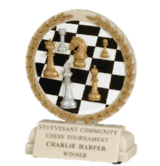
Mike (the "feeling good" disaster) ran his next marathon at strict 8:00 pace despite feeling amazing early. Finished in 3:28, breaking his goal and maintaining even splits throughout. "Turns out pacing calculators know more than my feelings." Six months later he won his age group at a smaller marathon, taking home a trophy that represented not just that race but the humbling lesson that made it possible.
Jessica (bathroom fail) now uses the porta-potty before every race no matter how long the line. Her next marathon: 3:47, beating her original goal and qualifying for her first Boston. "Four minutes in line is cheaper than twenty-eight minutes of suffering. That BQ acceptance email felt sweeter because I earned it the hard way first."
Carlos (weather denial) adjusted his goal by one minute per mile when he saw the forecast for race day. Finished his next hot marathon comfortably in his adjusted time, avoided medical issues, and PR'd two months later in better conditions with a 2:58 finish. "Ego is expensive. Adjustments are free. Learning to adapt is what finally got me under three hours."
Amanda (wrong pace group) stayed with the 4:00 group even when the 3:45 group looked more fun. Finished in 3:58 and then ran 3:41 the next season after a full training cycle focused on tempo work. "Boring pacing wins marathons. Discipline earns PRs. That medal from my breakthrough race reminds me that patience eventually pays off."
Tyler (nutrition experiment) now travels with his own tested gels and brings extras. Next race: no stomach issues, proper fueling, 3:42 finish earning his first age group award. "Pack your own nutrition. Always. That age group trophy is worth more because I know exactly what mistakes it cost me to earn it."
Each of these runners now has awards, PRs, or qualifications they were chasing. But more importantly, they have confidence that comes from turning failure into education. The trophies matter, but knowing you earned them through growth matters more.
Training for Smart Racing and Future Achievement
Preventing wall encounters starts months before race day. The training choices you make now determine whether you achieve your goals or learn expensive lessons.
Do long runs at appropriate pace. Easy pace, not goal pace. Long runs build endurance, not speed. Running them too fast makes you tired for other workouts without teaching proper pacing discipline. Every runner who eventually achieved their goals mentioned learning this in training.
Practice race pace in training. Do several runs at goal marathon pace so your body knows what it feels like. Then trust that feeling on race day even when it seems too slow. Many running clubs document training progression with milestone plaques that track the journey from first tempo run to race-day success.
Do progression long runs. Start slow, finish at goal pace. This teaches your body to run faster on tired legs, simulating late marathon efforts and building confidence that pace is sustainable when it matters.
Practice fueling during long runs. Test different gels, timing, amounts. Figure out what works during training, not during racing. Every successful marathoner we interviewed rehearsed their nutrition strategy multiple times.
Run some workouts in expected race conditions. If race day might be hot, do some training in heat. If it is a hilly course, train on hills. Prepare for the specific challenge ahead rather than hoping race-day magic compensates for missing preparation.
The Achievement Connection
Learning from failures makes future successes more meaningful. Every runner who hit the wall and came back smarter earned their finisher medal twice - once for finishing despite bonking, once for applying lessons in the next race.
Whether you are training for your first marathon, chasing a PR, or competing for age group awards, the journey includes setbacks. Smart runners turn bonks into education. Finishing strong after learning the hard way deserves serious recognition.
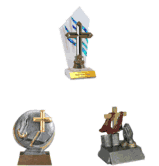
For runners celebrating achievements at any distance, from first finishes to comeback races to PR performances, quality awards matter. Browse running trophies and finisher medals that commemorate the training and lessons behind every success. Many runners also display personalized plaques that tell their complete story - including the bonks that taught them how to succeed, making their eventual achievements even more meaningful.
And before race day? Check out our companion piece on what elite runners listen to during training (Part A) to build the perfect workout playlists that keep your pacing in check.
Celebrate Smart Racing and Hard-Earned PRs
Every finish line represents months of training, lessons learned, and discipline maintained. Whether you bonked and came back stronger or nailed your pacing strategy perfectly, your achievements deserve recognition. Browse our selection of running trophies, race medals, and finish line awards perfect for marathons and distance events. Free engraving on all awards.
Need custom recognition for your running event, pace team, or training group? Our specialists understand endurance sports and can help you create awards that honor the effort behind every finish. Call 1-888-809-8800 for free consultation.
The miles you suffer through make the finish line matter. Make sure your achievement gets the recognition it deserves.