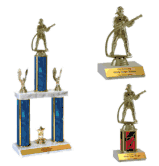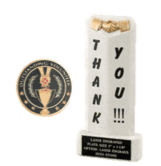


Welcome to pee-wee football coaching, where "quarterback sneak" sounds like a playground game, half your team can't buckle their own chin straps, and explaining the difference between offense and defense requires visual aids, possibly puppets, and definitely snacks. You're about to discover that teaching 8-year-olds to run plays is like choreographing a dance where everyone knows different music!
Pee-wee football introduces young athletes to America's favorite collision sport, though at this level "collision" means gentle bumping while parents hold their breath. According to USA Football's Youth Development Model, age-appropriate football training emphasizes fun, fundamentals, and safety while building athletic skills that transfer to all sports.
Pee-Wee Football Reality Check! Your meticulously drawn play will result in 11 kids running in 11 different directions. Someone will tackle their own teammate, another will run the wrong way after catching the ball, and your center will forget to snap the ball while examining an interesting grass blade. The team mom's cowbell will be louder than your coaching. This is pee-wee football perfection!
Understanding Pee-Wee Football Age Groups
Youth football divisions progress from flag to tackle, each requiring different coaching approaches. Understanding developmental stages prevents frustration when your offensive line creates gaps for the opposing team.
Flag Football (Ages 5-7): Introduction Phase
Flag football eliminates contact while teaching basic concepts like "the quarterback throws the ball" and "catching is legal and encouraged." Players learn positions exist though everyone wants to be quarterback or "the one who scores touchdowns."
Games resemble organized tag with occasional forward passes. Defense means pulling flags, not hugging opponents until they fall. Offensive plays work better drawn in crayon than X's and O's. Success equals everyone touching the ball and nobody crying about their flag being pulled.
Focus on fun movements: running patterns, catching basics, and understanding that lateral passes are legal but usually inadvisable when your teammate is running the opposite direction.
Tackle Football (Ages 8-10): Contact Basics
Introduction to tackle football requires extensive emphasis on safe techniques. Kids this age think tackling means flying through air like superheroes. Teaching proper form prevents injuries and parent heart attacks.
Weight limits ensure size matching, though speed varies dramatically. Your fastest player might be your smallest, creating interesting dynamics when they're also your running back. Positions become specialized though everyone still wants to carry the ball.
Playbooks remain simple: five running plays, three passes. Complex schemes confuse players who still struggle remembering whether they're on offense or defense after halftime. Keep it simple, keep it safe, keep it fun.
Advanced Pee-Wee (Ages 11-12): Competitive Development
Older pee-wee players handle more complex concepts: play-action passes, defensive stunts, special teams strategy. Some show real football aptitude while others excel through determination and effort. Both deserve equal development opportunity.
Physical development disparities create challenges. Early developers dominate through size while late bloomers compensate with speed and technique. Balancing playing time ensures everyone develops regardless of current physical advantages.
Essential Pee-Wee Football Drills
Football drills must emphasize safety while building skills progressively. Every drill should include proper technique instruction before adding speed or contact. Fun elements maintain engagement during repetitive fundamental work.
Safe Tackling Progression
Tackle Progression Stations
Setup: Four stations progressing from no contact to controlled contact
Station 1: "Fit position" - proper body position without movement
Station 2: "Roll tackle" - ground tackling on knees
Station 3: "Thud" - wrap up without taking down
Station 4: "Live" - full speed with coach supervision
Why it works: Builds confidence and technique gradually while maintaining safety throughout progression.
Angle Tackle Circuit
Setup: Cones creating angles, tackling dummies or shields
How it works: Players approach at angles, practice proper leverage and head placement. Start walking speed, progress to jogging. Never full speed until technique perfect.
Why it works: Most tackles happen at angles, not straight on. Teaches real-game situations safely.
Offensive Skill Development
Quarterback Accuracy Challenge
Setup: Targets at various distances (hula hoops, buckets, cones)
How it works: QBs earn points hitting different targets. Moving targets (coaches with shields) add difficulty. Competition between QBs maintains engagement.
Why it works: Develops accuracy without receiver pressure. Fun competition improves focus.
Running Back Gauntlet
Setup: Cones creating lanes, coaches with blocking shields
How it works: RBs navigate through "defenders" (coaches barely moving shields), practice cuts, spins, and ball security. Add fumble strips for advanced players.
Why it works: Teaches vision, agility, and ball protection in controlled environment.
Defensive Fundamentals
Pursuit Drill Relay
Setup: Teams lined up, coach rolls ball
How it works: First player pursues ball, touches it, sprints back. Next player goes. First team finishing wins. Add obstacles, change directions.
Why it works: Teaches pursuit angles and effort while maintaining competitive fun.
Safety First Rule: No drill is worth injury. If players show fatigue or technique breaks down, stop immediately. Water breaks every 15 minutes minimum. Watch for overheating - excitement masks exhaustion in young players.
Planning Football Practice
Football practice requires careful planning balancing contact with conditioning, skills with schemes. Equipment checks, proper warmups, and safety emphasis precede every session.
2-Hour Practice Schedule
0-10 minutes: Equipment check and dynamic warmup
10-20 minutes: Form running and agility
20-35 minutes: Individual position skills
35-50 minutes: Group work (line, backs, receivers)
50-65 minutes: Team offense installation/review
65-80 minutes: Team defense installation/review
80-95 minutes: Special teams (keep it simple!)
95-110 minutes: Controlled team scrimmage
110-120 minutes: Conditioning games and cooldown
Position-Specific Training
Rotate players through positions early in season to discover natural fits. The kid begging to play quarterback might be your best linebacker. The quiet one might be a natural center. Give everyone opportunities before specializing.
Skill positions (QB, RB, WR) attract most interest but linemen win games. Make line play fun through pancake awards, leverage competitions, and recognizing great blocks as enthusiastically as touchdowns. Every position matters - teach that early.
Game Day Management
Pee-wee game days test organizational skills: managing equipment, substitutions, play calling, and parent emotions while ensuring everyone plays and stays safe. Preparation prevents panic.
Pre-Game Preparation
Arrive early for equipment checks. Nothing derails game preparation like discovering missing helmet screws or broken chin straps. Have backup equipment for common failures: mouthguards (they disappear mysteriously), cleats, and athletic tape.
Simple pregame routine reduces anxiety: team stretch, position groups, special teams walk-through, team cheer. Keep energy positive but controlled. Overhyped players make mental mistakes; flat teams lack energy. Find the sweet spot.
Play Calling Strategy
- Keep play calls simple: Numbers or colors, not NFL terminology
- Limit playbook: 6-8 plays they know well beats 20 they don't
- Adjust to personnel: If your QB can't throw, don't call passes
- Manage clock wisely: Teach when to hurry, when to milk clock
- Trust your preparation: Don't install new plays during games
Substitution Management
Minimum play rules ensure everyone participates. Track carefully - parents count plays with lawyer-like precision. Create rotation charts preventing confusion and ensuring compliance.
Balance competitive desires with development needs. Yes, your studs playing every down might guarantee victory, but developing all players creates better long-term outcomes. Win with class, lose with grace, develop everyone always.
Building Team Culture
Successful pee-wee teams develop identity beyond wins and losses. Team culture emphasizing effort, improvement, and brotherhood creates lasting memories and life lessons.
Creating Team Traditions
Develop unique traditions: Thursday pizza nights, pregame chants, victory bell, effort awards. These rituals build unity and create anticipation. Players remember traditions longer than scores.
Position groups need identity too. Offensive line "Hog" awards for pancake blocks, defensive "Hammer" awards for big stops, special teams "Warrior" recognition. Every player should feel their contribution matters.
Offensive Identity
Physical toughness, ball security, explosive plays, red zone efficiency, never quit attitude, protect quarterback.
Defensive Pride
Gang tackling, forcing turnovers, goal line stands, pursuit to ball, communication, bend don't break mentality.
Special Teams Excellence
Hidden yardage value, field position battles, momentum changers, attention to details, pride in "third unit."
Safety and Injury Prevention
Football's physical nature requires constant safety vigilance. Proper equipment fitting, technique emphasis, and recognizing injury signs protect young athletes while parents trust your judgment.
Equipment Safety Essentials
Helmets must fit properly - snug but not tight, no movement when shaken. Check weekly as heads grow and padding compresses. Shoulder pads should cover completely without restricting movement. Never compromise on safety equipment quality.
Mouthguards prevent dental injuries and reduce concussion risk. Keep extras - they're the most commonly forgotten item. Insist on proper use; no mouthguard, no playing. Make it non-negotiable from day one.
Recognizing Injury Signs
Know concussion symptoms: confusion, headache, dizziness, nausea, sensitivity to light. When in doubt, sit them out. No game is worth long-term health consequences. Parents appreciate caution over cavalier attitudes.
Heat illness threatens more than contact injuries. Regular water breaks, shade when possible, and monitoring for exhaustion signs prevent serious problems. Cancel or modify practice in extreme heat - tough isn't stupid.
Health Priority: Your primary responsibility is returning every player safely to their parents. Wins are nice, but health is non-negotiable. When parents trust your safety commitment, they support everything else.
Managing Football Parents
Football parents bring intense passion ranging from reliving glory days through their kids to nervously watching their baby get tackled. Managing expectations while building support requires communication and boundaries.
Setting Expectations Early
Mandatory parent meeting covers safety protocols, playing time philosophy, and team rules. Address contact concerns honestly - football involves hitting, but proper technique minimizes risk. Transparency builds trust.
Explain development over winning philosophy. Some parents expect championships; you're developing young men through football. When parents understand long-term goals, they support short-term decisions even when costly.
Utilizing Parent Support
Football requires extensive volunteer support: chain gang, water crew, equipment managers, video coordinators. Engaged parents become team advocates rather than sideline critics. Everyone contributes to team success.
Create communication channels preventing game-day confrontations. Weekly emails with practice reports, game analysis, and player highlights maintain connection. Celebrate effort and improvement publicly - parents beam when their child receives recognition.
Common Challenges and Solutions
Every season presents unique obstacles from the player terrified of contact to the one who thinks unnecessary roughness is a suggestion. Creative solutions maintain team harmony.
Fear Management
Players afraid of contact need gradual confidence building. Start with non-contact roles: quarterback, kicker, or holder. As comfort grows, introduce controlled contact drills. Never force or shame - courage develops at different rates.
Create "courage awards" recognizing players overcoming fears. The kid who couldn't tackle week one but makes a stop week six deserves celebration. Progress matters more than perfection.
Size and Speed Disparities
Pee-wee football features dramatic size differences even within weight limits. Teach smaller players technique advantages: leverage, quickness, and intelligence beat size. Larger players need agility and conditioning emphasis preventing one-dimensional development.
Speed varies wildly too. Your fastest player might wear size 3 shoes while your biggest runs like he's in quicksand. Design plays utilizing everyone's strengths rather than forcing square pegs into round holes.
Motivational Recognition Throughout the Season
Football's physical demands and steep learning curve require constant motivation through strategic recognition. Awards aren't just for banquets - they're tools for building confidence, reinforcing positive behaviors, and maintaining team morale through tough practices and games.
Weekly Recognition Systems
Implement position group awards after each game. Offensive Line "Pancake Club" for knockdown blocks, "Hammer Award" for biggest defensive hit (with proper form!), "Hawk Award" for ball-hawking defensive backs. Display names on locker room boards or team websites.
Practice champions earn privileges: first in line for drills, choosing team music, or leading warmups. "Scout Team Player of the Week" recognizes players who help starters prepare. These kids often work hardest with least game recognition - acknowledge their contribution!
Building Team Unity Through Awards
Create traveling awards that move between players weekly. A championship belt for "Practice Champion," a special helmet decal for game performers, or a team football signed by each week's winner. Physical symbols create anticipation and competition for positive behaviors.
"Accountability Partners" pair veterans with rookies, awarding both when the rookie achieves milestones. This encourages mentorship while recognizing leadership development. Both players get recognition when goals are met.
Season Culmination Celebration
Season-ending banquets celebrate more than wins and losses. Every player contributed uniquely to team success. Recognition should reflect individual growth and team accomplishments.
Awards That Matter
Traditional awards (MVP, Best Offense/Defense) have place but creative recognition resonates longer. "Iron Man" for toughness, "Scout Team Warrior" for practice effort, "Most Improved," "Team Spirit." Include humorous awards: "Grass Stain King," "Best Touchdown Dance," "Loudest Mom Award" (parent category).
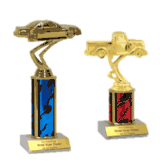
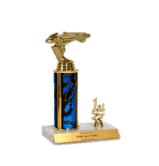
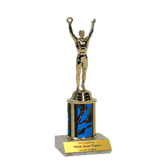
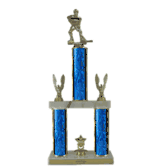
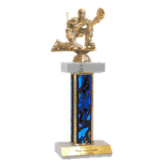
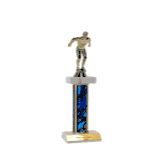
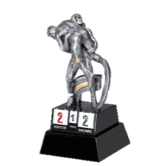
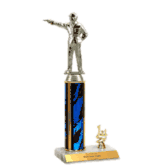
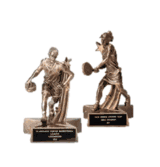
Invest in quality recognition. Consider ordering custom football trophies or personalized football medals that commemorate their first football experience memorably.
Share season highlights through video montages or photo albums. Parents treasure these memories. Include bloopers - the wrong-way run or accidental touchdown celebration after a five-yard gain. Laughter bonds teams.
Your Coaching Impact
Pee-wee football coaching influences young lives beyond teaching tackles and touchdowns. You're shaping character, building confidence, and creating memories lasting lifetimes.
Some players continue through high school and beyond. Others discover football isn't their passion. All learn valuable lessons: teamwork, perseverance, handling adversity, celebrating success. These experiences shape future leaders.
When equipment malfunctions, parents complain, or your team forgets every play mid-game, remember: you're teaching life through football. The shy kid who becomes vocal leader, the quitter who develops persistence, the selfish player who learns teamwork - these transformations matter most.
Embrace pee-wee football's organized chaos. Between explaining why punting on first down isn't strategic and celebrating your center's first successful snap without looking through his legs, you'll discover why coaching youth football creates lifelong memories. That moment when everything clicks and your team executes perfectly? That's worth every challenging practice and parent email!