
How to Present a Trophy or Award: Making the Moment as Memorable as the Achievement
Presenting a trophy or award is more than handing over a shiny object. It is a moment to honor hard work, dedication, and success -- a moment the recipient may remember for the rest of their life. But that only happens if the presentation is done with intention. A great award handed over with a mumbled name and a quick handshake lands very differently than the same award presented with a specific, personal acknowledgment of what it represents.
The ceremony does not need to be elaborate. It needs to be sincere. Whether you are handing out end-of-season trophies to eight-year-olds, recognizing a twenty-year employee in a conference room, or honoring volunteers at a community dinner, the principles are the same: name the achievement specifically, connect it to the person, and give the moment room to breathe.
Here is a practical guide to presentation across four of the most common recognition contexts -- with scripts, setup tips, and the small details that turn a transaction into an event.
Before You Start: Setting the Stage
The best award presentation begins before anyone walks to the front of the room. A few minutes of preparation can transform a routine handout into a ceremony that feels like it was designed specifically for the people in it.
Pre-Ceremony Checklist
- Confirm pronunciation. Nothing deflates a recognition moment faster than the presenter mispronouncing the recipient's name. Write it phonetically on your notes if needed.
- Prepare one specific detail per recipient. Not "John was a great team player" but "John covered two positions in the semifinals when we were short-handed and never complained." Specificity is what separates recognition from formality.
- Arrange awards in presentation order. Reaching around a stack of trophies while people watch is awkward. Have them staged and ready.
- Control the environment. If you can manage it, reduce distractions during the actual presentation -- lower background music, gather people in, signal that something worth paying attention to is about to happen.
- Brief other presenters. If coaches, managers, or community leaders are handing out awards, give them the same structure: name, specific achievement, handoff. Two minutes of coordination prevents five minutes of stumbling.

1. Presenting Children's Sports Awards at the End of the Season
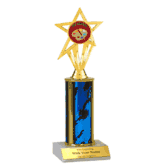
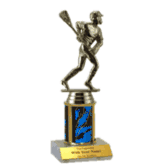
Children's sports awards are about celebrating teamwork, effort, and the moments that made the season worth showing up for. The end-of-season ceremony is where a kid who spent six weeks learning to dribble gets the same moment of recognition as the team's leading scorer -- and that equity matters enormously at this age.
The tone should be energetic and personal. Every child should hear their name said with enthusiasm, and every child should hear something specific said about them. That does not mean you need to write a speech for each player. It means being prepared with one true thing per kid that goes beyond "great job."
"And now, for the Most Enthusiastic Player -- the one who sprinted to every drill and somehow made warm-ups fun -- Sarah! Sarah, your energy this season was contagious and this team felt it every single week."
Presentation tip: Have kids come up one at a time rather than filing past in a line. The line format saves time but costs the moment. One at a time, with applause, teaches every child watching that this is a big deal -- and when their name is called, they will feel it.
For teams with large rosters, consider splitting the ceremony into smaller groups by age or division so each ceremony stays focused and no child spends forty minutes waiting. A well-run fifteen-minute ceremony beats a dragged-out forty-five-minute one every time.
2. Presenting an Employee with a Milestone Award
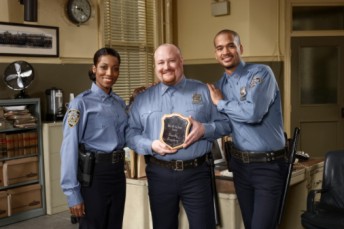
Recognizing an employee for a significant achievement -- years of service, completing a major project, exceeding a goal, or simply being the person a team depends on -- requires a different register than youth sports. The stakes are higher. An adult who has invested years in an organization is weighing that recognition against every moment they chose to stay. Make it count.
The setting matters. A milestone award presented in front of peers lands with weight. The same award handed over privately in a manager's office, while sometimes appropriate, does not carry the same organizational signal. If the achievement deserves recognition, it usually deserves an audience.
"This award goes to someone who not only exceeded their targets for the third consecutive quarter, but who also took the time to mentor two new team members through their onboarding -- something no one asked them to do, and something both of those people told me made a real difference. Let's give a big round of applause for Alex."
Presentation tip: Tie the recognition to the future, not just the past. "We cannot wait to see what comes next" is not empty filler -- it tells the recipient and everyone watching that this is an organization that notices ambition and rewards it. That message motivates the room, not just the person holding the award.
If you are presenting a years-of-service milestone, consider asking a colleague to share a brief memory before the award is handed over. A thirty-second story from a peer carries more emotional weight than a two-minute speech from a manager. It says the recognition comes from the whole team, not just the hierarchy.

3. Presenting Awards to Volunteers
Volunteers operate on a different motivation than employees or athletes. They are not there for a paycheck or a scholarship. They are there because they chose to be, often at real personal cost of time and energy. A volunteer award presentation should reflect that choice directly. The recognition should name not just what they did, but what it required of them to do it -- and what it meant to the people on the receiving end.
Volunteer recognition works best in a community setting, surrounded by the people who benefited from their work. Wherever possible, let the people they served be present for the ceremony, or at least acknowledged in the remarks. The volunteer did not just give time to an organization -- they gave it to people.
"Jamie has been the backbone of our food drive for three consecutive years. What most people do not know is that she coordinated distribution on a day when half the team had to cancel, handled everything herself, and made sure no family on our list went without. This award is a small acknowledgment of that. The families who were served are a much larger one."
Presentation tip: Avoid framing volunteer recognition around the organization's success ("thanks to Jamie, we hit our goals"). Frame it around human impact ("thanks to Jamie, forty families had food on the table"). Volunteers are not metrics. The recognition should reflect why they showed up, not what they produced for the organization.
4. Presenting Academic Awards
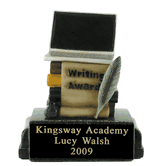
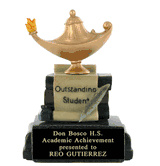
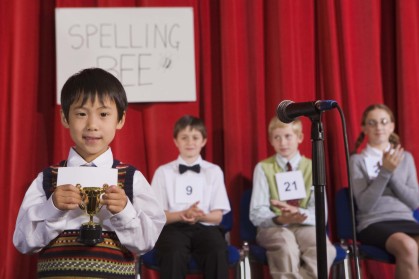
Academic recognition -- whether for grades, attendance, improvement, or a specific subject area -- carries a particular responsibility. An academic award or plaque presented well does not just honor what a student achieved. It shapes how they understand their own capabilities. At its best, academic recognition tells a student something true about themselves that they may not yet fully believe.
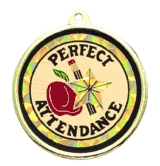
The most powerful academic awards name the quality behind the result, not just the result itself. "Perfect attendance" is a fact. "Perfect attendance in a year that was genuinely hard for a lot of students" is a story. "Academic excellence" is a grade. "The student who came in early every Friday to get extra help and never gave up" is a person.
"Taylor started this year saying math was not her subject. She finished this year with the highest score in the class on the final exam. This award goes to someone who proved that the only thing standing between you and a skill is the decision to keep working on it. Congratulations, Taylor, on your Academic Excellence Award."
Presentation tip: End with a forward-facing statement rather than a backward-looking one. "This is just the beginning of your amazing journey" is a cliche, but the instinct behind it is right -- academic recognition should leave students feeling capable of what comes next, not just proud of what is behind them. Be specific: "I cannot wait to see what you do with this in high school" lands harder than generic encouragement.
What to Say: A Practical Script Structure That Works Every Time
The single most common mistake in award presentations is vagueness. Vague recognition feels like a formality. Specific recognition feels like the presenter actually knows the recipient. The difference is often one sentence.
A reliable structure for any presentation, regardless of context:
The Four-Part Framework
1. Name the award and why it exists. "This award recognizes the player who made everyone around them better."
2. Name one specific thing the recipient did. "This season, she stayed late after every practice to help the younger players work on their passing."
3. Name the recipient with enthusiasm. "This year's Most Valuable Teammate is... Jordan."
4. Add one forward-facing line. "We cannot wait to see what this team looks like next year with you in it."
That structure takes under sixty seconds, works for any age and any context, and ensures that every recipient hears something true and specific about themselves before they take the award. It is the difference between an award ceremony and a recognition ceremony.
Language to Use -- and to Avoid
- Use specific verbs: "stayed late," "covered for," "organized," "mentored," "never missed" -- these paint a picture. "Was dedicated" does not.
- Avoid superlatives as substitutes for specifics: "the best," "the most amazing," "incredible" are filler when unattached to evidence. Attach them to something real.
- Name the effort, not just the result: "Won the championship" is a result. "Put in two hours of extra practice every week for four months" is an effort. Both deserve acknowledgment. The effort is what other people can emulate.
- Match your energy to the room: Youth sports calls for enthusiasm and noise. A corporate milestone might call for warmth and measured respect. A volunteer ceremony might call for genuine emotion. Read the room and calibrate.
Group Presentations vs. Individual Spotlights
Not every recognition event is a one-at-a-time ceremony. Sometimes you are recognizing thirty kids at an end-of-year party, or handing out participation award medals at a large tournament. The principles still apply -- they just require a different format.
For large group presentations, the individual spotlight moment matters even more because the risk of it feeling assembly-line is higher. The solution is not to slow the whole process down but to build in a brief pause for each name. Call the name. Wait for the person to reach you. Make eye contact. Hand the award directly to them, not past them. Say one thing. Done. That sequence takes fifteen seconds per person and transforms a handout into a moment.
For team awards presented to the whole group at once, designate one person to receive the award on behalf of the team -- ideally a player, not just the coach -- and use the remarks to name a few specific contributions from across the roster. Teams feel recognized when their individual efforts within the collective are named, not just the collective result.
Making Every Award Presentation Memorable
The award itself is only half the equation. A beautifully engraved trophy or plaque, presented with a mumbled name and a distracted handshake, loses most of its power. The same award, presented with a specific acknowledgment, a moment of genuine attention, and language that names the effort behind the achievement, becomes something the recipient carries with them.
The investment is small. A few minutes of preparation per recipient. One true, specific sentence about each person. The decision to slow down and let the moment have weight. That is the difference between a ceremony people forget and one they remember when they are telling the story years later.
Get the award right. Then get the presentation right. Both matter.
Find the Right Award for Every Occasion
TrophyCentral has supplied trophies, plaques, medals, and engraved awards to sports leagues, schools, businesses, and community organizations since 1999. Free engraving on every trophy and plaque, with most orders shipping within one to two business days.
Trophies for Every Sport & Activity
Youth sports, academic programs, community events -- hundreds of designs with free engraving included.
Plaques for Milestones & Service
Employee recognition, volunteer appreciation, and long-term service awards built to last on a wall.
Medals for Large Groups
Tournaments, end-of-year programs, and any event where every participant deserves something to take home.
Not sure what you need?
Call 1-888-809-8800 or browse award guides and buying resources for every program type.
The moment is worth getting right. Make sure the award is too.