

Welcome to youth soccer coaching, where "positions" are merely suggestions, every player wants to be striker, and the most important skill is convincing kids that passing occasionally might be more effective than dribbling through the entire opposing team solo. You're about to discover that herding cats seems organized compared to teaching 10 six-year-olds to spread out on a soccer field!
Youth soccer represents most kids' first team sport experience, where they learn that soccer balls aren't for sitting on, goalies use hands (revolutionary!), and that running in the same direction as your teammates generally produces better results. According to U.S. Soccer's Coaching Education Program, over 3 million children participate in organized youth soccer annually, making it America's fastest-growing youth sport.
Soccer Coaching Reality Check! Your carefully planned formation will immediately dissolve into "beehive ball" where 16 players chase one ball in a moving cluster. At least three players will pick dandelions mid-game, someone will score an own goal and celebrate wildly, and the highlight reel will feature a butterfly landing on the ball during a penalty kick. Welcome to the beautiful game!
Understanding Youth Soccer Development Stages
Youth soccer players progress through distinct developmental phases, each requiring different coaching approaches. Understanding these stages prevents frustration when your U6 team ignores tactical instructions to investigate an interesting bug on the sideline.
U6 (Under 6): Organized Chaos
Tiny soccer players view the field as an adventure playground where soccer occasionally happens. They understand "kick ball toward goal" but complex concepts like "offside" might as well be quantum physics. Success means everyone touches the ball, nobody cries (much), and parents get adorable photos.
Games resemble swarm behavior studies where the ball serves as queen bee. Positions are theoretical - everyone plays "ball chaser." Celebrate when someone accidentally passes, even if to opponents. Focus on fun, basic coordination, and ensuring everyone knows which goal is theirs (harder than it sounds).
U8-U10: Skill Building Years
Players begin understanding soccer involves more than just kicking. They grasp basic positions though still magnetically attracted to the ball. Some discover they can pass backwards (mind-blowing revelation), and a few realize space on the field exists beyond the ball's immediate vicinity.
Technical skills develop rapidly with proper instruction. Dribbling becomes intentional rather than accidental, passing occasionally reaches teammates, and shooting involves aiming rather than just kicking hard. Tactical understanding remains basic but improves with patient repetition.
U12-U14: Competitive Development
Pre-teens can handle tactical concepts, structured formations, and position-specific training. They understand teamwork's value though hormones occasionally override logic. Physical development varies dramatically - some players hit growth spurts while teammates remain compact, creating interesting dynamics.
Competition intensifies as players develop genuine soccer understanding. Some show real talent while others excel through effort and determination. Balance competitive development with inclusive team culture ensuring everyone improves regardless of natural ability.
Essential Soccer Practice Drills
Effective soccer drills combine skill development with enjoyment because bored players become creative in unproductive ways (like seeing who can kick the ball onto the roof). Mix technical work with games to maintain engagement throughout practice.
Dribbling and Ball Control Drills
Sharks and Minnows Classic
Setup: All players (minnows) with balls in defined square, 2-3 players without balls (sharks)
How it works: Minnows dribble while sharks try stealing balls. Caught minnows become sharks. Last minnow swimming wins!
Why it works: Develops close control, shielding, and awareness while being incredibly fun. Kids beg for "one more round!"
Gates Dribbling Challenge
Setup: Set up 10-15 "gates" (two cones, 1 yard apart) randomly around area
How it works: Players dribble through as many gates as possible in 60 seconds. Can't use same gate twice in row. Add competition: teams, different point values for gates.
Why it works: Improves dribbling, change of direction, and spatial awareness while maintaining high engagement through competition.
Passing and Receiving Excellence
Pass and Move Relay
Setup: Teams of 4-5 in lines facing each other, 10 yards apart
How it works: Pass across, follow your pass to opposite line. Add variations: two-touch, one-touch, weak foot only. Time trials for competition.
Why it works: Repetitive passing practice disguised as race. Develops passing accuracy and first touch under mild pressure.
Four Corner Passing Game
Setup: Square with cone at each corner, players at each cone
How it works: Pass to next corner, follow pass. Add second ball for chaos. Call "switch" to reverse direction. Progress to diagonal passes.
Why it works: Teaches movement off ball, timing, and communication while keeping everyone active.
Shooting and Scoring Practice
World Cup Shootout
Setup: Players represent different countries, cones for goals
How it works: Each "country" gets one shot per round. Miss = eliminated (but become assistant coaches). Last country standing wins World Cup!
Why it works: Practices shooting under pressure while maintaining fun through imagination and competition.
Power and Finesse Station
Setup: Two goals - one for power shots (further back), one for placement (closer, smaller targets)
How it works: Alternate between power shooting from distance and precise placement shots. Keep score: 1 point for power goals, 3 for hitting targets.
Why it works: Develops different shooting techniques while understanding when to use power versus placement.
Drill Success Secret: Name your drills something exciting! "Defensive positioning exercise" becomes "Zombie Invasion Defense." Same drill, 100% more enthusiasm. Kids don't realize they're learning when they're having fun!
Planning Dynamic Soccer Practices
Structure practices to maximize touches on the ball while building skills progressively. Every player should be active constantly - standing in lines watching others practice creates boredom and behavior issues.
75-Minute Practice Template
0-5 minutes: Free play with balls (arrive and play immediately)
5-15 minutes: Dynamic warmup game (tag variations with balls)
15-30 minutes: Technical skill focus (dribbling, passing, or shooting)
30-45 minutes: Small-sided games with conditions
45-60 minutes: Tactical work (positions, team shape, set pieces)
60-70 minutes: Scrimmage with minimal coaching
70-75 minutes: Cool down and team talk
Small-Sided Games for Development
Small-sided games (3v3, 4v4) provide more touches, decisions, and involvement than full-field games. Every player constantly participates rather than standing in positions waiting for occasional action. Create different game conditions targeting specific skills.
Game variations maintain interest: multiple balls, different size goals, must pass before shooting, points for everyone touching ball before scoring. These conditions develop specific skills while players think they're just playing fun games.
Game Day Management Strategies
Youth soccer games test your multitasking abilities: managing substitutions, providing tactical guidance, consoling the player upset about wrong color socks, and preventing parents from "helping" referee. Success requires organization, patience, and selective deafness to sideline coaching.
Formation and Positioning Basics
Keep formations simple for younger ages. U8 plays 4v4 or 7v7 - avoid complex systems. Basic 2-3-1 or 3-2-1 provides structure without overwhelming young minds. Positions should be fluid guidelines rather than rigid assignments.
Teach positioning through visual cues: "stay between these cones," "when ball is there, you stand here." Abstract concepts like "create space" confuse young players. Use concrete, visible references they can understand and remember during game chaos.
Substitution Strategy for Sanity
- Equal playing time: Track with simple chart or timer
- Position rotation: Everyone plays different positions each game
- Quick changes: Substitute during natural breaks to maintain flow
- Prepare subs: Tell players they're going in before stoppage
- Positive reinforcement: High-five coming off, encouragement going on
In-Game Coaching Approach
Youth players need encouragement more than tactical instruction during games. Shouting complex instructions while they're playing confuses and frustrates. Save teaching for practice; games are for applying what they've learned.
Focus on effort and attitude rather than mistakes. "Great hustle!" works better than "You should have passed!" Celebrate defensive effort as enthusiastically as goals. Build confidence through positive reinforcement during competition.
Managing Soccer Parents Successfully
Soccer parents range from supportive cheerleaders to sideline coaches convinced their child is the next Messi. Managing parent expectations while maintaining team harmony requires clear communication and firm boundaries.
Pre-Season Communication
Hold mandatory parent meeting establishing your coaching philosophy, team rules, and expectations. Emphasize development over winning, effort over outcomes, and team unity over individual glory. Parents need to understand youth soccer's true purpose: fun and skill development.
Create clear sideline behavior expectations. Parents should cheer positively for all players, avoid coaching from sidelines, and never criticize referees (even when they're obviously wrong). The "24-hour rule" prevents emotional post-game confrontations about playing time or positions.
Helpful Parent Roles
Team manager, equipment coordinator, snack scheduler, field setup crew, photo/video coordinator, practice assistant (with guidance).
Communication Tools
Weekly email updates, team app for scheduling, practice plans shared in advance, regular progress updates, celebration of team achievements.
Culture Building
Team social events, volunteer opportunities, sibling involvement activities, end-of-season celebration planning, positive sideline atmosphere.
Developing Soccer Skills and Character
Youth soccer develops more than just athletic ability. Players learn teamwork, perseverance, respect, and handling both victory and defeat. Your role extends beyond teaching soccer to shaping character through sport.
Building Team Chemistry
Create team traditions that build unity: special warmup routine, team cheer, victory lap after good effort (regardless of score), player of the match recognition. These rituals create belonging and identity beyond individual performance.
Partner exercises build connections between players. Rotate partners regularly so everyone works together. Shy players gain confidence, aggressive players learn patience, and friendships develop across skill levels. Team chemistry often matters more than talent in youth soccer.
Teaching Soccer IQ
Develop decision-making through questions rather than commands. "What options did you have?" teaches better than "You should have passed." Players who understand why make better decisions than those who simply follow instructions.
Use video when possible (even phone recordings) to show positioning and movement. Young players understand visual examples better than verbal explanations. Seeing themselves play provides powerful learning opportunities and builds soccer intelligence.
Common Challenges and Solutions
Every youth soccer season presents unique challenges from the player who refuses to pass to the one afraid of the ball. Anticipating common issues helps maintain patience and find creative solutions.
Behavioral Management Strategies
Ball hogs need specific passing challenges: "Can you complete five passes before shooting?" Rather than criticizing selfishness, reward teamwork. Create passing points in scrimmages where assists count double. Gradually, they discover passing creates easier scoring opportunities.
Timid players need gradual confidence building. Start with partner activities building to small groups. Celebrate their successes publicly. Assign them specific achievable tasks: "Mark number 7" rather than vague "play defense." Success builds upon success.
Disruptive players often seek attention. Channel energy productively: make them equipment managers, warmup leaders, or demonstration assistants. Responsibility often improves behavior better than punishment. Keep them engaged with important team roles.
Skill Development Challenges
Players develop at different rates, creating skill gaps within teams. Design drills with progression levels: beginners work on basic passing while advanced players add one-touch restrictions. Everyone practices same concept at appropriate challenge level.
Some players struggle with specific skills despite practice. Provide alternative techniques - not everyone learns identically. The player who can't master laces shooting might excel at inside-foot placement. Build on strengths while patiently addressing weaknesses.
Season-End Celebrations and Recognition
Conclude seasons with meaningful recognition celebrating every player's contribution. Move beyond generic participation trophies to personalized acknowledgment of growth and achievement.
Creative Award Ideas
Design awards recognizing diverse contributions: Golden Boot (top scorer), Iron Wall (best defender), Energizer Bunny (hardest worker), Team Spirit, Most Improved, Coaches Award. Include fun awards: Best Celebration Dance, Grass Stain Champion, Snack MVP. Personal recognition creates lasting memories.
Building Motivation Through Regular Recognition
Don't wait until season's end to recognize achievement. Weekly practice awards maintain motivation and build confidence throughout the season. "Training Ground Hero" for practice effort, "Skills Challenge Champion" for mastering new techniques, or "Team Builder" for encouraging struggling teammates.
Use free printable certificates for immediate recognition. Print a stack at season's start - "Defensive Wall," "Passing Precision," "Speed Demon," "Never Give Up" - and award them after practices and games. Kids love collecting certificates, and parents appreciate tangible recognition of effort.
Create a "Wall of Fame" with photos and certificates displayed at practice. This visual recognition motivates continued effort while building team pride. Rotate displays so everyone gets spotlight time.
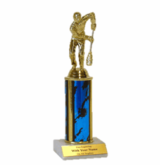
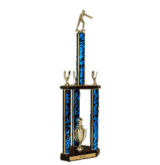
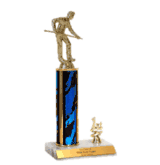
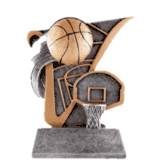
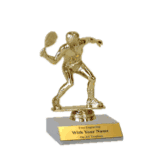
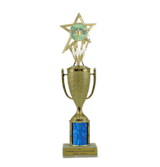
Quality end-of-season awards matter. Consider ordering custom soccer trophies that players treasure long after the season ends. Physical awards validate their hard work and create lasting memories of their soccer journey.
Growing Your Coaching Skills
Effective youth soccer coaching requires continuous learning. Attend coaching courses, watch other coaches, and learn from your mistakes. Every season brings new challenges and opportunities for growth.
Connect with experienced coaches for mentorship and advice. Most gladly share drills, management strategies, and war stories. The coaching community generally supports newcomers because everyone remembers their first season's challenges.
Remember your primary mission: creating positive soccer experiences that encourage lifelong sport participation. The player who learns to love soccer through your coaching carries that joy forward, whether playing professionally or just weekend pickup games.
Your influence extends beyond soccer skills. Players remember coaches who believed in them, encouraged them through struggles, and celebrated their successes. You're shaping future adults who understand teamwork, dedication, and resilience learned on your soccer field.
Some players will continue soccer seriously, others will find different passions, but all will remember their youth soccer experience. Make those memories positive through patient instruction, inclusive team culture, and emphasis on enjoyment over outcomes.
When chaos erupts (and it will), when parents complain (they might), when your team forgets everything you've taught them mid-game (guaranteed), remember: you're giving kids invaluable experiences through soccer. That's worth every moment of beautiful chaos!