free engraving
FREE ENGRAVING ON TROPHIES & PLAQUES
shop with confidence
FAST, RELIABLE & SECURE SHOP WITH CONFIDENCE
free economy shipping
FREE ECONOMY SHIPPING OVER $99 ON 1000's OF SELECT TROPHIES & AWARDS
discounted prices
QUALITY CUSTOM AWARDS AT DISCOUNTED PRICES
custom awards
4.9 RATING Over 2,300 ★★★★★ Reviews


How to Motivate Kids with Recognition That Actually Works (Not Just Participation Trophies)

Youth Recognition Student Motivation Child Development Growth Mindset

Your kid brought home another participation trophy. It sits on a shelf with twelve others that look identical. When you ask which activity it was for, they cannot remember. This is the participation trophy problem everyone complains about.

But here is what critics miss: the problem is not that kids receive recognition. The problem is that generic recognition teaches nothing about what actually earned it. When every kid gets the same trophy regardless of effort or improvement, trophies become meaningless decorations.

Smart recognition motivates kids to try harder, improve skills, and develop resilience. Poor recognition just clutters bedrooms. The difference comes down to specificity, timing, and connecting recognition to actual achievement.

Why Kids Need Different Recognition Than Adults

Children are not small adults. Their brains process feedback differently, they have less developed self-regulation, and they are actively building their sense of identity. Recognition strategies that work for employees often backfire with kids.

According to research from the American Psychological Association, children develop stronger intrinsic motivation when recognition focuses on effort and strategy rather than innate ability or outcomes alone. Telling a kid "you are so smart" actually reduces motivation to tackle challenges. Saying "your practice strategy really paid off" builds resilience.

Kids also need more frequent feedback than adults. A year-end trophy ceremony means nothing to a six-year-old who cannot connect current recognition to efforts from months ago. Younger children especially need recognition closer to achievements while memories remain fresh.

For adult-focused recognition strategies in workplace and volunteer contexts, see our companion guide on employee and volunteer motivation through recognition.

Non-Tangible Recognition That Builds Real Confidence

Before buying trophies, understand that the most powerful recognition for kids often costs nothing. Words matter more than we think.

Specific Praise That Teaches

Generic praise like "good job" provides zero information about what was good. Kids learn nothing from it. Specific praise teaches exactly what behavior to repeat.

"You kept trying that math problem even when it was hard, and you figured it out" teaches perseverance. "Your presentation was well organized with a clear beginning, middle, and end" teaches structure. "You helped your classmate without being asked" teaches kindness.

The formula is simple: describe the specific behavior, explain why it mattered, and connect it to a skill they are developing. This turns every praise moment into a teaching opportunity.

Progress Recognition Over Perfection

Kids need to know that improvement counts more than being the best immediately. Recognizing progress builds growth mindset while praising only perfect outcomes teaches kids to avoid challenges where they might not excel instantly.

"Last month you could barely dribble the ball, now you are making baskets" acknowledges measurable improvement. "Remember when reading out loud made you nervous? Look how confident you sound now" connects past struggle to current success. This teaches that effort produces results.

Effort Recognition Builds Resilience

Praising effort rather than outcomes teaches kids that trying hard has value even when results are not perfect yet. This is especially important when kids face setbacks or challenging learning curves.
"You practiced piano every day this week even though that piece was really difficult" values the work regardless of whether they mastered the piece. "You stayed focused through that whole science project even when the experiment did not work the first three times" celebrates perseverance through failure.

Character Recognition Matters Most

Academic and athletic achievement gets plenty of attention. Character recognition often gets forgotten, yet it shapes who kids become more than any test score.

Notice when kids show kindness, honesty, responsibility, or courage. "You told the truth even though you knew you would get in trouble" reinforces integrity. "You included the new student at lunch when others did not" teaches compassion. These moments define character development.

When Tangible Awards Help (And When They Hurt)

Physical awards work when they commemorate specific achievements and remind kids of what they accomplished. They backfire when they are generic or disconnected from actual effort.
Achievement Milestones

Major accomplishments deserve tangible recognition. Learning to read, mastering multiplication tables, completing a first season of sports, finishing a challenging project. These milestones represent real work and growth that physical awards can commemorate meaningfully.

Sustained Effort Over Time

Consistency matters more than occasional brilliance. The kid who practices regularly, attends consistently, or completes homework reliably deserves recognition for dedication even if they are not the top performer. Awards for sustained effort teach that showing up matters.

Personal Best Achievements

Beating your own previous performance deserves celebration regardless of how you compare to others. Personal best awards teach kids to compete against themselves rather than comparing constantly to peers. This builds intrinsic motivation.

Courage and Risk-Taking

Trying something scary or difficult deserves special recognition. The kid who conquered stage fright to perform, the student who attempted the advanced math problem, the athlete who finally tried the challenging skill. Courage awards teach that facing fears matters.

Rising Star Recognition

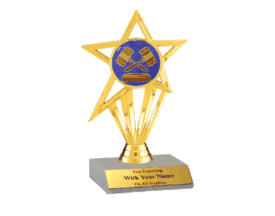
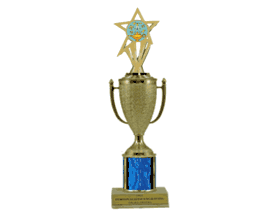
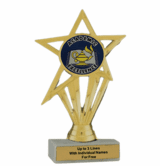
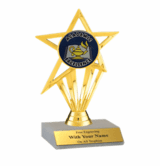
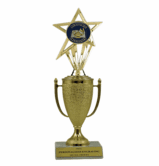
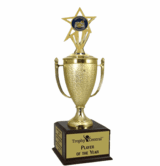
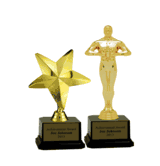
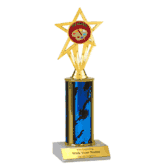
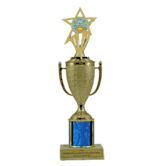
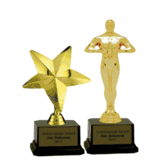
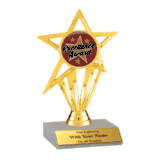
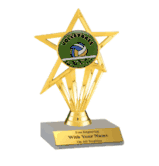
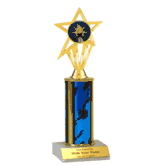
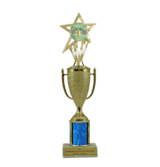
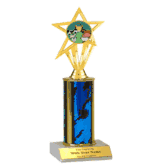
Identifying emerging talent early and recognizing trajectory motivates continued growth. Star trophies work perfectly for kids showing rapid improvement or developing passion for activities.

Team Contributions

Not every kid will be the star player or top student, but everyone can contribute to team success. Awards for being a good teammate, helping others improve, or showing team spirit teach collaborative skills that matter more than individual glory.

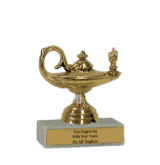
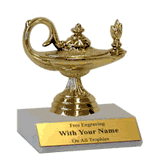
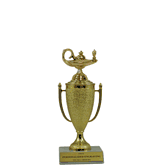
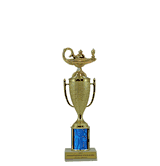
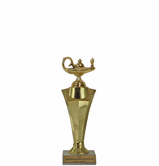
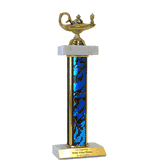
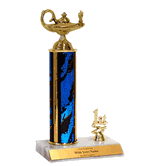
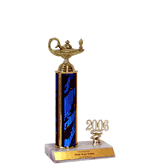
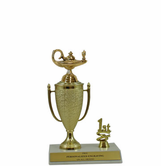
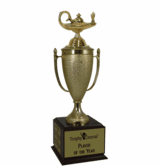
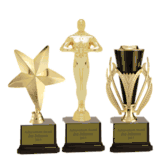
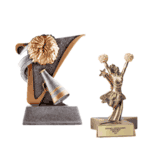
Browse versatile achievement trophies that work across contexts from academic milestones to first-time accomplishments, celebrating growth without being activity-specific.

Age-Appropriate Recognition Strategies

Elementary School Recognition (Ages 5-11)

Young kids need immediate recognition and visual reminders of achievement. Sticker charts, certificates they can see on walls, and small trophies they can hold all work well. They have short attention spans for delayed gratification.

Focus recognition on effort and improvement rather than comparison to others. "You tried every spelling word three times" beats "you got the highest score." Young kids are still developing social comparison skills and benefit from individual progress tracking.

Keep ceremonies short but meaningful. Long awards nights lose young kids' attention. Quick recognition with specific explanation of what they did works better than elaborate ceremonies where they just want to go play.

For comprehensive classroom recognition strategies, our teacher's guide to semester awards provides detailed categories ensuring every student receives meaningful acknowledgment.

Middle School Recognition (Ages 11-14)

Preteens are developing stronger social awareness and comparison tendencies. Recognition needs to feel authentic and specific to avoid the "everyone gets a trophy" cynicism they develop at this age.

Peer recognition matters enormously. Awards nominated by classmates or teammates often mean more than adult-selected recognition. This age group cares deeply about peer perception.

Humor and personality work well. "Most Likely to Make Everyone Laugh During Practice" or "Best Pre-Game Playlist Curator" acknowledge personality alongside achievement. Middle schoolers appreciate being seen as individuals.

High School Recognition (Ages 14-18)

Teenagers need recognition that acknowledges increasing maturity and real-world relevance. Generic participation awards feel insulting at this age. They want acknowledgment of genuine contribution and achievement.

Leadership recognition becomes important. Awards for mentoring younger students, organizing events, or demonstrating responsibility reflect their developmental stage of establishing identity and contributing meaningfully.

Future-focused recognition resonates. "Scholarship Potential" or "Career Ready" awards connect current effort to future opportunities in ways that motivate continued development.

Recognition Across Different Youth Contexts

Classroom Recognition That Motivates Learning

Teachers face the challenge of recognizing diverse learners without creating harmful comparison. Multiple award categories ensure everyone has paths to recognition beyond just top grades.

Most improved awards acknowledge growth regardless of starting point. Subject mastery recognition rewards deep understanding. Homework consistency awards celebrate reliability. Helping others awards teach collaboration. Create enough categories that different strengths get celebrated.

Sports and Athletic Recognition

Youth sports naturally emphasize winning and top performance, but smart programs recognize diverse contributions. Fastest runner, most improved player, best teammate, hardest worker, and most spirited all provide recognition paths beyond just scoring.

Effort-based awards teach that hard work matters regardless of natural talent. The kid who never misses practice but rarely scores still deserves recognition for commitment. This keeps less naturally gifted kids engaged rather than quitting.

Arts and Creative Programs

Creative endeavors benefit from recognition of technique, creativity, dedication, and artistic growth. Not just "best artist" but also "most creative approach," "technical excellence," "artistic courage," and "most improved technique."

Process recognition matters as much as final products. The student who sketches constantly, experiments with new techniques, or helps others with their projects deserves acknowledgment even if their final pieces do not win competitions.

Summer Camp and Recreation Programs

Camps provide unique recognition opportunities because they see kids in different contexts than school. Awards for trying new activities, making new friends, overcoming fears, or showing camp spirit celebrate aspects of growth that formal education sometimes misses.

Our comprehensive camp awards guide details specific categories from adventure skills to character development that make every camper feel accomplished.

Youth Organizations and Clubs

Scouts, 4-H, youth sports leagues, and other organizations benefit from multi-level recognition systems. Rank advancement, skill mastery, service hours, and leadership all provide distinct recognition paths.

Long-term participation recognition matters. The kid who stayed involved for five years deserves special acknowledgment even if they never became the star. Loyalty and commitment are achievements worth celebrating.

Budget-Friendly Recognition for Parents and Educators

Meaningful recognition need not require significant spending. Strategic use of free and low-cost options creates impact.

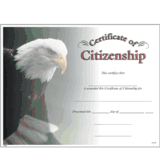
Free printable certificates provide professional-looking recognition at zero cost. Download customizable free award certificates for academic achievement, character recognition, sports accomplishments, and general excellence. Print on quality cardstock for 50 cents each.

Handwritten notes from teachers or coaches become treasures kids keep for years. Three minutes writing specific praise about what a child accomplished creates recognition that matters more than expensive trophies. Parents frame these.

Photo recognition costs almost nothing but creates lasting memories. Take pictures of kids with their achievements and display them. Recognition walls in classrooms or program spaces keep accomplishments visible.

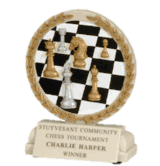
Small meaningful trophies work better than large generic ones. A 10-dollar trophy with specific engraving about actual achievement means more than a 30-dollar generic award. Invest in personalization rather than size.

Tiered systems maximize budgets. Verbal recognition and certificates for regular achievements, small trophies for significant milestones, larger awards for major accomplishments. Most recognition stays low-cost while top achievements get premium treatment.

Parent and Educator Budget Reality

A classroom of 25 students could receive comprehensive recognition through quarterly certificates (free to print), monthly specific verbal acknowledgment (zero cost), and 5 small trophies for major achievements at 10 dollars each. Total annual investment per student: 2 dollars for meaningful recognition throughout the year versus one expensive participation trophy that teaches nothing.

Recognition Mistakes That Accidentally Hurt Kids

The comparison trap: Constantly comparing kids to siblings or peers damages motivation and relationships. "Why can't you be more like your sister?" teaches resentment, not improvement. Focus on individual progress instead.

The fixed mindset praise: Telling kids they are "naturally smart" or "gifted athletes" creates fear of failure. When they hit challenges that require effort, they think something is wrong since things should come naturally. Praise effort and strategy instead of innate traits.

The delayed recognition problem: Recognizing achievements months after they occur loses meaning for kids, especially younger ones. They cannot connect current recognition to past effort. Acknowledge promptly while memories remain fresh.

The public humiliation risk: Never use recognition ceremonies to highlight what kids did wrong or who did not win. "Everyone tried hard but Johnny tried hardest" makes 24 kids feel inadequate. Find specific reasons each child deserves individual recognition.

The perfection expectation: Only recognizing perfect outcomes teaches kids to avoid challenges where they might not succeed immediately. Recognize improvement, effort, and learning from mistakes to build resilience.

The generic praise problem: "Good job" provides zero information. Kids learn nothing from vague praise. Describe specifically what they did well so they know what to repeat.

Building Growth Mindset Through Recognition

How we recognize kids shapes how they think about learning, challenge, and failure. Strategic recognition builds growth mindset while poor recognition reinforces fixed mindset.
Recognize the process, not just outcomes. "You tried three different strategies until you found one that worked" teaches problem-solving. "You got it right" teaches nothing about how to replicate success.

Acknowledge productive struggle. "That was hard and you stuck with it" validates effort during difficult learning. Kids need to know that struggle is normal and valuable, not a sign they lack ability.

Celebrate mistakes as learning. "You figured out what did not work, which helps you know what to try next" reframes errors as information rather than failures. This reduces fear of attempting challenging tasks.

Connect effort to outcomes explicitly. "Your extra practice this week is why you improved so much" teaches that effort produces results. Kids need to see clear connections between what they do and what happens.

Recognize multiple forms of intelligence. Academic ability, athletic skill, artistic talent, social intelligence, mechanical aptitude, and emotional awareness all deserve acknowledgment. Kids have diverse strengths worth celebrating.
What Effective Recognition Actually Teaches Kids

Beyond making children feel good temporarily, strategic recognition shapes fundamental beliefs about themselves and learning.

Recognition that focuses on effort and improvement teaches that abilities develop through practice. Kids learn they can get better at things through work rather than believing talent is fixed at birth. This growth mindset predicts long-term success better than early achievement.

Specific feedback teaches kids what excellence looks like in concrete terms. They learn that "doing your best" means trying multiple strategies, practicing consistently, and persevering through difficulty rather than just working until bored.

Character recognition teaches that who you are matters as much as what you achieve. Kindness, honesty, courage, and responsibility get elevated to the same importance as grades or trophies. This shapes identity during crucial developmental years.

Recognition for trying difficult things teaches that challenge is opportunity rather than threat. Kids develop courage to attempt things they might not master immediately when they know effort gets acknowledged regardless of perfect outcomes.

Ultimately, how we recognize children teaches them how to evaluate themselves. External recognition eventually becomes internal motivation when kids learn to recognize their own growth and feel proud of genuine effort and improvement.

Ready to Build Recognition That Actually Motivates Kids?

Browse our selection of youth achievement awards, rising star trophies, and download free recognition certificates designed for celebrating children's growth and effort. Free engraving on all awards, with most orders shipping within 1-2 business days.

Need help creating recognition systems that build confidence and motivation in young people? Our specialists understand child development and can help you design programs that celebrate growth meaningfully. Call 1-888-809-8800 for free consultation.

The kids in your life are working hard and improving every day. Make sure they know you noticed their growth, not just their grades.


⭐ 2,300+ 5-Star Reviews | 🏆 25+ Years Experience | 🚚 Fast Shipping | ✓ 100% Satisfaction Guarantee


Bing Tag