
Team Sports Season-End Awards: Recognition Strategies That Make Every Player Feel Valued
The final buzzer sounds. Season over. You've watched these kids show up week after week, improve their skills, support their teammates, and learn what it means to be part of something bigger than themselves.
Now comes the ceremony. Twelve names on the roster, twelve players who contributed differently but equally to your team's season. The challenge? Recognizing everyone meaningfully without the awards feeling forced or fake.
Good news: thoughtful season-end recognition doesn't require a sports psychology degree or a massive budget. With smart category planning and age-appropriate awards, you can celebrate every player's contribution while honoring standout achievement. Here's how teams from soccer to basketball are making season-end recognition actually work.
Why Season-End Awards Matter More Than You Think
Let's talk about what these awards actually accomplish. You're not just handing out trophies because parents expect it. Recognition shapes how young athletes view their sports experience and whether they come back next season.
Kids who receive meaningful recognition - awards that acknowledge real contributions they made - are significantly more likely to continue playing next year. Not participation trophies that say "You Showed Up." Real recognition that says "I noticed what you brought to this team."
Season-end awards also create closure. The season happened. It mattered. Here's proof. Players take their trophies home and put them on shelves next to awards from previous seasons. Parents photograph awards ceremonies. Families talk about what each kid earned. The season doesn't just end - it concludes with acknowledgment.
And here's the thing about team sports specifically: unlike individual competitions where rankings are clear, team sports require recognizing diverse contributions. Your top scorer obviously made an impact. But so did the defender who consistently shut down opposing attacks. So did the player whose positive attitude kept morale up during losing streaks. Season-end awards are where you acknowledge all of it.
Universal Award Categories That Work for Every Sport
Some recognition categories transcend specific sports. Whether you coach soccer, basketball, baseball, or volleyball, these categories celebrate contributions every team needs.
MVP - Most Valuable Player
What it recognizes: Overall excellence. The player whose combination of skill, leadership, and impact made the biggest difference to team success.
How to choose: This should be obvious to everyone - players, parents, and coaches. If you're agonizing between three players, that's actually three different awards. MVP should be clear.
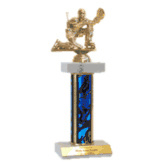
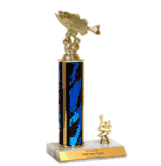
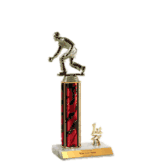
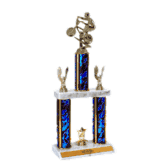
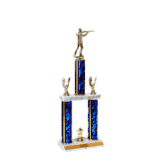
Award type: This is your biggest trophy moment. Spring for a substantial trophy that matches the achievement - something 10-15 inches that actually looks and feels like recognition for being most valuable.
Most Improved Player
What it recognizes: Growth. The player who ended the season significantly better than they started. Not the player who went from excellent to slightly more excellent. The one who made dramatic improvement.
How to choose: Look for measurable change. The basketball player who couldn't make a layup in October and was hitting three-pointers in March. The soccer player who started on the bench and earned starting position through skill development.
Award type: This deserves recognition equal to MVP. Improvement requires effort, dedication, and courage to keep pushing when things are hard. Honor that with a quality trophy.
Team Spirit Award
What it recognizes: Attitude and support. The player who cheers loudest for teammates, stays positive during tough games, and makes practices more fun for everyone.
How to choose: Your players know who this is. So do parents. The kid who brings energy, encourages teammates, and never lets morale drop even when the team is down.
Award type: Trophy or medal. This is substantive recognition, not a consolation prize. Team spirit is crucial to success - treat it accordingly.
Coaches Award
What it recognizes: Whatever quality you value most that hasn't been recognized by other awards. Sometimes it's dedication. Sometimes it's leadership. Sometimes it's a player who overcame challenges to stay committed to the team.
How to choose: This is your wildcard. Use it to acknowledge something specific to your season or a contribution that doesn't fit standard categories.
Award type: Trophy with personal engraving explaining why this player earned your recognition.
Hustle Award
What it recognizes: Maximum effort. The player who sprints for every loose ball, dives for every save, and never takes a play off regardless of score or circumstance.
How to choose: Watch effort, not results. The player who works hardest, not necessarily the one with the most talent.
Award type: Trophy or medal that emphasizes the recognition. Hustle matters.
Sportsmanship Award
What it recognizes: Character and integrity. Playing fair, respecting opponents and officials, handling wins graciously and losses with dignity.
How to choose: The player who never argues with refs, helps opponents up after plays, and represents your team's values consistently.
Award type: This can be a medal or certificate depending on budget, but the ceremony presentation should emphasize that character matters as much as skill.
Sport-Specific Recognition Categories
While universal awards cover team contributions, sport-specific awards recognize skill development unique to each game. Here's what works for different sports.
Soccer Awards
Golden Boot: Top scorer. Count goals across the season and honor the player who found the net most. For younger ages where individual stats aren't tracked, recognize the player who consistently created offensive threats.
Best Defender: The player who shut down opposing attacks. In youth soccer where individual defensive stats are rare, this goes to the defender who consistently won one-on-one battles and made smart positioning choices.
Goalkeeper of the Year: If you have a dedicated keeper, they deserve recognition. Even in youth soccer where positions rotate, acknowledge the player who excelled in goal.
Assist Leader: The player who set up goals. Soccer is about passing and teamwork - honor the playmaker who created opportunities for teammates.
Award suggestions: Sport-specific soccer trophies for top achievers, medals for category winners, and participation recognition for all players.
Basketball Awards
Leading Scorer: Player who averaged the most points per game. For younger players who don't track individual stats rigorously, recognize the player who consistently scored.
Best Defender: The player who guarded toughest opponents and created turnovers. Defense wins championships but rarely gets spotlight - correct that with dedicated recognition.
Best Rebounder: Player who controlled boards on both ends. Rebounding is effort and positioning - acknowledge the player who dominated this aspect.
Best Playmaker: The player who saw the court well and created opportunities. Basketball IQ deserves recognition.
Clutch Player: The player you wanted with the ball when the game was on the line. Not necessarily the best overall player, but the one who elevated in pressure moments.
Award suggestions: Basketball trophies for major awards, medals for skill-specific recognition.
Baseball and Softball Awards
Best Pitcher: Dominant on the mound. Earned this through wins, strikeouts, and consistent performance.
Best Hitter: Top batting average or most consistent hits. For younger ages without detailed stats, the player who reliably got on base.
Golden Glove: Best fielder. Error-free or near-error-free season with strong defensive plays.
Home Run Champion: Most home runs (if applicable for your age group and field dimensions).
Clutch Hitter: Player who delivered in important situations - runners on base, close games, playoff pressure.
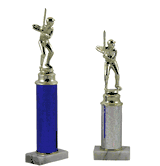
Award suggestions: Baseball trophies and softball trophies for position-specific excellence.
Volleyball Awards
Ace Award: Most service aces. Serving is both skill and pressure management - honor excellence here.
Dig Master: Best defensive player who saved impossible balls and kept rallies alive.
Kill Leader: Player with most kills or offensive points. The finisher.
Best Setter: Quarterback of volleyball. The player who ran the offense and set up attackers for success.
Best Blocker: Dominated at the net defensively. Changed opposing teams' approach based on blocking presence.
Award suggestions: Volleyball trophies for skill categories.
Football Awards
Offensive Player of the Year: Most impactful offensive player. Could be quarterback, running back, or receiver depending on your team's strength.
Defensive Player of the Year: Defensive standout. Tackles, sacks, interceptions, or simply consistently dominant play.
Lineman of the Year: These players rarely get spotlight but make everything else possible. Recognition matters especially here.
Special Teams Player: Excellence in kicking, punting, returning, or special teams coverage.
Award suggestions: Football trophies for position-specific honors.
Stat-Free Recognition: Not all youth leagues track detailed statistics, especially at younger ages. That's fine. Sport-specific awards can still recognize observable skill excellence. "Best Defender" doesn't require tracking blocks and steals - you know who consistently played strong defense. Trust your observations and be prepared to explain your reasoning if questioned.
Age-Appropriate Recognition Strategies
A ten-year-old's recognition needs differ dramatically from a seventeen-year-old's. Adjust your approach based on developmental stage.
Ages 5-8: Everyone Gets Something Meaningful
Young players are building foundational love for sports. Every player gets an award, but make each one personal.
The approach: Create fun, specific categories that celebrate actual behaviors you observed. "Best High-Five Giver." "Always Ready to Play." "Team Cheerleader." "Hardest Worker at Practice." Make it real and make it theirs.
Award type: Small trophies (5-7 inches) or medals with participation ribbons for all. Cost per player: 3-8 dollars.
Presentation: Keep it light and fun. Read each award with enthusiasm. Let kids cheer for each other. Take group photo with all awards.
Ages 9-12: Balance Participation with Achievement
Players at this age understand competition but still need recognition that everyone matters.
The approach: Major awards (MVP, Most Improved) go to clear standouts. Everyone else gets position-specific or contribution-based recognition. "Best Midfielder." "Defensive Anchor." "Practice Player of the Year."
Award type: Top awards get trophies (8-12 inches). Other players get medals or smaller trophies (6-8 inches). Everyone receives something substantial, but there's differentiation. Cost per player: 5-12 dollars depending on award level.
Presentation: Create anticipation. Build up to major awards. Make each player's presentation personal with specific examples of what they contributed.
Ages 13-18: Merit-Based with Comprehensive Recognition
Older players understand that not everyone is MVP. They accept and even expect differentiation based on contribution and performance.
The approach: Major awards for top performers. Category awards for specific excellence. Participation recognition for everyone who finished the season, but it's appropriately smaller than achievement awards.
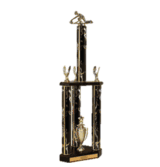
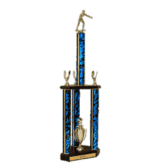
Award type: Championship trophies for team success. Individual trophies (10-15 inches) for major awards like MVP. Medals for category winners. Certificates or small medals for participation. Investment varies widely: 3-20 dollars per player depending on award level.
Presentation: Make it feel important. Formal ceremony. Invite families. Have coaches speak meaningfully about what each award represents. These ceremonies become memories.
Budget Planning That Actually Works
Let's talk money. Team budgets vary wildly from well-funded travel teams to scrappy recreational leagues. Recognition should fit your reality.
Budget Tier 1: 3-5 Dollars Per Player
Reality: Small recreational league, parent-funded, minimal budget.
Strategy: Medals for all, or mix of small trophies for top awards and ribbons for participants. Shop budget medals and look for multi-pack deals.
12-player team cost: 36-60 dollars total.
Pro move: Order one nice team trophy (25-35 dollars) that rotates annually, plus individual medals (2-3 dollars each) for all players.
Budget Tier 2: 8-15 Dollars Per Player
Reality: Standard youth sports budget, combination of fees and fundraising.
Strategy: Differentiated recognition. Top achievers get trophies (10-15 dollars). Other players get substantial medals (4-6 dollars) or smaller trophies (6-10 dollars).
12-player team cost: 96-180 dollars total.
Pro move: Invest more in MVP and Most Improved (15-20 dollar trophies). Balance with quality medals for others.
Budget Tier 3: 15-25 Dollars Per Player
Reality: Well-funded program, competitive team, or combination of league funding and parent contributions.
Strategy: Quality trophies for everyone, differentiated by size and style. Major awards get impressive pieces (20-30 dollars). All players receive meaningful trophies (12-18 dollars).
12-player team cost: 180-300 dollars total.
Pro move: Add sport-specific plaques for major awards. Include perpetual trophy for team achievement. Invest in professional engraving that tells the story.
Bulk ordering strategy: If you coordinate with your entire league (multiple teams), bulk pricing typically saves 15-25%. A 100-player league ordering together gets significantly better per-unit pricing than individual teams ordering separately. Approach your league coordinator about centralized ordering.
The Ceremony That Makes It Matter
How you present awards matters as much as what awards you give. A trophy handed out during equipment return hits different than a trophy presented during an actual ceremony.
Setting and Atmosphere
Location: Make it feel special but not overwhelming. Team's home field or court if accessible. Community center room. Even someone's backyard works if set up properly. The space matters less than the intention.
Setup: Arrange seating for players and families. Create a designated presentation area. Have all awards displayed (covered if you want suspense). Basic setup that signals "this is important" without requiring extensive production.
Timing: 60-90 minutes total. Includes arrival, ceremony, and social time after. Too short feels rushed. Too long loses attention.
Presentation Structure
Opening: Welcome families. Thank them for season support. Set positive tone. 3-5 minutes.
Season highlights: Share memorable moments, funny stories, or season statistics. Remind everyone why the season mattered. 5-8 minutes.
Team recognition: Address whole team. Acknowledge collective accomplishment. Thank players for commitment. 2-3 minutes.
Individual awards: This is the main event. Call each player forward individually. Say their name clearly. Share specific reason they're receiving their award. Hand them trophy/medal. Applause. Photo. Repeat.
Closing: Final thank you. Information about next season if available. Social time begins.
The Personal Touch
Here's what elevates a ceremony from adequate to memorable: specificity. When you present an award, say something real.
Not this: "Sarah gets Most Improved because she got better this season."
This: "Sarah started the season struggling to complete a pass. By playoffs, she was threading balls through defenses and created three of our goals in the championship game. That's what improvement looks like."
Not this: "Jake gets Team Spirit Award for being positive."
This: "We were down 3-0 at halftime against Lincoln. Jake stood up in the huddle and said 'We've got this, one goal at a time.' We came back to tie 3-3. That's Jake. Always believing, always encouraging, always making us better."
Specific examples turn awards into stories. Stories turn ceremonies into memories.
Pre-Write Your Presentations: Don't wing it. Before the ceremony, write 2-3 sentences for each player about why they're receiving their award. Include specific examples or game references. This prep work transforms your presentation from generic to meaningful and ensures you don't blank under pressure.
Common Mistakes That Undermine Recognition
Mistake 1: Making up fake awards to ensure everyone gets something. "Best Left-Handed Thursday Morning Practice Player" is obviously fabricated. Kids know it. Parents know it. You know it. Create real categories based on actual contributions, or scale your recognition appropriately for age group.
Mistake 2: Handing out awards alphabetically. This destroys any sense of occasion or meaning. Build toward major awards. Create flow and anticipation.
Mistake 3: Rushing through presentations to "get through it." If recognition isn't worth doing right, don't do it. Schedule enough time to make each presentation meaningful.
Mistake 4: Only recognizing starters or top players. Your bench players showed up to every practice, traveled to every game, and stayed committed even with limited playing time. That commitment deserves recognition.
Mistake 5: Generic engraving that could apply to anyone. "Great Season 2025" tells no story. "Leading Scorer - 23 Goals - Championship Season 2025" tells a story.
Mistake 6: Waiting too long after season ends. Strike while the season is fresh. Two weeks after the final game is ideal. Two months later and momentum is gone.
Mistake 7: Forgetting parents. Parents invested hundreds of hours driving to practices and games. Quick acknowledgment of their support matters. Doesn't need to be elaborate - just genuine recognition of their role.
Making Recognition Sustainable
If you coach multiple seasons, you need recognition approaches that work year after year without burning out or breaking the bank.
The Annual Template
Create a standard award structure for your team or league that applies every season. Standard categories with room for 1-2 coach's choice awards. This template approach provides consistency while allowing flexibility for unique seasons or players.
Example structure: MVP, Most Improved, Team Spirit, Hustle Award, 2-3 sport-specific skill awards, Coach's Award. Apply this every year with different recipients.
The Perpetual Trophy
Invest in one high-quality trophy that stays with the organization and recognizes annual champions or MVPs. Winner's name gets added to a plaque. Trophy passes to next year's winner. Creates tradition and reduces annual costs since you're only purchasing one major trophy once.
The Parent Committee
Don't shoulder all recognition planning alone. Recruit 2-3 parents to form an awards committee. They handle ordering, budget management, and ceremony logistics. You focus on selecting recipients and preparing presentations. This distributes workload and builds parent investment.
The Multi-Season Discount
If you coach multiple teams or seasons annually, establish a relationship with your award supplier. Explain you're a repeat customer who will order 50-100 pieces throughout the year. Many suppliers offer coach/league accounts with preferential pricing for regular customers.
For comprehensive planning resources, explore the complete sports recognition resource hub with strategies for different sports, age groups, and team budgets.
The Real Goal of Season-End Recognition
Let's be clear about what you're actually accomplishing with thoughtful season-end awards. You're not just satisfying parents or following youth sports tradition.
You're teaching players that effort gets noticed. That contribution matters even when it doesn't show up on a stat sheet. That being part of a team means everyone has value, but excellence still gets honored.
You're creating closure for a season that shaped these kids in ways beyond wins and losses. They learned to work with teammates they didn't choose. They developed skills through repetitive practice. They experienced both success and failure in public. That journey deserves acknowledgment.
You're building something bigger than one season. That trophy goes on a shelf next to last year's award. It becomes part of how kids see their athletic identity. Years from now, adults will remember specific awards they received and what those recognitions meant to them at the time.
The 60 dollars you spent on medals? The two hours you invested in a ceremony? That's not overhead expense. That's investing in why kids play sports in the first place - to feel part of something, to be seen, to know their effort mattered.
Your players worked hard this season. They showed up, pushed themselves, supported teammates, and represented your team. Now celebrate them. They earned it.
Ready to Celebrate Your Season?
Browse our complete selection of soccer trophies, basketball trophies, baseball trophies, softball trophies, volleyball trophies, football trophies, plus sports medals and award ribbons for every recognition need.
Most orders ship within 1-2 business days with free shipping on orders over 99 dollars. Need help planning recognition for your team or league? Our specialists in Michigan and New York understand youth sports requirements and can help you create a recognition strategy that fits your budget and honors every player. Call 1-888-809-8800 for free consultation on bulk pricing and award selection.
Your players gave their best this season. Let's recognize that commitment properly.