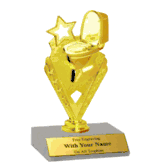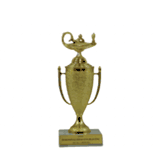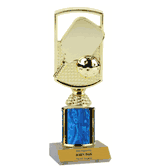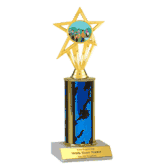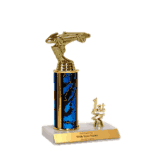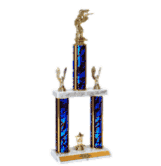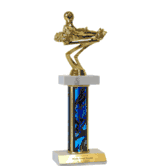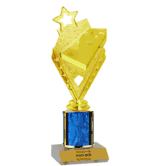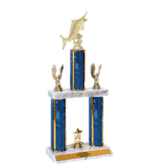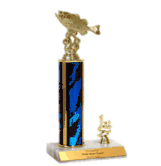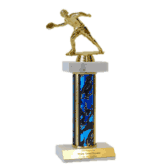

Teaching is like conducting a symphony where every student plays a different instrument, learns at their own pace, and sometimes needs a little extra encouragement to hit the right notes! Creating a classroom environment where students feel motivated, recognized, and excited about learning requires more than just great lesson plans - it demands a toolkit of creative resources, meaningful rewards, and recognition strategies that celebrate both big achievements and small victories.
According to research from Edutopia, students who receive consistent positive recognition and meaningful rewards show 34% higher engagement levels and demonstrate significantly improved academic performance across all subject areas. The magic happens when teachers combine effective instruction with thoughtful motivation strategies that make students feel valued, capable, and excited about their educational journey.
Motivation Science Breakthrough! Educational psychology research reveals that students remember positive classroom experiences for an average of 12 years, and these memories directly influence their lifelong attitudes toward learning, school, and personal achievement. One well-designed reward system can literally change a child's entire educational trajectory!
Whether you're managing a kindergarten classroom full of wiggly five-year-olds or inspiring high school students to tackle challenging concepts, the right combination of resources, recognition, and rewards can transform your classroom into a place where learning feels like an adventure rather than a chore. From simple sticker charts to elaborate point systems, from individual achievements to classroom celebrations, effective student motivation requires understanding what makes kids tick while maintaining the structure and consistency that supports genuine learning. Discover our comprehensive collection of academic resources and tools designed specifically to support teachers in creating engaging, motivating classroom experiences.
Understanding What Really Motivates Students
Student motivation isn't one-size-fits-all magic - it's more like a recipe that needs different ingredients depending on age, personality, learning style, and individual circumstances. Some kids light up for public recognition, while others prefer quiet acknowledgment. Some students chase competition and challenges, while others thrive on collaboration and community achievement.
The key to effective motivation lies in understanding that intrinsic motivation (internal satisfaction from learning and achievement) ultimately matters more than extrinsic rewards (external prizes and recognition), but external motivators can be powerful bridges that help students discover their own internal drive for learning and success.
Age-Appropriate Motivation Strategies
Elementary students typically respond enthusiastically to immediate, tangible rewards that they can see, touch, and share with families. Stickers, certificates, small prizes, and public recognition create excitement while building positive associations with effort and achievement. These young learners need frequent acknowledgment and clear connections between their actions and positive outcomes.
Middle school students navigate complex social dynamics while developing their identities, making peer recognition and choice-based rewards particularly effective. These students appreciate opportunities to earn privileges, select their own rewards from options, and receive recognition that acknowledges their growing independence and unique interests.
High school students often respond best to authentic recognition that connects to their future goals, provides meaningful choices, and acknowledges their developing expertise and leadership capabilities. These young adults appreciate rewards that feel genuine rather than childish while still providing motivation for sustained effort and academic growth.
Choice-Based Reward Menus
Allow students to select from various reward options including extra computer time, homework passes, or special classroom privileges that match their individual preferences!
Collaborative Achievement Goals
Create class-wide challenges where students work together toward shared rewards like pizza parties, extra recess, or special celebration activities!
Individual Progress Tracking
Help students visualize their own growth through charts, portfolios, and self-reflection tools that celebrate personal improvement and effort!
Creative Classroom Reward Systems That Actually Work
The most effective classroom reward systems balance structure with flexibility while maintaining excitement and meaning over time. Students need to understand how rewards are earned, feel that achievements are within reach, and believe that recognition reflects genuine effort and growth rather than just natural ability or luck.
Point and Token Systems
Digital point systems using classroom management apps allow real-time recognition while providing students with immediate feedback about their choices and achievements. These systems work particularly well when students can track their own progress and make decisions about how to spend earned points on various reward options.
Physical token systems using poker chips, play money, or custom classroom currency create tactile experiences that younger students especially enjoy while teaching basic economic concepts about earning, saving, and spending. These systems allow for complex reward structures while maintaining simplicity in daily operations.
Collaborative point earning, where individual achievements contribute to class-wide goals, builds community while maintaining individual accountability. Students learn that their personal efforts benefit everyone while still receiving recognition for their individual contributions and growth.
Recognition and Achievement Celebrations
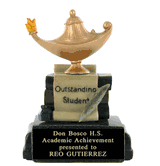
Student of the Week programs provide opportunities for in-depth recognition that goes beyond academic achievement to include character, effort, improvement, and unique contributions to classroom community. These programs work best when selection criteria rotate to ensure different types of students receive recognition throughout the year.
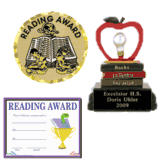
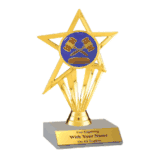
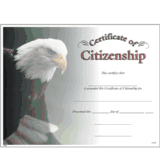
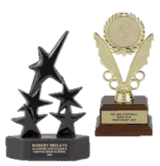
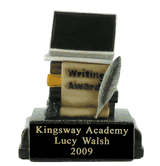
Achievement certificates and awards create tangible recognition that students can take home and share with families while building portfolios of their school success. Quality certificates with specific achievement details become treasured keepsakes that remind students of their capabilities and growth over time.
Classroom celebration events for major milestones, improved test scores, or successful completion of challenging projects create shared positive memories while acknowledging collective effort and achievement. These celebrations reinforce that learning is enjoyable and that hard work leads to success worth celebrating.
Tried-and-True Classroom Reward Ideas
- Homework Passes: Earned privileges that students value highly and use strategically
- Special Helper Roles: Leadership opportunities that build responsibility and pride
- Extra Choice Time: Freedom to select preferred activities during designated periods
- Positive Parent Contact: Phone calls or notes home celebrating student achievements
- Lunch with Teacher: One-on-one time that builds relationships and provides individual recognition
Academic Achievement Recognition That Inspires
Academic recognition works best when it celebrates both outcomes and processes, acknowledging not just who got the highest grade but also who showed the most improvement, demonstrated persistence through challenges, or helped classmates understand difficult concepts. Effective academic recognition builds growth mindset while maintaining high expectations for all students.
Subject-Specific Recognition Programs
Reading achievement programs that celebrate books completed, genres explored, and reading growth create enthusiasm for literacy while accommodating different reading levels and interests. These programs work particularly well when students can share book recommendations, participate in reading challenges, and see their progress visualized through charts or displays.
Math mastery recognition acknowledges students who demonstrate conceptual understanding, problem-solving creativity, and willingness to tackle challenging mathematical thinking. Math awards that focus on process rather than just correct answers encourage risk-taking and mathematical reasoning that supports long-term success.
Science exploration awards recognize curiosity, hypothesis formation, careful observation, and scientific thinking rather than just memorization of facts. These recognition programs encourage the questioning and experimentation that characterize authentic scientific learning and discovery.
Writing achievement recognition celebrates creativity, improvement in mechanics, powerful expression, and willingness to revise and improve work. Writing awards that acknowledge various types of excellence help students understand that good writing serves many purposes and takes many forms.
Study Skills and Learning Process Recognition
Organization awards acknowledge students who maintain neat notebooks, complete assignments consistently, and demonstrate responsible learning habits that support academic success. These awards teach that success requires good systems and personal responsibility rather than just natural ability.
Collaboration recognition celebrates students who work effectively in groups, help classmates understand concepts, and contribute positively to classroom learning communities. These awards acknowledge that learning is often social and that helping others helps everyone succeed.
Growth mindset awards recognize students who embrace challenges, learn from mistakes, and demonstrate that intelligence can be developed through effort and good strategies. These awards help students understand that struggle is part of learning rather than a sign of inability.
Recognition Impact Research! Studies from the American Psychological Association show that students who receive specific, process-focused recognition demonstrate 41% greater persistence when facing academic challenges and develop stronger beliefs in their ability to improve through effort and strategy use!
Behavior and Character Rewards That Build Community
Character recognition helps students understand that how they treat others and contribute to classroom community matters as much as academic achievement. Effective behavior rewards focus on positive choices rather than just absence of problems while teaching students about empathy, responsibility, and citizenship.
Positive Behavior Support Systems
Kindness recognition programs acknowledge students who include others, show empathy, and create welcoming classroom environments for everyone. These programs help students understand that kindness is a choice that requires effort and courage while building classroom communities where everyone feels valued and included.
Responsibility awards celebrate students who take care of classroom materials, follow through on commitments, and demonstrate trustworthiness in both academic and social situations. These awards teach that reliability is a valuable trait that benefits both individuals and communities.
Leadership recognition acknowledges students who help resolve conflicts, guide group work effectively, and demonstrate positive influence on their classmates. Leadership awards help students understand that leadership means serving others rather than just being in charge.
Social Skills Development Recognition
Conflict resolution recognition celebrates students who help mediate disagreements, find solutions that work for everyone, and demonstrate that problems can be solved through communication and compromise. These awards teach valuable life skills while improving classroom climate.
Inclusion awards acknowledge students who actively work to ensure everyone feels welcome, invite others to join activities, and celebrate differences rather than using them to exclude or judge others. These awards help build classroom communities that support all learners.
Respect recognition celebrates students who listen carefully to others, treat classmates and teachers with dignity, and understand that everyone deserves courtesy regardless of differences in ability, background, or opinion.
Effective Reward System Benefits
- Increases student engagement and motivation for learning
- Builds positive classroom culture and community connections
- Teaches goal-setting and self-monitoring skills
- Provides opportunities for individual and group recognition
- Creates structure that supports diverse learning needs
Implementation Considerations
- Requires consistent management and regular system updates
- Must balance individual and group recognition fairly
- Need to maintain excitement without creating reward dependence
- Time investment for tracking progress and providing recognition
- Budget considerations for tangible rewards and recognition materials
Budget-Friendly Recognition That Feels Special
Creating meaningful student recognition doesn't require expensive budgets when creativity, personal attention, and genuine appreciation guide reward selection and recognition planning. The emotional impact and sense of being valued matter infinitely more than monetary cost in creating positive motivation that students remember and treasure.
Creative No-Cost Recognition Ideas
Personalized notes and certificates featuring specific achievements, character observations, or growth acknowledgments create meaningful recognition that students save and treasure. Handwritten notes that describe exactly what students did well provide powerful feedback while showing that teachers notice and value individual effort and progress.
Special privileges like line leader, teacher assistant, or technology monitor provide recognition through responsibility while giving students opportunities to contribute meaningfully to classroom operations. These privileges feel valuable to students while helping teachers manage classroom tasks and building student investment in community success.
Public recognition through morning announcements, classroom displays, or positive phone calls home extends appreciation beyond the classroom while building family awareness of student success and school engagement. Public recognition helps students feel pride while strengthening home-school connections.
Low-Cost High-Impact Rewards
Sticker and certificate programs provide affordable recognition that accumulates into larger rewards while maintaining daily acknowledgment of effort and achievement. Quality stickers and attractive certificates create tangible recognition that students can collect, display, and share with families throughout the school year.
Classroom celebration supplies for pizza parties, movie afternoons, or special snack times create shared positive experiences that build community while celebrating collective achievement and individual contributions. These celebrations create positive memories associated with hard work and success.
Educational reward activities like extra computer time, library visits, or choice reading periods provide recognition through preferred learning opportunities while supporting continued academic growth and engagement. These rewards feel valuable while extending rather than interrupting educational focus.
Student Motivation Success Formula
Clear Expectations + Consistent Recognition + Meaningful Rewards + Genuine Relationships = Motivated Learners!
Technology Tools for Modern Classroom Management
Digital tools can streamline recognition systems while providing real-time feedback and data that help teachers understand what motivates individual students. Technology solutions work best when they enhance rather than replace personal relationships and meaningful recognition experiences.
Digital Point and Behavior Tracking
Classroom management apps like ClassDojo, Seesaw, and Google Classroom provide platforms for real-time behavior tracking, parent communication, and student portfolio development. These tools allow immediate recognition while creating records of growth and achievement that support ongoing motivation and family engagement.
Gamification platforms that turn learning into quest-based adventures appeal to students who enjoy video games while providing structured progression through academic and behavioral goals. These systems work particularly well for students who respond to competition, levels, and achievement badges.
Student self-monitoring tools that allow learners to track their own progress, set personal goals, and reflect on their growth build autonomy while maintaining accountability. Self-monitoring systems help students develop metacognitive skills while reducing teacher workload for progress tracking.
Communication and Documentation Tools
Parent communication platforms provide easy ways to share positive news about student achievement while building family partnerships that support student success. Regular positive communication helps families understand school expectations while celebrating progress and encouraging continued effort.
Digital portfolio systems allow students to collect and showcase their best work while reflecting on their learning journey throughout the school year. Portfolio systems help students see their own growth while providing authentic assessment opportunities that complement traditional grades.
Recognition automation tools can schedule positive emails, generate certificates, and track reward distribution while maintaining the personal touch that makes recognition meaningful. Automation handles logistics while freeing teachers to focus on relationship building and individualized recognition.
Creating Sustainable Motivation Systems
The most effective classroom motivation systems grow and evolve with students while maintaining core principles that support long-term engagement and intrinsic motivation development. Sustainable systems balance structure with flexibility while helping students gradually internalize motivation for learning and positive behavior.
Building Intrinsic Motivation
Choice and autonomy opportunities help students develop ownership of their learning while maintaining structure that supports success. When students can choose topics for projects, select from reward options, or set personal goals, they develop internal motivation that extends beyond external recognition systems.
Competence building through scaffolded challenges ensures that students experience success while being appropriately challenged to grow. Recognition systems that celebrate progress rather than just perfection help students understand that learning involves struggle and that improvement is always possible.
Connection and belonging initiatives help students feel valued as individuals while contributing meaningfully to classroom community. When students feel connected to their teachers and classmates, they develop motivation to participate and succeed that extends beyond individual rewards.
Gradual Release of External Supports
Fading external rewards over time helps students transition from external motivation to internal drive while maintaining the structure needed to support continued growth. Effective systems gradually increase expectations while providing recognition for more sophisticated achievements and behaviors.
Student leadership opportunities allow motivated learners to help manage recognition systems while developing responsibility and contributing to classroom community. Peer recognition programs and student-led celebrations help distribute motivation support while building leadership skills.
Self-reflection and goal-setting activities help students understand their own learning processes while developing the metacognitive skills that support lifelong learning and achievement. When students can identify what helps them succeed, they become partners in their own motivation and growth.
The best teachers understand that motivation is not about bribing students to learn, but about creating classroom environments where students discover their own capacity for growth, achievement, and contribution to learning communities that celebrate everyone's success.
Professional Development and Resource Support
Effective student motivation requires ongoing learning and adaptation as teachers discover what works best for their unique student populations and classroom contexts. Professional development resources help teachers refine their approach while connecting with research-based strategies and peer expertise.
Research-Based Strategy Resources
Educational research databases provide access to current studies about motivation, recognition, and classroom management while helping teachers understand the science behind effective practices. Staying current with research helps teachers make informed decisions about which strategies to implement and how to adapt them for specific contexts.
Professional learning communities allow teachers to share successful strategies, troubleshoot challenges, and collaborate on motivation system development. Peer learning provides practical wisdom while building professional networks that support continued growth and innovation.
Conference and workshop participation provides opportunities to learn from experts while networking with other educators who share similar challenges and goals. Professional development events offer inspiration and practical strategies while helping teachers avoid isolation and burnout.
Implementation Support and Adaptation
Administrative support for motivation initiatives helps ensure that recognition systems align with school-wide goals while providing resources and backup when challenges arise. Administrative understanding and support make motivation systems more sustainable and effective.
Family engagement strategies help parents understand and support classroom motivation systems while extending recognition and encouragement into home environments. When families understand how to support motivation systems, students receive consistent messages about the value of effort and achievement.
Continuous improvement processes help teachers adapt motivation systems based on student feedback, achievement data, and changing classroom dynamics. Regular reflection and adjustment keep motivation systems fresh and effective while preventing stagnation and declining engagement.
Teacher resources for student motivation represent investment in both immediate classroom management and long-term student development while creating positive learning environments where all students can discover their potential and develop love for learning that extends far beyond formal education.
Whether implementing simple recognition systems or comprehensive motivation programs, the essential element remains building authentic relationships with students while providing recognition that celebrates effort, growth, and positive contribution to learning communities where everyone can succeed and thrive.
From daily acknowledgment to major celebrations, from individual recognition to classroom community building, effective motivation strategies help teachers create educational environments where students feel valued, capable, and excited about learning while developing the intrinsic motivation that supports lifelong success and contribution.
Professional guidance and quality resources help teachers navigate the complex balance between external recognition and intrinsic motivation development while creating classroom environments that support diverse learners and maintain high expectations for academic and character growth. Partner with experienced educational specialists who understand child development and motivation science while providing practical tools that enhance rather than complicate effective teaching practice.