

Congratulations on volunteering to coach T-ball! You're about to embark on a journey where "running the bases" means chasing butterflies, "catching fly balls" involves more dodging than catching, and where the highlight of practice might be snack time. Welcome to the wonderful chaos of coaching 4-6 year olds in their first organized sport experience!
T-ball coaching requires patience, creativity, and the ability to tie approximately 47 shoes per practice while simultaneously preventing small humans from building dirt castles in the pitcher's mound. According to Little League International, T-ball introduces over 2 million children annually to baseball fundamentals while teaching essential life skills like teamwork, following directions, and the critical importance of post-game juice boxes.
First-Time Coach Reality Check! At your first practice, expect at least one player to run to third base first, another to bring their favorite stuffed animal to play shortstop, and someone to ask mid-game if they can go home to watch cartoons. This is completely normal! Your success will be measured in smiles, not scoreboards!
Understanding Your T-Ball Players
T-ball players inhabit a magical world where attention spans last approximately 8 seconds, every dandelion demands immediate investigation, and the most important position on the field is "closest to mom." Understanding developmental capabilities helps set realistic expectations for what your tiny athletes can actually accomplish.
What 4-6 Year Olds Can Actually Do
Most T-ballers can follow one-step directions (sometimes), run in generally the right direction (occasionally), and maintain focus for about as long as it takes to sneeze. They're developing gross motor skills, learning social interaction, and discovering that baseball gloves make excellent hats when worn incorrectly.
Physical abilities vary dramatically at this age. Some players throw like future major leaguers while others haven't figured out that releasing the ball is part of throwing. Some run like gazelles while others have just mastered walking without falling. Embrace the beautiful chaos!
Emotional regulation remains a work in progress. Expect tears over struck-out butterflies, meltdowns when someone else gets the pink helmet, and pure joy when they successfully hit the ball off the tee (even if they then run to third base first). Your calm response to these moments shapes their sports experience.
Pro Tip: Always have band-aids ready. Not because injuries are common, but because T-ballers believe band-aids possess magical healing powers for both real and imaginary boo-boos. A strategically placed band-aid can turn tears into smiles faster than you can say "play ball!"
Essential T-Ball Practice Drills
Successful T-ball drills combine skill development with entertainment value, because boring drills lead to mutiny faster than you can spell "fundamentals." Every drill should feel like a game, include movement, and last no longer than a commercial break.
Hitting Drills That Actually Work
Traffic Light Swing Practice
Setup: Players line up with bats (plastic works great for safety)
How it works: Call out "green light" for full swings, "yellow light" for slow-motion swings, "red light" to freeze mid-swing. This teaches swing mechanics while keeping everyone engaged through the game element.
Why it works: Kids love traffic light games, and the varying speeds help develop muscle memory without boring repetition.
Bubble Pop Batting
Setup: Blow bubbles near the tee area
How it works: Players try to pop bubbles with their bats using proper swing technique. Graduate to hitting actual balls once they master bubble destruction.
Why it works: Focuses on hand-eye coordination without pressure, plus bubbles make everything more fun!
Fielding Drills for Tiny Gloves
Alligator Chomp Catching
Setup: Roll soft balls to players
How it works: Teach the "alligator chomp" - glove on ground (bottom jaw), bare hand on top (top jaw), chomp the ball! Make alligator noises mandatory for full effect.
Why it works: Creates memorable visual and audio cues for proper ground ball technique.
Bucket Brigade Relay
Setup: Place buckets at each base
How it works: Players field balls and run to drop them in buckets. First team to fill all buckets wins! Mix in different movement styles - hop to first, skip to second, crab walk to third.
Why it works: Combines fielding, running, and silliness while teaching base locations.
Base Running Adventures
Animal Race Base Running
Setup: Standard diamond setup
How it works: Call out different animals for each base - "Hop like a bunny to first! Gallop like a horse to second! Waddle like a penguin to third! Run like a cheetah home!"
Why it works: Teaches base sequence while keeping movement fun and varied. Plus, penguin waddles are hilarious.
Drill Duration Rule: Keep drills under 5 minutes each. T-ballers have the attention span of goldfish at a disco. Rotate activities frequently, and always end on a high note when everyone's still having fun!
Planning Your First Practice
Your first practice sets the tone for the entire season. Aim for organized chaos rather than perfect execution. Success means everyone wants to come back, not mastering the infield fly rule.
60-Minute Practice Blueprint
0-5 minutes: Arrival chaos and shoe-tying ceremony
5-10 minutes: Team cheer and "everybody run to that tree and back!"
10-20 minutes: Catching/throwing with lots of praise for effort
20-30 minutes: Hitting off tees (everyone gets multiple turns)
30-40 minutes: Base running game (usually devolves into gleeful chaos)
40-50 minutes: Simple scrimmage where everyone wins
50-55 minutes: Cleanup and "what was your favorite part?"
55-60 minutes: Snack distribution and parent retrieval
Equipment Essentials
Start with basics: tees, soft balls (lots - they disappear mysteriously), plastic bats for practice, and more patience than you knew existed. Color-coded equipment helps ("Everyone with blue gloves to first base!"). Accept that equipment will be worn creatively - helmets become chairs, gloves become puppets.
Safety equipment matters even when the ball travels approximately 3 miles per hour. Helmets prevent bonks from enthusiastic teammates more than pitched balls. Have extras because someone always forgets, and sharing helmets leads to commentary about cooties.
Game Day Management
T-ball games resemble organized chaos where the score doesn't matter, everyone bats every inning, and victory is measured by post-game snack quality. Your role involves herding cats while maintaining the illusion of baseball.
Game Day Survival Checklist
- Extra everything (gloves, helmets, patience, sanity)
- First aid kit (mostly for band-aid distribution)
- Lineup that ensures equal playing time and minimal tears
- Positive phrases ready ("Nice try!" "Great effort!" "Almost!")
- Snack coordination spreadsheet (never underestimate snack importance)
- Camera for capturing the adorable chaos
- Backup balls (they grow legs and wander off)
Managing Playing Time and Positions
Rotate positions frequently because attention spans expire quickly and everyone deserves a chance to pick dandelions in the outfield. Create a position called "pitcher's helper" for the kid who really wants to pitch but can't reach the mound.
The "everyone bats" rule prevents meltdowns and ensures maximum participation. Batting order should rotate each game so everyone gets to be cleanup hitter and lead-off superstar. Celebrate every hit like it's a World Series grand slam.
Working With T-Ball Parents
T-ball parents range from former college athletes convinced their child is the next Babe Ruth to adults who think a "double play" is something that happens at daycare. Managing parent expectations requires diplomacy, humor, and occasionally hiding in the equipment shed.
Setting Realistic Expectations
Send a welcome letter explaining that T-ball focuses on fun, fundamentals, and friendship rather than fierce competition. Mention that practices might include spontaneous dance parties and that catching butterflies counts as fielding practice.
Establish the "24-hour rule" - parents should wait a day before discussing concerns, allowing emotions to settle and perspective to return. Most T-ball "crises" resolve themselves once everyone realizes that mixing up first and third base isn't career-ending.
Parent Volunteer Roles
Snack coordinator (most important position), base coach (must enjoy being run into), team photographer (chaos documentarian), and equipment manager (ball hunter extraordinaire).
Communication Keys
Weekly emails with practice plans, game times, and snack schedules. Include funny moments from practice to maintain perspective and build community.
Boundary Setting
No coaching from the stands, no negative comments about any player, and mandatory celebration of effort over outcomes. The loudest cheer should be for the kid who finally remembered which way to run!
Creating Positive Team Culture
T-ball success means everyone wants to play again next year, not batting averages or championship trophies. Focus on creating memories, building confidence, and ensuring every player feels valued regardless of their ability to hit, catch, or run in the correct direction.
Celebration and Recognition Ideas
Create special recognition moments beyond traditional awards. "Practice Player of the Day" for best listening, "Hustle Award" for enthusiastic effort, or "Best Dugout Dance" for keeping spirits high. These moments matter more than you might think.
Motivational Awards That Build Confidence
Recognition in T-ball isn't about who hits the farthest or runs the fastest - it's about celebrating effort, improvement, and the courage to try. Weekly awards during practice keep motivation high: "Star Listener," "Super Helper," or "Brave Batter" (for the kid who was scared of the ball but stood in the batter's box anyway).
Consider using free printable award certificates for practice achievements. These cost nothing but mean everything to a 5-year-old who gets to take home a "World's Best High-Fiver" certificate. Print them on colorful paper, add stickers, and watch faces light up!
Mid-season recognition maintains enthusiasm when the novelty wears off. Create a "T-Ball Hall of Fame" bulletin board with photos of weekly award winners. Kids love seeing their picture displayed, and parents appreciate the recognition of their child's efforts.
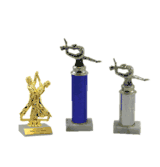
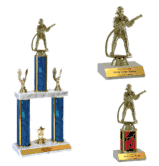
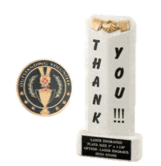
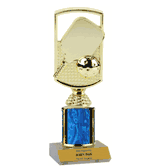
End-of-season celebrations should recognize every player's unique contribution. Whether ordering personalized T-ball trophies or medals, ensure every child receives recognition that celebrates their participation and growth. Physical awards they can keep forever commemorate their first sports experience.
Team traditions build lasting memories. Create a team cheer that's slightly ridiculous, establish silly warm-up rituals, or institute "Magic Socks Monday" where everyone wears their silliest socks. These traditions matter more than perfect fundamentals.
Common T-Ball Challenges and Solutions
Every T-ball season presents unique challenges, from the player who cries when their balloon flies away to the one convinced that sliding into every base is mandatory. Anticipating common issues helps maintain sanity.
When Things Go Wonderfully Wrong
The player who won't leave their parent: Start with them as your "special assistant coach" until comfort grows. The child afraid of the ball: Use softer balls, bubbles, or balloons until confidence builds. The perfectionist who melts down over mistakes: Celebrate mistakes as learning opportunities and share your own silly errors.
Attention wanderers need special jobs - equipment helper, line leader, or cheerleader. The child who won't stop talking about dinosaurs can be the "T-Rex throwing champion." Work with their interests rather than against them.
Rain delays and cancelled games require backup plans. Indoor practice at a gym, baseball movie party, or team pizza gathering maintains momentum when weather doesn't cooperate. Sometimes the best practices don't involve any baseball at all.
Your Secret Weapons for Success
Master the art of specific praise: "I love how you kept your eye on the ball!" works better than generic "good job!" Learn every player's name immediately - being recognized individually matters enormously at this age.
Develop your silly side. Be willing to demonstrate the "wrong way" for laughs, create ridiculous team cheers, and occasionally let them catch you instead of the ball. Your willingness to be playful sets the tone for fun.
Remember that every professional baseball player started somewhere, probably picking dandelions in right field while their coach tied someone else's shoes. Your patient guidance through this adorable chaos creates the foundation for lifelong sports enjoyment.
Keep perspective when your carefully planned practice devolves into interpretive dance or butterfly observation. These moments become the stories families treasure years later. You're not just teaching baseball; you're creating childhood memories.
Most importantly, end every practice and game the same way - with genuine enthusiasm for their effort and excitement about seeing them next time. Your positive energy becomes their love for the game, regardless of whether they continue playing baseball or discover their passion lies elsewhere.