
Science Fair Excellence: Recognition Strategies That Inspire the Next Generation of Innovators
Published: March 4, 2026
Read Time: 7 minutes
Science Fair
Student Recognition
STEM Education
School Events
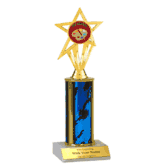
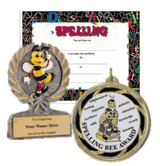
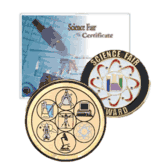
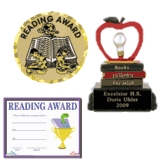
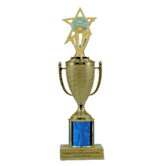
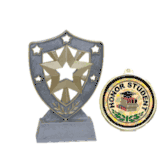
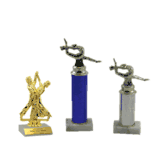
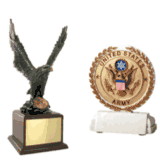
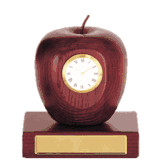
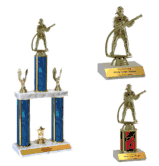
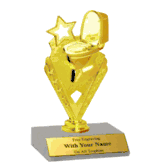
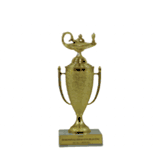
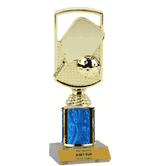
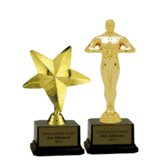
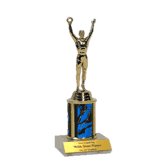
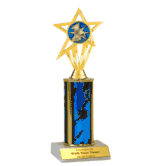
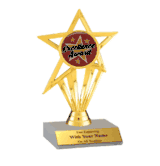
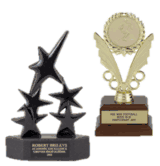
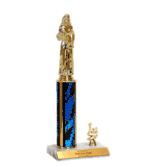
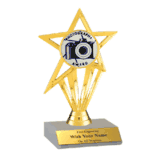
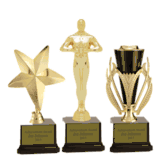
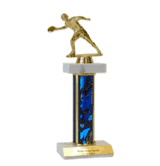
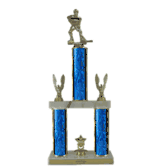
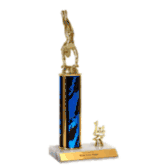
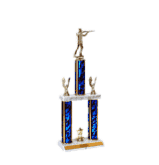
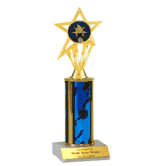
A student spends six weeks designing an experiment, constructing a display board (with only moderate parental interference), rehearsing their presentation in the bathroom mirror, and mentally preparing for the judge who will inevitably ask the one question they did not practice. On science fair day, they stand beside their project for hours explaining their process to strangers. They learn more from that single experience than from months of standard classroom instruction. What happens in the moments after judging matters enormously. Recognition done well validates every hour of effort, builds confidence that propels students toward future scientific challenges, and tells them that rigorous thinking is worth celebrating. Recognition done poorly or skipped entirely sends the opposite message: that effort goes unnoticed and scientific curiosity is unremarkable. And nobody wants to be the program that accidentally taught kids science is thankless. This guide helps science fair organizers, school administrators, and parent volunteers design recognition programs that inspire students at every level. From competitive award structures that reward excellence to inclusive categories that celebrate every participant, the right recognition program transforms science fairs from annual obligations into experiences students remember and return to with even greater ambition. Why Science Fair Recognition Deserves More Attention Than It GetsMost science fair organizers spend enormous energy on logistics: securing gym space, recruiting judges, managing registration, and tracking down someone to bring extension cords. Recognition is often treated as an afterthought, handled with leftover ribbon stock or certificates printed at 11pm the night before. This imbalance misses the most important opportunity the entire event creates. According to Society for Science, which has operated the nations most prestigious science competitions for over seventy years, the moments when young researchers receive meaningful acknowledgment for their work are among the most powerful motivators for continued scientific engagement. Students who feel genuinely celebrated for scientific effort are significantly more likely to pursue advanced STEM coursework, enter future competitions, and develop long-term identities as scientists and innovators. Recognition also communicates institutional values. When schools invest in quality awards and thoughtful presentation ceremonies, they signal that scientific thinking matters. When recognition is minimal or generic, that signal reverses. Students absorb these messages whether adults intend them or not. A well-executed recognition program is curriculum as much as it is ceremony. The good news is that meaningful science fair recognition does not require dramatic restructuring. Organizers who understand what students need from recognition and apply a few strategic principles create dramatically better outcomes with modest additional planning investment. Building a Competitive Award Structure That Motivates Without DiscouragingThe most common science fair recognition mistake is designing competitive awards that celebrate only the top finishers while leaving the majority of participants feeling invisible. A student who finishes fifth in a twelve-person category did impressive work. A student whose project was technically sound but whose presentation needed development learned important skills. Both deserve acknowledgment calibrated to their achievement. Traditional Placement AwardsFirst, Second, and Third Place by DivisionPlacement awards organized by grade level or subject division allow students to compete against developmentally appropriate peers. A fourth grader winning first place in the elementary division receives meaningful recognition without being overshadowed by middle school entries. Dividing awards by category such as biology, chemistry, engineering, and environmental science creates additional winning opportunities while reinforcing that different types of scientific thinking all deserve celebration. Honorable Mention RecognitionStrong entries that do not place in top three still deserve formal acknowledgment. Honorable mention awards given to the next tier of finishers communicate that near-miss performances are recognized and valued. Students who receive honorable mention often return the following year with refined projects, motivated precisely because official recognition acknowledged they were close to the top. Best in Show OverallA single grand prize awarded across all divisions creates the events most prestigious recognition moment. Best in Show winners receive the maximum ceremony and celebration the event can offer. This award generates genuine excitement when announced last, after divisional winners have already been recognized, building anticipation throughout the ceremony. Special Recognition CategoriesSpecial awards recognize qualities that standard placement judging does not capture. These categories can be sponsored by local businesses, parent organizations, or community partners, creating both recognition opportunities and community investment in student science. Most Creative Approach AwardSome students design experiments that are genuinely novel in their thinking even when execution could be stronger. Maybe the idea was brilliant and the data was messy. Maybe the hypothesis was the most interesting thing at the fair even if the conclusion was inconclusive. Recognizing creative approach separately from results communicates that innovative thinking is valued alongside technical precision, and it rewards the students who took real scientific risks. Those students deserve encouragement, not just a participation certificate. Best Research and Documentation AwardThe scientific method depends on thorough documentation. Students whose research logs, data collection, and bibliography demonstrate exceptional rigor deserve specific recognition even when their experimental results were inconclusive. Science is built on careful documentation, and awards that celebrate this quality reinforce essential habits. Most Improved from Previous Year AwardStudents who competed previously and came back with a substantially stronger project demonstrate exactly the growth mindset science education aims to develop. They did not quit after a tough first year. They analyzed what went wrong, improved their methodology, and showed up again. That deserves recognition on its own terms, not just a comparison to students who may have walked in with more natural advantages. Community Impact AwardProjects that address local environmental conditions, health challenges, or community needs deserve recognition for connecting scientific inquiry to real world application. This award celebrates students who understood that science exists to solve human problems, not just to satisfy theoretical curiosity. Outstanding Presentation AwardScientific communication is a distinct skill separate from experimental design. Students who explain their work clearly, answer judge questions with confidence, and present data accessibly deserve recognition for communication excellence. This award validates an often-overlooked component of scientific practice. Pro Tip: Design Award Categories Before Recruiting JudgesMost organizers recruit judges first and design award categories later. Flip that. When award categories are established in advance, judges receive specific scoring criteria aligned with what the event actually intends to celebrate. Judges evaluating Best Research and Documentation know to look at lab notebooks and citation quality. Judges evaluating Most Creative Approach weight novelty differently than technical precision. Defined categories produce more defensible results, fewer hallway debates after the ceremony, and recognition that genuinely reflects what happened at the fair. Inclusive Recognition That Celebrates Every ParticipantCompetitive science fairs serve an important purpose, but inclusive recognition running alongside competitive awards ensures that every student who invested effort receives genuine acknowledgment. Participation recognition done well avoids empty trophies that students immediately discard and instead creates meaningful keepsakes that validate real effort. Participation Certificates With Specific AcknowledgmentGeneric participation certificates that say only Participated in Science Fair communicate minimal value. Certificates that include the student's name, their project title, the specific skills demonstrated such as data analysis, creative hypothesis, or experimental design, and the year create documents students actually keep. Specificity transforms participation acknowledgment from obligatory paperwork into genuine recognition of individual contribution. Project Category RecognitionRecognizing students within their specific subject area such as biology, environmental science, physics, or engineering creates additional acknowledgment layers without requiring more competitive placement awards. A student who did not place competitively might receive a Subject Area Recognition certificate that validates their choice of topic and contribution to that field of inquiry. Effort and Process AwardsAwards that celebrate visible effort, such as Most Detailed Display, Most Complex Experiment Attempted, or Most Questions Asked by Visitors, recognize qualities that competitive scoring does not capture. These awards require organizers to observe students during the fair itself rather than only during formal judging, creating opportunities to notice contributions that standard evaluation misses. Recognition Planning Timeline for Science Fair OrganizersEight Weeks Before the Fair: Establish competitive award categories and special recognition awards. Identify sponsors for special awards if applicable. Begin designing or ordering awards to ensure sufficient production lead time. Four Weeks Before: Finalize judge recruitment and share award category criteria with judges. Design scoring rubrics aligned with specific recognition categories. Prepare participation certificate templates with project-specific fields. One Week Before: Confirm all award inventory, verify engraving or customization orders, and prepare ceremony program listing all recognition categories. Brief ceremony presenters on recognition order and scripts. Day of Fair: Organize awards by category backstage before ceremony begins. Assign a dedicated coordinator to manage award distribution flow so presentation maintains pace and energy throughout ceremony. Choosing the Right Awards for Science Fair RecognitionAward selection communicates event quality as powerfully as any other design choice. Students absorb implicit messages about how much their work is valued from the physical quality of recognition they receive. Medals for Competitive ExcellenceScience fair medals are among the most beloved recognition formats for student competitions. Students wear them home, show family members, and keep them for years. Gold, silver, and bronze medal hierarchies immediately communicate competitive standing in a format universally understood across cultures and age groups. Medals with science-themed imagery such as microscopes, atoms, or laboratory equipment reinforce the specific achievement being recognized. Explore our full selection of science fair medals designed specifically for student recognition programs. Trophies for Major AwardsBest in Show, division winners, and special category winners deserve the elevated presentation that trophies provide. A trophy occupies physical space in a student's room, on a family shelf, or in a school display case in a way that certificates and ribbons cannot replicate. For major competitive recognitions, trophy quality should reflect the significance of the achievement. Students who win Best in Show should receive an award that looks and feels like the highest honor in the room. Certificates for Broad AcknowledgmentCertificates work beautifully for participation recognition, honorable mentions, and special category awards when budget or logistics make individual trophies impractical for every recipient. The key is certificate quality and specificity. Heavy card stock, professional printing, and project-specific language transform certificates from afterthoughts into documents worth displaying. Our customizable certificate options allow organizers to create professional recognition for every participant level. Ribbons for Immediate Visual RecognitionAward ribbons pinned to display boards during the fair itself create immediate visual recognition before formal ceremony. Students wearing ribbons on their boards attract more visitor attention, which generates additional conversation practice and confidence building throughout the event day. Ribbons also allow spectators including parents, teachers, and younger students to see which projects received recognition, generating natural conversations about scientific merit and achievement. Pro Tip: Announce Winners Strategically During CeremonyThe most effective science fair ceremonies build from participation recognition toward competitive awards, saving the highest honors for last. Open with inclusive participation acknowledgment so every student feels celebrated before competitive results are announced. Work through special category awards, then divisional placements, then close with Best in Show as the culminating moment. This structure means students who did not place competitively have already experienced genuine celebration before they find out the competitive results, which prevents the all-too-common scenario where half the room mentally checks out the moment they realize their name is not coming up. Recognition Strategies That Build Long-Term Science Fair CultureIndividual recognition transforms students in the moment. Systematic recognition strategies build school science culture over time, increasing participation, raising entry quality, and developing the kind of community investment that makes a science fair feel like a real event rather than a Tuesday obligation. Create a Science Fair Hall of Fame: A permanent display in the school building featuring past Best in Show winners with their project titles and photos creates aspirational recognition that motivates current students. Younger students walking past the display see peers who achieved something memorable. The possibility of joining that display becomes a long-term motivational force more powerful than any single year's trophy. It also makes for a genuinely interesting hallway, which is saying something. Celebrate at Multiple Venues: Recognition should not stop when the gym lights go off. Share award recipients in school newsletters, on school websites, in morning announcements, and at subsequent school board meetings. When a student's name gets called over the intercom on Monday morning with a specific mention of their project, the recognition ripples through the entire school community in ways that the private ceremony alone never could. Connect Winners to Future Opportunities: Students who win competitive science fair awards are often eligible for regional, state, and national competitions they may not even know exist. Part of meaningful recognition is opening doors. Organizers who connect local winners to information about advancing to higher competition levels turn a ribbon into a genuine career pathway moment. That is a pretty remarkable return on a five-minute conversation. Feature Student Work Year-Round: Display winning project boards, photographs, and award certificates throughout school common areas after the fair concludes. Rotating displays of strong scientific work communicate that achievement is celebrated all year, not just on the one day when gym tables are folded out and parents are wandering around looking confused. Recognize Mentors and Teachers: Students do not arrive at excellent science fair entries independently, no matter what the display board might suggest. Teachers who provide guidance, parents who help with materials, and mentors who sharpen methodology all contribute meaningfully. Acknowledging these supporters during the ceremony creates community investment in the program and models that scientific achievement is collaborative work. Build a Science Fair Recognition Program Worth RememberingThe students standing beside their display boards on science fair day are doing something harder than it looks: they formed a question, designed a test, gathered data, drew a conclusion, and then stood up in front of strangers to defend every step of that process. That deserves more than a generic ribbon and a thank-you-for-participating. Recognition that genuinely celebrates that effort tells students those habits matter, and that the people around them are actually paying attention. From competitive medals that mark excellence to participation certificates that acknowledge every student who took the challenge seriously, the right recognition program turns science fair day into a memory that lasts a lot longer than the project does. Visit TrophyCentral.com for science fair medals, trophies, certificates, and ribbons designed specifically for student recognition programs. Our recognition specialists help schools and organizations build award programs that inspire students to return next year with even greater ambition. Call 1-888-809-8800 to speak with recognition specialists about building your science fair award program. |

FREE ENGRAVING ON
TROPHIES & PLAQUES

FAST, RELIABLE & SECURE
SHOP WITH CONFIDENCE

FREE ECONOMY SHIPPING OVER $99
ON 1000's OF SELECT TROPHIES & AWARDS

QUALITY CUSTOM AWARDS AT
DISCOUNTED PRICES

4.9 RATING Over 2,300 ★★★★★ Reviews

Trophy, Award & Engraving Experts
Trusted by Schools, Leagues & Businesses Since 1999
Trusted by Schools, Leagues & Businesses Since 1999