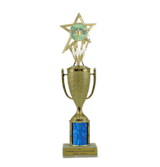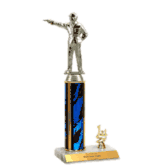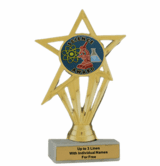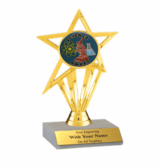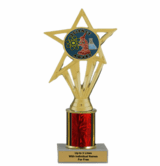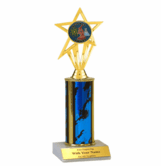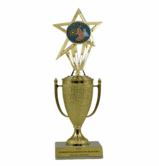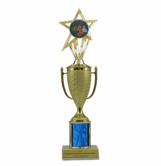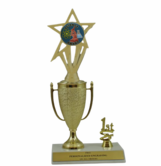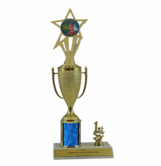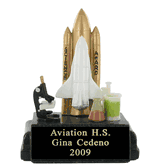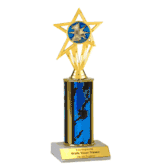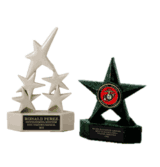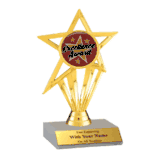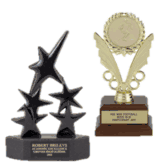
Science fairs are where curiosity meets discovery and young minds transform into innovators who might just solve tomorrow's biggest challenges! Every year, millions of students dive into the scientific method, design experiments, analyze data, and present their findings with the enthusiasm of professional researchers. From volcano eruptions that actually teach chemistry principles to groundbreaking robotics projects that push technological boundaries, science fairs showcase the incredible potential of student researchers at every educational level.
Research studies demonstrate that science fair participation provides tremendous educational benefits beyond traditional classroom learning. Students who participate in science competitions develop critical thinking skills, enhance their understanding of scientific practices, and often discover increased interest in STEM careers. Recognition through thoughtful awards amplifies these positive outcomes by validating student effort, celebrating achievement, and motivating continued scientific exploration throughout their academic journeys and beyond.
Incredible Science Fair Impact! According to research from the Society for Science, approximately 60% of students who participate in science fairs report increased interest in science and engineering careers! These competitions inspire future scientists, engineers, and innovators who will shape our world for generations to come.
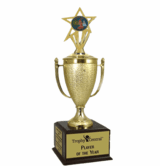
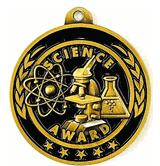
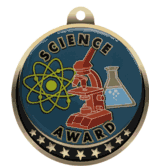
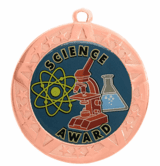
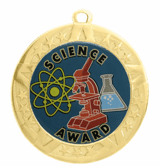
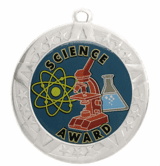
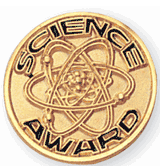
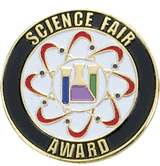
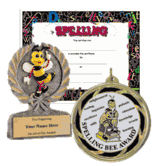
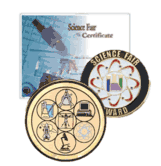
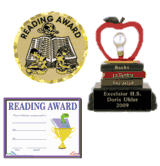
Whether you are organizing elementary school discovery fairs, middle school STEM showcases, or competitive high school research competitions, the right awards create lasting memories while encouraging future scientific pursuits. From budget-friendly participation recognition to premium awards for groundbreaking research, science fair trophies should celebrate both the journey of scientific inquiry and the achievement of meaningful results. Browse our complete selection of science trophies and awards, science medals and science pins to find perfect recognition for your young innovators. Don't forget our collection of science lapel pins for memorable keepsakes students can wear with pride! For comprehensive recognition ideas across various fields, check out our complete Trophy and Award Guides collection.
Category Awards That Celebrate Every Scientific Discipline
Science encompasses an incredibly diverse range of disciplines, and category-specific awards recognize excellence across all fields of scientific inquiry. From biology to physics, chemistry to computer science, category awards allow students with different interests and aptitudes to compete fairly within their chosen areas while celebrating the unique contributions each discipline makes to our understanding of the world.
Biology and Life Sciences awards honor students who explore living systems, from cellular processes to ecological relationships. These young biologists investigate everything from plant growth optimization to animal behavior patterns, microbiology discoveries to environmental conservation solutions. Recognition in this category celebrates research that helps us understand life itself and discover ways to protect and enhance biological systems for future generations.
Chemistry Champions
Celebrating students who explore molecular interactions, chemical reactions, and material properties through innovative experiments and rigorous analysis!
Physics Phenoms
Honoring young physicists who investigate motion, energy, forces, and the fundamental laws governing our physical universe through creative inquiry!
Engineering Excellence
Recognizing innovative problem-solvers who design, build, and test solutions that address real-world challenges using engineering principles!
Technology and Computer Science Recognition
Computer Science and Technology awards celebrate students who harness computational thinking and digital innovation to solve problems and create new possibilities. These tech-savvy researchers develop algorithms, design apps, explore artificial intelligence applications, analyze big data, and create technological solutions that demonstrate both coding expertise and creative problem-solving abilities.
Environmental Science awards honor students investigating critical ecological issues, climate patterns, pollution solutions, and sustainability innovations. These environmentally conscious researchers tackle pressing global challenges through scientific inquiry, developing projects that range from water quality analysis to renewable energy optimization, waste reduction strategies to ecosystem restoration approaches that benefit communities and environments.
Mathematics and Behavioral Sciences awards recognize students whose research explores patterns, statistics, human behavior, psychology, and social systems. These analytical thinkers use mathematical modeling, statistical analysis, and scientific methodology to understand human behavior, optimize systems, and discover patterns that reveal insights about how people think, learn, interact, and make decisions in various contexts.
Essential Science Fair Category Awards
- Biology and Life Sciences: Recognizing research in botany, zoology, microbiology, genetics, and ecology
- Chemistry: Celebrating investigations of matter, reactions, compounds, and molecular structures
- Physics and Astronomy: Honoring research in mechanics, energy, optics, and celestial phenomena
- Engineering: Recognizing innovative designs, prototypes, and technological solutions
- Computer Science: Celebrating programming, algorithms, artificial intelligence, and data science
- Environmental Science: Honoring sustainability research, ecology studies, and conservation projects
- Mathematics: Recognizing mathematical modeling, statistics, and theoretical applications
- Behavioral Sciences: Celebrating psychology, sociology, and human behavior research
Grand Awards for Outstanding Achievement
Grand awards represent the highest level of recognition at science fairs, celebrating projects that demonstrate exceptional quality, innovation, and scientific rigor. These prestigious awards acknowledge students whose research stands out among all competitors through sophisticated methodology, significant findings, impressive presentation skills, and contributions that advance scientific understanding or solve meaningful problems.
Best in Show Recognition
Best in Show awards honor the single most outstanding project at the entire science fair, regardless of category. This ultimate recognition celebrates the student or team whose research demonstrates the perfect combination of scientific excellence, creative thinking, thorough investigation, and impressive presentation. Best in Show winners typically exhibit advanced understanding of their topic, employ sophisticated research methods, produce meaningful results, and communicate their findings with exceptional clarity and professionalism.
First, Second, and Third Place overall awards provide graduated recognition for top-performing projects across all categories. These premier awards celebrate exceptional achievement while acknowledging that multiple outstanding projects deserve special recognition. Overall placement awards often come with substantial prizes, scholarships, or opportunities to advance to regional, state, or international competitions where students compete against the best young researchers from wider geographical areas.
Director's Choice or Judge's Special Recognition awards allow fair organizers and judges to acknowledge projects that demonstrate unique qualities beyond standard evaluation criteria. These flexible awards celebrate innovative approaches, creative problem-solving, exceptional dedication, surprising discoveries, or projects addressing important community needs. Special recognition provides meaningful acknowledgment for outstanding work that might not fit traditional category structures but deserves celebration nonetheless.
Innovation and Creativity Awards
Most Innovative Project awards celebrate students who demonstrate exceptional creative thinking by approaching problems from unique angles, developing novel methodologies, or discovering unexpected applications for scientific principles. Innovation awards recognize that groundbreaking research often comes from asking questions nobody else considered or investigating familiar topics through completely new lenses that reveal surprising insights and possibilities.
Outstanding Originality awards honor research that breaks new ground rather than replicating existing experiments or confirming established findings. These awards celebrate students who design truly original investigations, develop unique experimental approaches, or explore questions that haven't been extensively researched. Original research demonstrates intellectual curiosity and independent thinking that characterizes professional scientists throughout their careers.
Creative Application awards recognize projects that apply scientific principles to solve practical problems in innovative ways. These awards celebrate students who don't just understand scientific concepts but can also envision and implement creative applications that benefit communities, improve systems, or address real-world challenges through scientific problem-solving and practical innovation.
Science Fair Success Formula
Curiosity + Rigorous Methodology + Meaningful Results + Clear Communication = Award-Winning Research!
Special Recognition for Scientific Excellence
Beyond category and grand awards, special recognition honors specific aspects of scientific inquiry that deserve celebration. These awards acknowledge important elements of quality research that may not be reflected in overall project rankings but represent essential scientific skills, values, and contributions worthy of individual recognition and student encouragement.
Research Quality Awards
Best Experimental Design awards celebrate students who develop sophisticated, well-controlled investigations with appropriate variables, adequate sample sizes, and rigorous methodology. These awards recognize that quality results depend on quality experimental design, and students who demonstrate advanced understanding of scientific methodology deserve special acknowledgment for approaching their research with professional-level planning and execution.
Outstanding Data Analysis awards honor students who collect, organize, analyze, and interpret data with exceptional skill and sophistication. These awards celebrate statistical thinking, graphical representation excellence, and ability to draw meaningful conclusions from experimental results. Data analysis recognition emphasizes that scientific discovery requires not just collecting information but also understanding what data reveals about underlying patterns and principles.
Thorough Research and Documentation awards recognize students whose background research, literature reviews, and project documentation demonstrate exceptional depth and academic rigor. These awards celebrate students who invest significant effort in understanding existing knowledge before conducting their investigations and who maintain detailed records throughout their research process with professional-level organization and thoroughness.
Presentation and Communication Recognition
Best Display Board awards celebrate visual communication excellence, recognizing students who create organized, attractive, and informative project displays that effectively communicate their research to judges and visitors. Outstanding display boards combine clear organization, appropriate visual elements, readable text, and professional presentation that makes complex research accessible and engaging for diverse audiences.
Outstanding Oral Presentation awards honor students who explain their research with exceptional clarity, enthusiasm, and professionalism during judge interviews. These awards recognize that scientific communication requires not just understanding research but also ability to articulate methods, results, and significance to others. Strong presentation skills demonstrate confidence and deep comprehension that extends beyond memorized scripts.
Scientific Communication Excellence awards celebrate students whose research papers, abstracts, or written explanations demonstrate sophisticated scientific writing skills. These awards recognize that professional scientists must communicate through written publications, and students who develop strong scientific writing abilities early gain valuable skills that will benefit them throughout academic and professional careers in any field.
Inspiring Special Award Categories
- Problem-Solving Pioneer: For projects addressing significant real-world challenges
- Environmental Steward: Recognizing research promoting sustainability and conservation
- Young Researcher Award: Celebrating exceptional work by elementary or middle school students
- Team Collaboration Excellence: Honoring outstanding teamwork and cooperation
- STEM Advocate: For projects inspiring others to pursue scientific inquiry
- Community Impact: Recognizing research benefiting local communities
- Perseverance Award: Celebrating dedication through challenges and setbacks
Participation and Encouragement Awards
Participation awards play a crucial role in science fair programs by celebrating effort, learning, and engagement regardless of competitive placement. These awards recognize that every student who completes a science fair project demonstrates courage, curiosity, and commitment deserving acknowledgment. Participation recognition encourages continued scientific exploration by validating the learning process itself rather than focusing exclusively on winning.
Universal Recognition Strategies
All-Participant awards ensure every student receives tangible recognition for completing their project, regardless of judging outcomes. Universal recognition acknowledges the significant learning that occurs throughout the research process, from selecting topics to designing experiments, collecting data to presenting findings. Participation awards create positive associations with scientific inquiry that encourage future involvement in science fairs and STEM activities.
Certificate of Achievement recognition provides professional-looking acknowledgment that students can display proudly at home or in classrooms. Customized certificates featuring student names, project titles, and fair dates create memorable keepsakes that validate effort while building confidence and encouraging continued interest in science. Well-designed certificates demonstrate that participation itself represents meaningful achievement worthy of formal recognition and celebration.
Ribbons and medals offer affordable yet meaningful recognition that students enjoy receiving and displaying. Colorful ribbons designating participation, category involvement, or grade-level achievement create visible symbols of accomplishment that students wear with pride during award ceremonies and take home as lasting reminders of their scientific adventures and learning experiences throughout the project.
Effort and Growth Recognition
Most Improved Researcher awards celebrate students who demonstrate significant growth in scientific thinking, research skills, or project quality compared to previous science fair entries. Growth recognition particularly motivates students who may not win top awards but show impressive development in scientific abilities, research sophistication, or presentation skills that deserve acknowledgment and encouragement.
Outstanding Dedication awards recognize students whose commitment to their projects stands out through extensive research time, persistence through challenges, multiple experiment iterations, or exceptional effort despite obstacles. Dedication recognition validates hard work and perseverance, teaching students that scientific success requires sustained commitment and willingness to persist when research doesn't proceed as initially planned.
Promising Young Scientist awards celebrate elementary or early middle school students showing exceptional potential for future scientific achievement. Early recognition encourages young students to continue developing scientific interests and skills throughout their educational journeys, potentially influencing career paths and lifelong relationships with science, technology, engineering, and mathematics.
Learning Through Experience! Research from the National Science Teachers Association demonstrates that hands-on scientific inquiry through projects like science fairs significantly improves student understanding of science concepts and develops critical research skills that benefit students across all academic subjects and future careers!
Grade-Level and Age-Appropriate Recognition
Age-appropriate awards acknowledge that scientific sophistication naturally varies across grade levels, and recognition structures should reflect different developmental stages and appropriate expectations. Separating awards by grade divisions ensures fair competition while allowing younger students to experience success that encourages continued participation as they develop more advanced research capabilities throughout their educational progression.
Elementary Division Awards
Elementary science awards celebrate curiosity, creativity, and fundamental scientific thinking appropriate for younger students exploring science for the first time. Elementary projects typically demonstrate basic experimental concepts, simple data collection, and age-appropriate understanding of scientific principles. Recognition at this level emphasizes learning process, enthusiasm for discovery, and building positive associations with scientific inquiry rather than advanced research sophistication.
Best Elementary Experiment awards honor young researchers who design simple yet effective investigations that demonstrate understanding of cause-and-effect relationships, basic variables, and simple data collection methods. Elementary recognition celebrates foundational scientific skills while encouraging continued development of more sophisticated research abilities as students progress through grade levels.
Most Creative Elementary Project awards recognize young students whose projects demonstrate exceptional imagination, unique approaches, or innovative thinking within age-appropriate parameters. Creativity recognition particularly motivates elementary students by celebrating qualities they can control regardless of access to advanced resources or sophisticated equipment that may not be available at their grade level.
Middle School Division Recognition
Middle school awards acknowledge increasing scientific sophistication as students begin applying more advanced methodology, conducting more complex investigations, and demonstrating deeper understanding of scientific principles. Middle school projects typically show improved experimental design, better data analysis, more thorough background research, and stronger presentation skills than elementary work while still developing toward high school-level sophistication.
Outstanding Middle School Research awards celebrate students demonstrating exceptional scientific thinking appropriate for their developmental stage, including improved experimental controls, multiple trial execution, basic statistical analysis, and increasingly sophisticated understanding of their research topics. Middle school recognition validates growing scientific capabilities while motivating continued skill development.
Middle School Innovation awards honor creative problem-solving and novel approaches appropriate for this transitional educational stage. These awards celebrate students beginning to think more independently about scientific questions while developing research skills that will prepare them for more advanced high school investigations and potential participation in competitive regional or state science fairs.
High School Division Excellence
High school awards recognize the most sophisticated student research, often approaching professional-level methodology, advanced data analysis, and publication-quality presentation. High school projects may demonstrate complex experimental designs, statistical analysis, extensive literature reviews, sophisticated equipment use, and research that generates genuinely new knowledge or makes meaningful contributions to scientific understanding.
Advanced Research awards celebrate high school students whose projects demonstrate exceptional scientific sophistication, potentially including original research questions, innovative methodologies, significant findings, or work conducted in partnership with professional scientists or research institutions. Advanced recognition prepares students for collegiate research experiences and potential STEM careers.
High School Division Champions represent the absolute best research at their grade level, often qualifying for advancement to prestigious regional, state, or international competitions. These top achievers demonstrate research quality, scientific thinking, and presentation skills that position them for continued success in competitive science environments and future academic pursuits.
Benefits of Grade-Level Divisions
- Ensures fair competition among developmental peers
- Provides appropriate achievement opportunities for all ages
- Encourages continued participation across grade levels
- Recognizes age-appropriate scientific sophistication
- Builds confidence through attainable success
Division Planning Considerations
- Requires sufficient participants per grade level
- More complex judging coordination needed
- May need different rubrics for each division
- Additional awards budget requirements
- Clear division criteria must be established
Team Project and Collaboration Awards
Team project awards celebrate collaborative research while recognizing that scientific advancement increasingly depends on effective teamwork and interdisciplinary cooperation. Team awards acknowledge both collective achievement and individual contributions within group projects, encouraging collaboration skills that prepare students for professional scientific environments where research teams are standard practice.
Group Project Recognition
Best Team Project awards honor groups demonstrating exceptional collaborative research where team members effectively divide responsibilities, combine diverse skills, and create research outcomes exceeding what individuals could accomplish alone. Strong team projects show clear evidence of shared workload, integrated contributions, and collaborative problem-solving throughout investigation and presentation phases.
Outstanding Collaboration awards recognize teams whose working relationships exemplify effective communication, mutual support, shared decision-making, and respectful cooperation. These awards celebrate interpersonal skills essential for scientific careers while validating that how students work together matters as much as their research results in developing capable future scientists.
Complementary Skills Integration awards honor teams strategically combining members with different strengths such as technical expertise, analytical abilities, creative thinking, or communication skills. These awards recognize that diverse team composition enhances research quality while teaching students the value of appreciating and leveraging different abilities within collaborative environments.
Individual Contributions Within Teams
Outstanding Team Member awards acknowledge individual students who make exceptional contributions to group projects through leadership, technical skills, creative insights, or dedication. Individual recognition within team contexts validates personal effort while maintaining collaborative spirit, ensuring that strong team members receive appropriate acknowledgment without diminishing collective achievement.
Team Leadership awards celebrate students who coordinate group efforts, facilitate communication, maintain project momentum, and help teams overcome challenges. Leadership recognition teaches that guiding collaborative work represents valuable skills complementing research abilities, and effective leadership significantly influences team project success in scientific and professional environments.
Research Contribution Excellence awards honor specific technical, analytical, or creative contributions that individual team members make to group projects. These awards recognize specialized expertise or exceptional work on particular project aspects, ensuring that students developing strong abilities in specific research areas receive appropriate individual acknowledgment alongside team recognition.
Interdisciplinary Team Award
Celebrating teams combining multiple scientific disciplines to address complex problems requiring diverse knowledge and integrated approaches!
Peer Mentorship Recognition
Honoring experienced students who guide and support less experienced team members or younger students through research processes!
Inclusive Research Team
Recognizing teams demonstrating exceptional commitment to inclusive participation where all members contribute meaningfully regardless of background!
Budget-Friendly Recognition That Feels Special
Meaningful science fair recognition doesn't require expensive budgets when creativity, thoughtfulness, and genuine appreciation guide award planning. The educational impact and student motivation come from acknowledgment itself rather than award cost, making budget-conscious recognition perfectly appropriate for science fairs of any size or resource level while maintaining positive influence on student attitudes toward science.
Affordable Recognition Options
Printed certificates with custom designs, student names, project titles, and specific commendations create professional recognition costing under two dollars per student while providing meaningful keepsakes families display proudly. Well-designed certificates featuring science-themed graphics, fair logos, and personalized text demonstrate thoughtful recognition regardless of modest production costs.
Colorful ribbons designating various achievement levels, categories, or participation provide visible recognition students enjoy wearing and displaying. Ribbon recognition costs pennies per student while creating festive award ceremony atmospheres and tangible symbols of accomplishment that students treasure. Multiple ribbon colors and styles allow diverse recognition categories without significant budget impact.
Small medals on colorful ribbons combine affordability with more substantial physical recognition that students particularly enjoy receiving. Basic science-themed medals cost only a few dollars each while providing lasting keepsakes that feel more significant than paper certificates alone. Medal recognition works especially well for category winners and special achievement acknowledgment.
Creative Low-Cost Recognition Ideas
- Science-Themed Bookmarks: Custom-printed recognition students actually use
- Digital Achievement Badges: Electronic certificates students can share online
- Recognition Wall Display: Public acknowledgment featuring all participants
- Personalized Lab Notebooks: Practical gifts encouraging continued research
- Science Fair Alumni Status: Special recognition for repeat participants
- Photo Recognition Boards: Display boards featuring all projects and participants
Premium Awards for Major Achievements
Significant achievements and major competitions deserve premium recognition that reflects accomplishment importance while creating impressive displays of achievement. Premium awards become treasured possessions that students display proudly throughout their lives while symbolizing important milestone moments in their developing scientific identities and educational journeys.
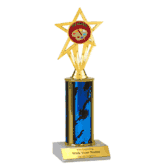
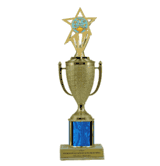
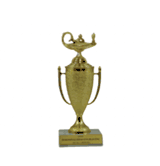
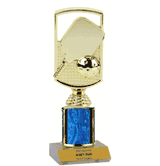
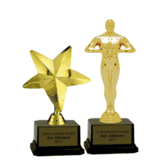
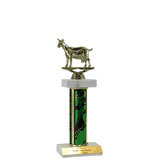
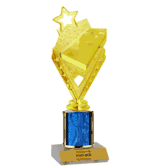
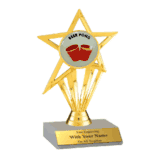
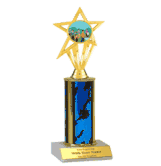
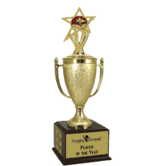
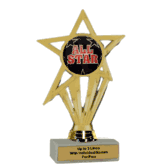
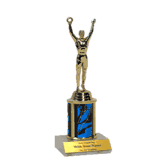
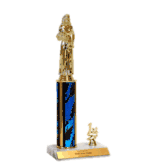
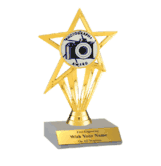
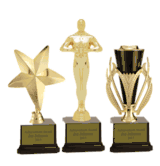
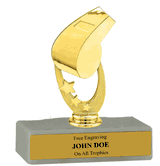
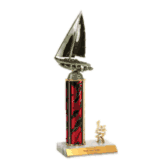
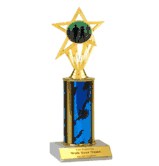
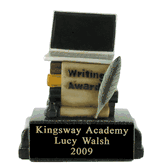
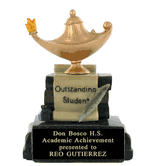
Quality trophies featuring science-themed toppers, engraved plates with achievement details, and substantial bases create meaningful recognition appropriate for top awards, category winners, and special achievements. Trophy recognition provides physical symbols of accomplishment that students display in bedrooms or study spaces as ongoing motivation and reminders of scientific success.
Crystal or glass awards offer elegant recognition appropriate for grand awards, best in show, and other highest achievement levels. Premium crystal recognition with custom engraving creates sophisticated awards suitable for competitive fairs or prestigious recognition that students will value throughout high school, college, and beyond as symbols of significant scientific accomplishment.
Plaques with custom engraving, project photos, or research summaries create personalized recognition combining visual appeal with meaningful documentation of achievement. Plaque awards work particularly well for school-level recognition, perpetual awards listing multiple years of winners, or special recognition honoring sustained excellence or significant contributions to science fair programs.
The best scientists remain curious throughout their lives, always asking questions and seeking answers through investigation and experimentation. Science fair recognition celebrates this curiosity while encouraging young researchers to continue exploring, discovering, and contributing to our understanding of the amazing world around us.
Creating Memorable Award Ceremonies
Award ceremonies transform science fair recognition from simply distributing awards into meaningful celebration events that honor achievement, build community, and create lasting positive memories associated with scientific inquiry. Well-planned ceremonies recognize winners while celebrating all participants, engaging families and communities, and emphasizing that scientific exploration represents valuable endeavor worthy of public acknowledgment and appreciation.
Ceremony Structure and Format
Opening remarks should contextualize science fair importance while celebrating student effort, learning, and achievement. Effective openings acknowledge the scientific process, thank volunteers and supporters, welcome attendees, and build anticipation for recognition to follow. Opening speakers might include principals, science coordinators, distinguished scientists, or community leaders who value STEM education.
Category-by-category recognition allows focused attention on each scientific discipline while educating attendees about diverse fields and their importance. Presenting awards by category creates opportunities to highlight specific achievements, explain interesting projects, and celebrate breadth of scientific inquiry represented in the fair. Category presentation also manages ceremony length by distributing recognition across multiple segments.
Grand award presentations should build excitement while providing substantial recognition for highest achievements. Saving best in show and top overall awards for ceremony conclusions creates climactic moments while ensuring premium recognition receives appropriate attention. Grand award presentations might include detailed project descriptions, judge comments, or video highlights showcasing exceptional research.
Engaging Presentation Elements
Student project spotlights featuring selected participants explaining their research provide engaging ceremony elements while giving students additional presentation practice and recognition opportunities. Brief project presentations educate audiences about student work while demonstrating communication skills and research quality represented in the science fair program.
Judge commentary sharing insights about evaluation process, common strengths observed, and characteristics of outstanding projects provides valuable feedback while educating participants about scientific excellence. Judge remarks help students understand what makes research outstanding while providing guidance for future project improvement and deeper scientific thinking development.
Photo and video highlights showcasing science fair activities, student research moments, and fair atmosphere create visual interest while celebrating the broader experience beyond just awards. Multimedia presentations engage audiences while documenting fair activities for absent families and creating promotional materials for future science fair recruitment and community awareness.
Interactive Exhibition Time
Open house periods allowing ceremony attendees to visit projects personally, ask questions, and appreciate research details beyond award announcements!
Guest Speaker Inspiration
Brief talks by scientists, engineers, or STEM professionals sharing career journeys and encouraging continued scientific exploration among participants!
Mentor Recognition Segment
Acknowledging teachers, parents, scientists, and other mentors who supported student research throughout investigation and presentation processes!
Advancing Winners to Higher Competition Levels
Pathway recognition connecting local science fairs to regional, state, and international competitions provides additional motivation while creating opportunities for exceptional students to compete against broader peer groups. Advancement opportunities reward outstanding achievement while exposing high-performing students to increasingly competitive scientific environments that challenge abilities and showcase research to larger audiences.
Competition Hierarchy Recognition
Regional fair qualification awards acknowledge students whose projects earned advancement to area competitions representing multiple schools or districts. Regional qualification demonstrates research quality exceeds local standards while providing opportunities to compete against diverse competitors and receive feedback from broader judge panels with varied expertise.
State science fair advancement represents significant achievement, recognizing students whose research ranks among their state's best work. State-level competition exposes students to high-quality projects from across their geographic region while providing networking opportunities with other accomplished young scientists and potential mentors from universities and research institutions.
International competition qualification represents the highest achievement level, with programs like the Regeneron International Science and Engineering Fair bringing together the world's most outstanding high school researchers. International competition qualification opens doors to substantial scholarships, research opportunities, professional networking, and life-changing experiences that significantly influence educational and career trajectories.
Advancement Support Recognition
Competition Preparation awards acknowledge students who invest significant additional effort preparing projects for advancement to higher competition levels through improved presentations, additional research, or enhanced displays. Advancement preparation recognition validates the extra work required to compete successfully at increasingly rigorous competition levels beyond initial school or local fairs.
Multiple Competition Participation awards celebrate students who successfully advance through multiple competition tiers, demonstrating sustained excellence and commitment. Multiple-level participation recognition honors dedication to scientific excellence while acknowledging the significant time investment required to compete successfully at school, regional, state, and potentially international levels.
Research Impact awards honor students whose projects generate recognition beyond typical competition placements through special organization awards, research applications, publication opportunities, or community implementations. Impact recognition celebrates research that extends beyond fair participation into meaningful real-world applications or contributions to scientific knowledge.
Competition Advancement Pathway
School Fair Success + Regional Recognition + State Achievement + International Opportunity = Life-Changing STEM Journey!
Special Population and Inclusion Recognition
Inclusive recognition ensures science fairs celebrate diverse participants while encouraging underrepresented groups to pursue scientific interests and careers. Thoughtful inclusion awards acknowledge that providing equitable access to science fair opportunities and recognition helps address persistent diversity challenges in STEM fields while demonstrating that scientific talent exists across all communities and populations.
Access and Equity Awards
First-Time Participant awards celebrate students entering their initial science fair, particularly encouraging those from communities historically underrepresented in STEM fields. First-time recognition validates courage required to try something new while creating positive experiences that encourage continued participation regardless of competitive outcomes in initial attempts.
Overcoming Challenges awards honor students who complete projects despite significant obstacles such as language barriers, learning differences, limited resources, or personal circumstances. Challenge recognition acknowledges that science fair participation itself represents achievement worthy of celebration when students overcome barriers that might otherwise prevent involvement in competitive academic activities.
Community School Excellence awards recognize outstanding projects from schools with limited resources, celebrating achievement despite equipment, funding, or facility limitations. Resource-conscious recognition demonstrates that scientific thinking and quality research don't require expensive equipment or elaborate facilities, and motivated students can produce excellent work regardless of school resources.
Encouraging Underrepresented Groups
Girls in STEM awards celebrate female students pursuing scientific research while encouraging continued participation in fields where women remain underrepresented. Gender-conscious recognition helps address persistent diversity gaps while providing role models and demonstrating that scientific ability has no gender limitations.
Minority Scientist awards honor students from racial and ethnic backgrounds historically underrepresented in STEM careers. Diversity recognition helps create inclusive scientific communities while demonstrating commitment to ensuring that future scientific workforces reflect population diversity and benefit from varied perspectives and experiences.
Rural Student Achievement awards celebrate students from rural communities who may face geographic isolation, limited mentorship access, or fewer competitive opportunities. Rural recognition validates achievement while building scientific communities across geographic divides and ensuring that distance from research centers doesn't limit scientific potential or recognition opportunities.
Promoting Inclusive Excellence
- Accessible Science Award: Recognizing projects making science accessible to broader audiences
- Multilingual Research: Honoring students conducting or presenting research in multiple languages
- Adaptive Research: Celebrating students using accommodations or adaptive approaches successfully
- Family Science Team: Recognizing strong family support and involvement in student research
- Community Partnership: Honoring projects developed through community organization collaborations
Mentor and Volunteer Recognition
Science fair success depends on dedicated adults who support student research, organize events, judge projects, and ensure smooth operations. Mentor and volunteer recognition acknowledges crucial behind-the-scenes contributions while demonstrating appreciation for time, expertise, and dedication that make science fair programs possible and beneficial for participating students.
Teacher and Mentor Appreciation
Outstanding Mentor awards honor teachers, parents, or professionals who provide exceptional student guidance throughout research processes. Mentor recognition celebrates adults investing significant time helping students develop research questions, design experiments, analyze data, and present findings while teaching scientific thinking skills extending far beyond individual projects.
Dedication to Student Success awards recognize mentors demonstrating extraordinary commitment to supporting multiple students, spending countless hours on science fair guidance, or maintaining long-term involvement in fair programs. Dedication recognition validates that mentor influence significantly impacts student success and that sustained mentor commitment benefits entire school communities.
Inspiring Scientific Curiosity awards celebrate mentors whose enthusiasm, knowledge, and support inspire students to pursue scientific interests with passion and dedication. Inspiration recognition acknowledges that great mentors don't just help with projects but also shape student attitudes toward science, potentially influencing career choices and lifelong relationships with scientific inquiry.
Judge and Volunteer Acknowledgment
Judge Appreciation awards recognize professionals donating time and expertise to evaluate student projects fairly and constructively. Judge recognition acknowledges that quality science fairs depend on knowledgeable evaluators providing meaningful feedback while celebrating community members willing to support youth science education through volunteer service.
Organizational Support awards honor volunteers coordinating logistics, managing registrations, setting up facilities, or handling countless details ensuring smooth science fair operations. Volunteer recognition validates that successful events require extensive planning and execution often invisible to participants but absolutely essential for positive science fair experiences.
Community Partnership awards celebrate businesses, organizations, or institutions providing science fair support through funding, supplies, facility access, or promotional assistance. Partnership recognition builds ongoing relationships while demonstrating community investment in youth science education and STEM workforce development.
Mentorship Matters! Research consistently shows that students with strong mentorship support during science fair participation demonstrate significantly higher confidence, better research skills, and increased likelihood of pursuing STEM education and careers compared to students working independently without guidance!
Digital Age Recognition Innovations
Modern technology enables innovative recognition approaches that complement traditional awards while creating shareable content, broader visibility, and lasting digital records of achievement. Digital recognition particularly appeals to contemporary students while enabling science fairs to leverage social media, websites, and electronic communication for expanded recognition reach beyond ceremony attendees.
Online Recognition Platforms
Science fair websites featuring participant profiles, project descriptions, award winners, and photo galleries provide permanent recognition accessible to extended families, future employers, and college admissions offices. Website recognition creates lasting documentation while allowing students to share achievements through social media and professional networking platforms.
Digital badges and certificates provide electronic recognition that students can display on educational profiles, social media accounts, or electronic portfolios. Digital credentials offer portability and shareability impossible with physical awards while creating recognition formats appropriate for increasingly digital-native student populations.
Social media recognition campaigns celebrating participants, highlighting interesting projects, and announcing winners extend fair visibility while providing public acknowledgment students value. Social recognition creates excitement while promoting science fair programs to wider audiences including potential future participants, community supporters, and educational partners.
Video and Multimedia Recognition
Recognition videos featuring project highlights, student interviews, judge commentary, and award presentations create engaging content for websites, social media, and future fair promotion. Video recognition provides lasting documentation while creating shareable content families treasure and schools use for recruiting future participants and building program visibility.
Virtual participation options enable remote students, judges, or audience members to engage with science fairs through live streaming, video submissions, or online exhibitions. Virtual components expand participation possibilities while creating inclusive opportunities for students unable to attend physical events due to distance, scheduling conflicts, or health considerations.
Digital project portfolios allow students to document research processes, compile data, and present findings through multimedia formats extending beyond traditional display boards. Portfolio approaches enable richer project documentation while teaching digital literacy skills increasingly important for contemporary scientific communication and professional presentation.
Digital Recognition Advantages
- Easily shareable across social networks
- Permanent online achievement documentation
- Broader audience reach beyond ceremony attendees
- Cost-effective complement to physical awards
- Appeals to tech-savvy student populations
Digital Recognition Considerations
- Requires technical infrastructure and expertise
- Privacy concerns with student information online
- May not replace desire for physical awards
- Digital divide may limit access for some families
- Ongoing website maintenance requirements
Building Sustainable Recognition Programs
Long-term science fair success requires sustainable recognition programs that maintain enthusiasm, attract continued participation, and evolve with educational priorities and community needs. Sustainable programs balance tradition with innovation while managing resources effectively and building community support ensuring science fair programs thrive across multiple years and generations of students.
Program Development Strategies
Perpetual recognition displays establishing ongoing traditions honor multiple years of achievement while building institutional memory and school pride. Perpetual displays might include trophy cases, recognition plaques listing annual winners, or wall displays celebrating science fair history. Traditional displays create continuity while inspiring current students through visible evidence of past achievement.
Alumni recognition programs connecting former participants with current students provide mentorship opportunities while demonstrating long-term program value. Alumni involvement strengthens programs through volunteer support, funding contributions, or career connections while showing current participants that science fair participation can influence life trajectories and lead to meaningful STEM careers.
Community partnership development builds sustainable funding, volunteer support, and broader awareness ensuring programs continue despite budget fluctuations or changing school priorities. Strong community connections create stakeholder networks invested in program success while demonstrating that science education benefits entire communities through workforce development and economic growth.
Recognition Evolution and Innovation
Annual program evaluation examining participation trends, award distribution, and participant feedback ensures recognition remains relevant, equitable, and motivating. Regular assessment identifies areas for improvement while tracking whether recognition strategies successfully encourage continued participation, diverse involvement, and positive attitudes toward science among all students.
Recognition category updates reflecting emerging scientific fields, community priorities, or educational trends keep programs current and relevant. Evolving categories might address artificial intelligence, climate science, biotechnology, or other contemporary topics while demonstrating that science fair programs respond to changing scientific landscapes and societal needs.
Student input incorporation through surveys, focus groups, or advisory committees ensures recognition reflects student perspectives and preferences. Student involvement in program development creates ownership while ensuring awards remain meaningful and motivating from participant viewpoints rather than solely adult assumptions about effective recognition.
Science fair recognition represents investment in future scientific leadership, innovation capacity, and STEM workforce development through celebrating student achievement, validating effort, and encouraging continued scientific exploration among young people who represent society's future problem-solvers, researchers, and innovators across all scientific and technological fields.
Whether selecting premium awards for international competition qualifiers or budget-friendly participation recognition for elementary school beginners, the essential element remains ensuring every student feels valued for their scientific curiosity, acknowledged for their research efforts, and encouraged to continue exploring the fascinating world around them through ongoing scientific inquiry and discovery.
From creative category awards to inclusive recognition programs, science fair awards should celebrate both exceptional achievement and universal participation while building sustainable programs that inspire generations of young scientists to pursue knowledge, ask questions, and contribute their unique talents toward advancing human understanding of our amazing universe.
Professional recognition expertise helps schools and organizations create maximum positive impact while maintaining realistic budgets and logistical capabilities. Partner with experienced award specialists who understand science education's unique requirements and can balance traditional recognition with innovative approaches that celebrate both achievements and the qualities making each young scientist special and valued.