
Reading Motivation: Building Lifelong Readers Through Evidence-Based Strategies |

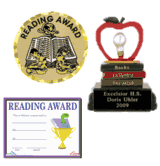
Reading motivation represents one of the most critical factors in developing successful, engaged readers who continue reading throughout their lives. Research consistently demonstrates that motivated readers not only read more frequently but also comprehend better, leading to improved academic outcomes across all subject areas. This comprehensive guide explores the science behind reading motivation and provides practical strategies that educators, parents, and organizations can implement to foster a genuine love of reading in young learners. Understanding the Science of Reading MotivationReading motivation encompasses the complex interplay of factors that drive individuals to engage with text voluntarily and persistently. Researchers have identified that many children's reading motivation declines over the school years, with girls tending to have more positive motivation for reading than boys, and notable ethnic differences in children's reading motivation (Guthrie & Wigfield, 2015). Understanding these patterns helps educators and parents recognize when intervention strategies become most crucial. The theoretical foundation for reading motivation draws from self-determination theory, which identifies three basic psychological needs: autonomy, competence, and relatedness. When these needs are met in reading contexts, students develop intrinsic motivation that sustains their reading engagement over time. Students' self-concepts and the value they place on reading are critical to their success, with gender differences identified as early as third grade (Marinak & Gambrell, 2007). Modern research reveals that reading motivation significantly impacts comprehension outcomes. Students who are motivated to read demonstrate greater persistence when encountering challenging texts, employ more sophisticated reading strategies, and show increased willingness to engage with diverse text types. This creates a positive cycle where improved comprehension leads to greater confidence, which in turn enhances motivation to continue reading. Key Components of Reading MotivationSelf-Efficacy and Competence BeliefsSelf-efficacy in reading refers to students' beliefs about their ability to successfully complete reading tasks. These beliefs form through mastery experiences, where students evaluate their own competence after learning and believe their efforts have been successful. Mastery experiences increase confidence and willingness to try similar and more challenging tasks, while social experiences play a powerful role in developing self-efficacy (Gambrell, 2011). Building reading self-efficacy requires carefully scaffolded experiences where students can experience success with appropriately challenging materials. This means providing texts that stretch students slightly beyond their independent reading level while ensuring adequate support for comprehension. When students consistently experience success with effort, they develop confidence in their reading abilities and greater willingness to tackle increasingly complex texts. Value and Purpose in ReadingStudents must perceive reading as valuable and purposeful to maintain long-term motivation. Research distinguishes between intrinsic value (reading for enjoyment) and extrinsic value (reading for external rewards or outcomes). While both types of value can motivate reading behavior, intrinsic value tends to produce more sustained engagement and deeper comprehension. Effective reading programs help students discover personal connections to texts and understand how reading skills transfer to real-world applications. This might involve connecting reading to students' interests, cultural backgrounds, or future aspirations. When students see reading as personally meaningful rather than merely academic exercise, their motivation increases significantly. Autonomy and ChoiceChoice is widely acknowledged as a method for enhancing motivation, with research showing that allowing students to make choices about their reading material increased the likelihood that they would engage more in reading (Worthy & McKool, 1996). Even minimal task choices can increase learning and enhance subsequent interest in reading activities. Providing genuine student choices requires moving beyond token selections to meaningful options that respect students' interests, reading levels, and cultural backgrounds. This includes choice in reading materials, response formats, reading partners, and even reading environments. The key is ensuring choices are authentic rather than simply offering predetermined options that all lead to identical outcomes. Evidence-Based Strategies for Building Reading MotivationCreating Literacy-Rich EnvironmentsThe physical and social environment profoundly impacts reading motivation. Successful reading environments provide diverse, high-quality texts that reflect students' interests and experiences. Providing balanced book collections at all grade levels is vital to engagement, with research suggesting that children as young as kindergarten showed preference for informational text, and nonfiction books were the overwhelming choice of first-grade students (Pappas, 1993; Mohr, 2006). Literacy-rich environments also feature comfortable reading spaces, opportunities for book discussions, and displays that celebrate reading achievements. These spaces should feel welcoming and accessible to all students, regardless of their current reading level. Visual displays might include book recommendations from peers, author spotlights, or connections between books and current events or student interests. Strategic Use of Rewards and RecognitionThe relationship between external rewards and reading motivation has generated considerable debate among educators and researchers. However, recent studies provide nuanced guidance on effective reward strategies. Marinak and Gambrell found support for the reward proximity hypothesis, specifically showing that students who were given a book (proximal reward) were more motivated to engage in subsequent reading than students that received a token (less proximal reward) (2008). Effective reward systems focus on acknowledging effort, progress, and the development of reading habits rather than simply completing assigned tasks. Rewards should be directly related to reading and should enhance rather than replace intrinsic motivation. For example, earning bookmarks, special reading time, or opportunities to share book recommendations with peers can reinforce reading behavior without undermining intrinsic interest. Recognition programs work best when they celebrate diverse reading achievements, including improvement in reading stamina, exploration of new genres, or thoughtful contributions to book discussions. Award medals can provide meaningful recognition for these diverse accomplishments. Academic recognition awards can play an important role in acknowledging reading milestones, particularly when they highlight specific achievements like completing a challenging book series or demonstrating growth in reading comprehension. Social Interaction and Reading CommunitiesReading is fundamentally a social activity, and creating opportunities for students to interact around texts significantly enhances motivation. Book clubs, literature circles, and reading partnerships provide forums for students to share reactions, ask questions, and build deeper understanding through discussion. Effective reading communities establish norms that value diverse perspectives and encourage risk-taking in thinking and expression. Students should feel safe to share honest reactions to texts, ask questions that reveal confusion, and disagree respectfully with interpretations. These communities work best when they include students with varying reading abilities and perspectives, as diverse viewpoints enrich discussions for all participants. Peer recommendations carry particular power in motivating reading choices. Creating systems for students to share book recommendations, write reviews for classroom libraries, or participate in book talks can harness peer influence positively. An bulletin board can serve as an excellent space to display student book recommendations and reviews. Social media platforms, when used appropriately, can extend these conversations beyond the classroom. Connecting Reading to Real-World ApplicationsStudents develop stronger motivation when they understand how reading connects to their lives outside school. This involves demonstrating how reading skills apply to areas of personal interest, future career goals, and civic participation. For example, students interested in sports might explore sports journalism, biography reading, or statistical analysis articles. Project-based learning approaches that integrate reading with other subjects help students see reading as a tool for learning rather than an isolated skill. When students use reading to research topics they care about, solve real-world problems, or explore questions they have generated, motivation increases naturally. Addressing Reading Motivation ChallengesSupporting Struggling ReadersStudents who experience reading difficulties often develop negative associations with reading that compound their academic challenges. Research indicates that when people are unmotivated, they are unlikely to continue participating in an activity, making motivation crucial for sustained reading development (Linnenbrick-Garcia & Patall, 2015). Successful interventions for struggling readers focus on building confidence through appropriately challenging materials while maintaining high expectations. This requires careful attention to text selection, ensuring that students can access content that interests them at their instructional reading level. Audio support, graphic novels, and high-interest, low-readability texts can provide entry points for reluctant readers. It's essential to avoid creating separate, lower-expectation environments for struggling readers. Instead, provide additional support that enables participation in rich literacy experiences alongside more proficient peers. This might include pre-reading support, collaborative reading structures, or alternative ways to demonstrate understanding. Cultural Responsiveness and EquityReading motivation varies significantly across cultural and socioeconomic groups, requiring culturally responsive approaches that honor students' backgrounds and experiences. Research shows ethnic differences in children's reading motivation, with students of color who have fallen behind grade level reading comprehension being especially susceptible to dropping out of school (NAEP, 2019). Culturally responsive reading instruction involves selecting texts that reflect students' cultural backgrounds, incorporating multiple perspectives, and validating diverse ways of engaging with text. This includes recognizing that students may bring different literacy practices from their home communities and building bridges between these practices and school expectations. Addressing equity in reading motivation also requires examining potential biases in assessment practices, text selections, and reward systems. Programs should actively work to ensure all students see themselves represented in reading materials and have equal opportunities to experience success and recognition. Technology and Digital Reading MotivationDigital technologies offer new opportunities for motivating readers while presenting unique challenges. E-books, audiobooks, and interactive reading platforms can provide engaging entry points for students who struggle with traditional print texts. These tools can offer features like adjustable text size, background colors, and embedded supports that make reading more accessible. However, research suggests that the format alone does not guarantee increased motivation. The key lies in how digital tools are integrated into meaningful reading experiences. Interactive features should enhance rather than distract from comprehension, and digital reading experiences should maintain focus on developing critical thinking and deep understanding. Social reading platforms that allow students to share reactions, ask questions, and participate in online book discussions can extend reading communities beyond physical classroom boundaries. These platforms work best when they maintain the same supportive norms as face-to-face reading communities. Family and Community EngagementResearch pinpoints the importance of passive home literacy environment including parents' reading activities at home, home educational resources, and parental expectation (Mullis et al., 2016). Family engagement in reading motivation extends beyond simply ensuring students complete homework to creating home environments that value and support reading. Effective family engagement programs provide parents with specific strategies for supporting reading motivation rather than general encouragement to read more. This includes helping parents understand how to select appropriate books, engage in meaningful conversations about texts, and recognize signs of reading growth. Community partnerships with libraries, bookstores, and cultural organizations can extend reading motivation efforts beyond schools and homes. Public libraries play a key role in the literacy landscape, especially by providing access to books and a variety of free literacy programs for families, with the library as a space that motivates kids to enjoy reading leading to a lifelong love of learning (IMLS, 2023). Assessment and Monitoring ProgressMeasuring reading motivation requires moving beyond traditional assessments to capture students' attitudes, interests, and engagement patterns. Effective assessment strategies include interest inventories, reading logs that track self-selected reading, and regular conversations about reading experiences and preferences. Observation of reading behaviors provides valuable insights into motivation levels. This includes monitoring factors like book selection patterns, persistence when encountering challenges, participation in reading discussions, and voluntary reading during free time. These behaviors often provide more accurate indicators of motivation than self-report surveys. Progress monitoring should focus on growth in reading engagement rather than simply completion of assigned tasks. This includes tracking increases in reading volume, diversity of text types explored, and quality of thinking demonstrated in reading responses and discussions. Professional Development and ImplementationSuccessfully implementing research-based reading motivation strategies requires ongoing professional development that goes beyond one-time training sessions. Effective professional development helps educators understand the theoretical foundations of reading motivation while providing practical strategies for implementation. Implementation support should include opportunities for educators to observe effective practices, collaborate with colleagues, and receive feedback on their efforts to enhance reading motivation. School leaders play crucial roles in creating supportive environments for innovation and risk-taking in reading instruction. Sustaining motivation-focused reading programs requires systemic support, including appropriate resource allocation, schedule flexibility, and assessment practices that value motivation alongside traditional achievement measures. Long-Term Impact and Future DirectionsThe ultimate goal of reading motivation efforts is developing lifelong readers who choose to read for pleasure, learning, and civic participation throughout their lives. Research indicates that reading motivation established in elementary years significantly predicts reading engagement and achievement in adolescence and adulthood. Future research directions in reading motivation focus on understanding how digital technologies can best support motivated reading, developing culturally sustaining pedagogies that honor diverse literacy practices, and creating more sophisticated measures of reading engagement that capture the complexity of motivation in different contexts. Educational policies and practices must evolve to recognize reading motivation as equally important to reading skill development. This includes rethinking accountability systems, teacher preparation programs, and curriculum design to ensure motivation receives appropriate attention alongside traditional literacy components. Organizations committed to recognizing reading achievement, such as through educational scholarship programs, play important roles in reinforcing the value society places on literacy development and reading engagement. These recognition efforts can provide powerful external validation for students' reading accomplishments while supporting intrinsic motivation development. Using a certificate template can help formalize recognition of reading achievements. Building motivated readers requires sustained, intentional effort from educators, families, and communities working together. When students develop genuine enthusiasm for reading, they gain access to lifelong learning opportunities that extend far beyond academic requirements. The research is clear: motivated readers become better readers, and better readers become more motivated, creating positive cycles that benefit individuals and society as a whole. ReferencesGambrell, L. B. (2011). Seven rules of engagement: What's most important to know about motivation to read. The Reading Teacher, 65(3), 172-178. Guthrie, J. T., & Wigfield, A. (2015). Beyond cognition: Reading motivation and reading comprehension. PMC. https://pmc.ncbi.nlm.nih.gov/articles/PMC5014370/ Institute of Museum and Library Services. (2023). Research on motivation, literacy and reading development: A review of best practices. https://www.imls.gov/publications/research-motivation-literacy-and-reading-development-review-best-practices Linnenbrick-Garcia, L., & Patall, E. A. (2015). Motivation. In L. Corno & E. M. Anderman (Eds.), Handbook of educational psychology (3rd ed., pp. 91-103). Routledge. Marinak, B. A., & Gambrell, L. B. (2007). Reading motivation: What the research says. Reading Rockets. https://www.readingrockets.org/topics/motivation/articles/reading-motivation-what-research-says Marinak, B. A., & Gambrell, L. B. (2008). Intrinsic motivation and rewards: What sustains young children's engagement with text? Literacy Research and Instruction, 47(1), 9-26. Mohr, K. A. J. (2006). Children's choices for recreational reading: A three-part investigation of selection preferences, rationales, and processes. Journal of Literacy Research, 38(1), 81-104. Mullis, I. V. S., Martin, M. O., Foy, P., & Hooper, M. (2016). PIRLS 2016 international results in reading. TIMSS & PIRLS International Study Center, Boston College. National Assessment of Educational Progress. (2019). 2019 NAEP reading report card. National Center for Education Statistics. Pappas, C. C. (1993). Is narrative "primary"? Some insights from kindergarteners' pretend readings of stories and information books. Journal of Reading Behavior, 25(1), 97-129. Parsons, S. A., & Erickson, J. D. (2024). Where is motivation in the science of reading? Phi Delta Kappan, 105(5), 32-36. https://kappanonline.org/motivation-science-of-reading-parsons-erickson/ Worthy, J., & McKool, S. S. (1996). Students who say they hate to read: The importance of opportunity, choice, and access. In D. J. Leu, C. K. Kinzer, & K. A. Hinchman (Eds.), Literacies for the 21st century: Research and practice (pp. 245-256). National Reading Conference. |