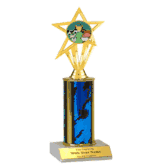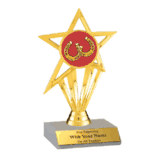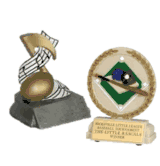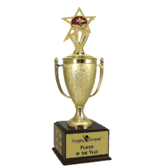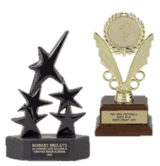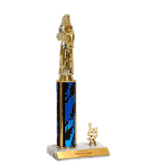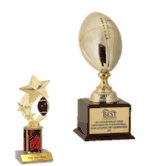

The Complete Guide to Youth Football Awards: From Pee Wee to High School Recognition |
Youth football programs across America serve millions of young athletes every season, creating opportunities for children to develop athletic skills, build character, and learn valuable life lessons through organized sports. From tiny Pee Wee league players taking their first snaps to high school varsity athletes competing for championship titles, proper recognition and awards play a crucial role in motivating young players and celebrating their achievements both on and off the field. The impact of youth football extends far beyond the gridiron. According to the National Federation of State High School Associations, football remains one of the most popular high school sports in America, with over one million students participating annually across all divisions (NFHS, 2023). However, the foundation for this participation begins much earlier, in community Pee Wee leagues where children as young as five years old first experience the thrill of organized football. Research consistently demonstrates that positive recognition and awards programs significantly impact young athletes' continued participation, self-esteem development, and overall sports experience. When implemented thoughtfully, awards and recognition systems help coaches, parents, and league organizers create environments where every child feels valued for their contributions, effort, and improvement, regardless of natural athletic ability or team success. Youth Sports Impact Alert! The Aspen Institute's Project Play research shows that 70% of children drop out of organized sports by age 13, but programs with strong recognition and positive coaching retain players at significantly higher rates. Quality recognition programs that celebrate effort and improvement can be the difference between a lifelong love of athletics and early sports abandonment. Ready to shop? Browse our complete selection of football trophies, medals, and plaques with free engraving on every trophy & plaque order. Shop All Football Trophies & Awards →Understanding Youth Football Development StagesEffective awards programs recognize that young football players develop at dramatically different rates, both physically and mentally. A successful recognition system adapts its approach based on the specific age group and developmental stage, ensuring that awards remain meaningful and appropriate for each level of play. Pee Wee football programs typically serve children ages 5-8, focusing primarily on basic skill development, fun, and positive experiences with organized sports. At this level, awards should emphasize participation, effort, and fundamental skill acquisition rather than competitive achievement or statistical performance. Young children at this stage are just beginning to understand team concepts and may struggle with complex rule structures, making recognition programs that celebrate individual improvement and team participation most effective. Junior football leagues, serving ages 9-12, represent a transitional period where children begin developing more sophisticated understanding of game strategy while still requiring heavy emphasis on skill development and positive reinforcement. Awards programs for this age group can begin incorporating some performance-based recognition while maintaining strong focus on character development, sportsmanship, and personal growth. High school football programs serve the most developmentally mature athletes in youth football, typically ages 14-18, where competitive achievement, statistical performance, and team success become more appropriate focal points for recognition. However, even at this level, effective awards programs balance competitive recognition with character-based awards that acknowledge leadership, improvement, and dedication. Youth Football Development PathwayPee Wee (Ages 5-8): Fun & Fundamentals * Junior (Ages 9-12): Skills & Strategy * High School (Ages 14-18): Competition & Character The Psychology of Youth Sports RecognitionUnderstanding how young athletes process recognition and awards helps coaches and parents design more effective programs that truly motivate and inspire continued participation. Sports psychology research reveals that external recognition works most effectively when it reinforces internal motivation rather than replacing it, creating sustainable patterns of effort and engagement. According to research published by the American Psychological Association, young athletes who receive recognition focused on effort, improvement, and process rather than purely outcome-based achievement develop stronger intrinsic motivation and demonstrate greater resilience when facing challenges (American Psychological Association, 2016). This research suggests that effective youth football awards programs should emphasize progress, dedication, and character development alongside traditional performance metrics. The concept of growth mindset, developed by psychologist Carol Dweck, proves particularly relevant for youth football recognition programs. Awards that celebrate improvement, learning from mistakes, and persistent effort help young athletes develop beliefs that abilities can be developed through dedication and hard work, creating more resilient and motivated players who continue participating even when facing difficulties. Age-Appropriate Award Categories for Pee Wee FootballPee Wee football awards should focus heavily on participation, effort, and basic skill development rather than competitive performance or statistical achievement. At this foundational level, the primary goals involve creating positive associations with organized sports, building basic football skills, and developing social interaction abilities within a team environment. Participation awards represent the most fundamental recognition for Pee Wee players, acknowledging every child who completes the season and celebrates their commitment to showing up f aaor practices and games. These awards help establish that consistent participation and effort are valued, creating positive reinforcement for behaviors that support long-term athletic development. Most Improved Player awards work particularly well for young children beca |

FREE ENGRAVING ON
TROPHIES & PLAQUES

FAST, RELIABLE & SECURE
SHOP WITH CONFIDENCE

FREE ECONOMY SHIPPING OVER $99
ON 1000's OF SELECT TROPHIES & AWARDS

QUALITY CUSTOM AWARDS AT
DISCOUNTED PRICES

4.9 RATING Over 2,300 ★★★★★ Reviews

Trophy, Award & Engraving Experts
Trusted by Schools, Leagues & Businesses Since 1999
Trusted by Schools, Leagues & Businesses Since 1999