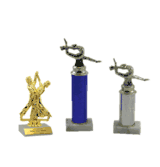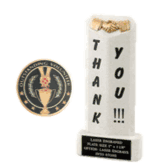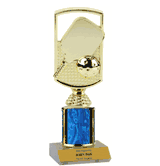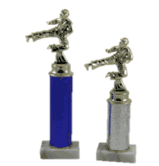


Dance Recital Recognition Beyond Standing Ovations
The lights dim. The curtain rises. Sixty dancers take their positions after six months of rehearsals, costume fittings, and that one terrible week when nobody could remember the jazz combination. Parents clutch programs. Dance teachers hold their breath. The music starts.
Two hours later, the applause fades, bobby pins litter the dressing room floor, and someone is crying about a lost shoe. The performance is over, but the moment to honor months of dedication is just beginning.
Most recitals end with generic participation ribbons that get tossed in a drawer within a week. Strategic recognition creates tangible memories that dancers display for years - the kind that remind your now-teenage daughter why she fell in love with dance in the first place, even when she is convinced she hates everything.
Why Comprehensive Recital Recognition Actually Matters
Dance teaches discipline, artistry, physical strength, and how to smile through the pain when you land a leap wrong. But the best lessons happen when recognition acknowledges both the moments on stage and the work nobody sees.
Your tiny tap dancers spent September learning to distinguish shuffle from flap. Your jazz students mastered turns in October. Your hip-hop crew perfected synchronization by December. Your contemporary dancers connected emotion to movement. Your ballet students achieved positions that seemed impossible in September.
According to Dance Teacher Magazine, thoughtful recognition strengthens studio culture by acknowledging the complete dance education journey - technique development, artistic expression, ensemble cooperation, and personal growth that extends far beyond individual spotlight moments.
Generic participation awards that ignore individual growth and specific accomplishments waste money and teach nothing. Strategic recognition celebrates both the pirouettes everyone sees and the practice room breakthroughs only teachers witness.
15 Recognition Categories That Honor Every Dance Moment
Great recital recognition ensures every dancer receives meaningful acknowledgment while creating specific categories that celebrate genuine achievement. Mix age-appropriate trophies, medals, and ribbons to maximize impact while respecting your budget.
Technical Excellence Awards
Outstanding Technique
The dancer whose clean lines, precise positions, and technical control set the standard. This student demonstrates textbook execution across multiple dance styles and makes difficult movements look effortless through months of dedicated practice.
Most Improved Dancer
The student who transformed from September to May. Maybe she finally landed that elusive double pirouette. Maybe he conquered the flexibility required for grand jete. This award celebrates breakthrough moments that represent significant personal achievement.
Flexibility Champion
The dancer who achieved splits, oversplits, back bends, and extensions that seemed impossible at the season start. This recognition honors students who committed to daily stretching routines and demonstrated measurable physical progress.
Turns Specialist
The student who mastered pirouettes, fouettes, or other turning combinations with control, speed, and consistency. Multiple clean rotations require months of core strength development, spot technique, and balance work.
Performance Quality Awards
Stage Presence Champion
The dancer who commands attention the moment she steps onstage. This student makes eye contact with the audience, projects energy to the back row, and transforms choreography into genuine performance art.
Facial Expression Excellence
The performer whose face tells the story as eloquently as his body. Dance is not just about steps - emotion, character, and artistic interpretation separate good dancers from captivating performers.
Musical Interpretation Award
The dancer who truly embodies the music, hitting accents, respecting dynamics, and making artistic choices that enhance choreography. This student dances with the music, not just to the music.
Costume and Character Award
The performer who disappears into the role, whether playing a delicate snowflake, a sassy jazz dancer, or a powerful contemporary soloist. Costume presentation, attention to detail, and character commitment matter.
Work Ethic and Dedication Awards
Perfect Attendance Award
The dancer who showed up consistently for every rehearsal, rain or shine, tired or energized. Ensemble work requires reliable team members, and attendance is the foundation of progress.
Practice Room Warrior
The student who arrived early, stayed late, and practiced combinations during open studio time. This award honors dancers who treat improvement as a personal responsibility, not just something that happens during class.
Choreography Assistant
The dancer who helped teach, clean, and perfect group numbers. This student demonstrated leadership by helping younger dancers remember combinations, suggesting formation adjustments, and supporting the choreographer's vision.
Positive Attitude Award
The dancer who maintained encouragement, optimism, and enthusiasm even during frustrating rehearsals. This student lifted spirits when energy lagged, supported struggling dancers, and created positive culture.
Special Recognition Awards
Breakthrough Performance
The dancer who exceeded expectations during the recital. Maybe nerves typically derail this student, but recital night produced her best performance ever. Maybe this dancer rose to the occasion when it mattered most.
Ensemble Excellence
The dancer who makes group numbers better through awareness, timing, and generous stage presence. This student creates visual symmetry, maintains formation integrity, and prioritizes group success over individual spotlight.
Multi-Style Master
The student who excelled across ballet, jazz, tap, contemporary, or hip-hop. Versatility demonstrates both physical adaptability and artistic range as dancers shift between very different technical requirements and stylistic demands.
Adjust recognition to honor age-appropriate accomplishments. Tiny dancers (ages 3-6) need awards celebrating basics: following directions, remembering routines, stage confidence. Intermediate students (ages 7-12) can be recognized for technical milestones and work ethic. Advanced dancers (ages 13 and up) should receive recognition acknowledging sophisticated artistry, leadership, and genuine excellence.
Nobody benefits when a talented advanced dancer receives the same generic participation trophy as a beginner who struggles with basic coordination. Age-appropriate awards teach dancers that meaningful progress deserves meaningful recognition.
Budget-Friendly Recognition Without Cutting Corners
Quality recognition does not require emptying studio accounts. Strategic spending ensures every dancer feels celebrated while maintaining financial responsibility.
Sample Budget for 60-Dancer Recital
Recognition Mix Strategy:
- 8-inch participation trophies for all dancers: 60 x $7.85 = $471
- Special category medals for 15 award winners: 15 x $5.20 = $78
- Ribbons for age group category winners: 30 x $2.50 = $75
- Certificate printing and frames: $45
Total Investment: $669 for 60 dancers ($11.15 per dancer)
This budget ensures every dancer receives a meaningful keepsake while creating special recognition for specific achievements. Adjust quantities based on your student enrollment and recital structure.
Cost-Saving Strategies:
- Order in November or December: Avoid spring rush and take advantage of early ordering discounts when trophy companies have capacity. Six-month lead time allows for careful planning without emergency shipping charges.
- Standardize bases and columns: Ordering consistent trophy bases with interchangeable figures reduces per-unit cost while maintaining quality appearance. Studios can build trophy inventory over multiple years.
- Mix recognition types strategically: Reserve trophies for major categories and younger dancers who treasure physical keepsakes. Use medals and ribbons for older students who value specific achievement recognition over trophy size.
- Create studio tradition awards: Invest in a few perpetual trophies or plaques where annual winners add their names. One-time purchase creates lasting tradition while reducing yearly expense.
- Leverage free engraving: Take advantage of Trophy Central's free engraving on trophies and plaques. Professional engraving adds perceived value without additional cost, making each award feel custom and special.
Pro Tip
Order 10 percent more than your current enrollment. That extra cushion covers last-minute student additions, lost trophies that need replacement, and special recognition moments you did not anticipate when placing the original order. Having backup awards prevents panic before recital weekend.
How to Present Recognition That Actually Means Something
Award presentation transforms recognition from transactional handoff into memorable moment. Thoughtful ceremony structure ensures every dancer feels celebrated without dragging the event into the next day.
Timing Strategies:
End-of-Recital Presentation: Present awards immediately after the final bows while families are already seated and energy is high. This approach capitalizes on performance excitement but requires careful time management to prevent audience fatigue. Limit individual awards to 5 to 7 major categories and distribute participation recognition as dancers exit.
Separate Awards Ceremony: Host a dedicated event 1 to 2 weeks after recital. This approach allows more leisurely presentations, detailed descriptions of achievements, and celebration without performance stress. Schedule it as a studio family event with light refreshments and casual atmosphere.
Class-by-Class Recognition: Present awards during final regular classes before summer break. This intimate approach lets teachers personalize comments, classmates celebrate together, and shy dancers receive recognition without massive audience pressure.
Presentation Best Practices:
- Speak specifically: Do not just read names from a list. Briefly describe why each award winner earned recognition: Emma's triple pirouettes improved from unstable in September to rock-solid by April means infinitely more than Emma, Most Improved Dancer.
- Create photo opportunities: Pause for photos after each award so families capture the moment. Designate a photography zone with good lighting and clean background so pictures look professional.
- Involve senior students: Let advanced dancers present awards to younger students. This creates mentorship moments, adds variety to presentations, and gives teenage dancers leadership roles.
- Acknowledge improvement, not just talent: Emphasize effort, progress, and dedication alongside natural ability. Students control work ethic; they cannot always control natural flexibility or turnout. Recognition should reward choices.
- Keep participation recognition equal: If every dancer gets a trophy, ensure they are identical. Save size and style variations for achievement categories where differentiation is intentional and meaningful.
Pro Tip
Prepare short written descriptions for each special award winner. Hand these to your presenter or read them yourself during the ceremony. Specific recognition statements make awards meaningful while keeping presentations flowing smoothly without awkward pauses.
Common Mistakes That Waste Money and Disappoint Dancers
Even well-intentioned recognition programs fail when execution undermines the goal of meaningful celebration. Avoid these recurring problems.
Participation Inflation: Giving every dancer 15 different awards dilutes recognition to meaninglessness. If everyone is special at everything, nobody is special at anything. Participation recognition ensures inclusion; achievement awards should require genuine accomplishment.
Vague Award Titles: Most Dedicated Dancer means nothing when three dancers could have won it with equal validity. Specific categories with clear criteria create awards worth pursuing. Perfect Attendance leaves no ambiguity. Kinda Showed Up Most of the Time is useless.
Last-Minute Trophy Scrambles: Ordering awards three weeks before recital guarantees stress, limits selection, requires rush shipping, and produces panic when delivery is delayed. Order by January for May recitals. Studios that order early get better prices, more customization options, and zero panic.
Ignoring Age Appropriateness: Giving 4-year-olds medals they cannot read and 16-year-olds miniature trophies they will hide in a closet demonstrates you did not think about recipients. Match recognition type to age and achievement level.
Forgetting Names: Nothing deflates an award moment faster than incorrect spelling on engraving. Triple-check all name spellings before submitting orders. Verify through class rosters, registration forms, and direct parent confirmation. A misspelled trophy says you did not care enough to get details right.
Skipping Teacher Recognition: Studio directors who fail to acknowledge teacher contributions miss an opportunity to strengthen studio culture. Dance teachers deserve recognition for choreography, instruction quality, and dedication just as much as students earn awards for performance.
What Dance Recital Recognition Actually Accomplishes
Strategic recognition builds dancers, not just trophy collections. Here is what thoughtful awards teach beyond adding shelf decorations.
Progress Is Measurable: Awards marking specific improvements teach dancers that growth happens through sustained effort, not magic. When a Most Improved Flexibility trophy acknowledges six months of daily stretching, dancers learn that results follow commitment.
Diverse Talents Deserve Celebration: Not every dancer will be the strongest turner or highest jumper, but every dancer can contribute something valuable. Recognition for stage presence, positive attitude, or ensemble work teaches students their unique strengths matter.
Hard Work Gets Noticed: Practice room warriors and perfect attendance winners learn that showing up consistently matters more than flash. These lessons translate directly to school, work, and life beyond dance.
Supporting Others Is Valuable: Awards for choreography assistance and positive attitude teach that building others up is honorable. Dance studios should produce collaborative artists, not just competitive individuals.
Art Requires Technical Foundation: Technical excellence awards remind students that beautiful performances require unglamorous drill work. You cannot interpret music emotionally until you master the basics that let you dance without thinking about where your feet go.
Performance Matters: Stage presence and facial expression awards teach that dance is communication, not just exercise. The choreography is not finished until you make an audience feel something.
Twenty years from now, your dancers will not remember the exact choreography from their recital. They will remember how recognition made them feel when achievement was acknowledged, improvement was celebrated, and dedication mattered.
Make Your Recital Recognition Memorable
Your dancers spent six months perfecting choreography, conquering technique challenges, and building confidence. Now honor their dedication with recognition they will display proudly for years to come.
Browse Trophy Central's complete dance awards selection featuring ballet, jazz, contemporary, and multi-style recognition options. Every award includes free engraving, arrives ready to present, and celebrates your dancers' achievements with quality they deserve.
Questions about award selection, engraving, or quantities? Call our recognition specialists at 1-888-809-8800 or explore our trophy buying guides for detailed selection help.
Visit Trophy Central's blog for more recognition ideas across sports, academics, and performing arts.
Your dancers gave everything to the performance. Give them recognition that honors their dedication.