
Chess Tournament Awards: Recognition Strategies That Build a Thriving Chess Community
Published: March 4, 2026
Read Time: 6 minutes
Chess Tournaments
School Chess
Chess Clubs
Student Recognition
Chess is a game of patience, strategy, and the particular brand of quiet suffering that comes from watching your opponent spend four minutes deciding on a move while your clock is already ticking. Players invest hundreds of hours studying openings, analyzing endgames, and developing positional intuition that most people in their lives will never fully appreciate. The dedication required to improve at chess is genuinely remarkable, and largely invisible to everyone who is not also playing chess. Yet many chess tournaments and school chess programs treat recognition as an afterthought, presenting a single trophy to the winner and sending everyone else home empty-handed. This misses the motivational opportunity that thoughtful recognition creates. Players who receive genuine acknowledgment for specific aspects of their game return for more. Players who feel invisible after investing significant effort often drift away from the game entirely, which is a loss both for them and for the program. This guide helps chess tournament directors, school chess coaches, and club organizers design recognition programs that celebrate excellence across multiple dimensions, retain players at every skill level, and build the kind of community that keeps chess programs thriving year after year. Understanding What Chess Players Actually Want From RecognitionChess players are a unique recognition audience. Unlike team sport participants, chess players compete as individuals in a context where intellectual achievement is explicitly on display. Every game is essentially a public test of your preparation and your thinking under pressure. That is a vulnerable position to be in, and it matters how the people running the event acknowledge what players brought to it. Strong chess players tend to be analytical thinkers who value precision and specificity. Generic recognition like Great effort feels hollow to someone who just navigated a twelve-move tactical combination to win a difficult endgame. Recognition that acknowledges specific aspects of performance, whether it is tactical sharpness, consistent results, or significant rating improvement, lands differently than broad praise that could apply to anyone. Chess also has a rich tradition of tiered achievement that players understand intuitively. US Chess, the national governing body for chess in the United States, maintains a rating system that players across the country use as their primary benchmark of progress. Recognition programs that align with this achievement culture, celebrating milestones, class-level performance, and rating improvements, speak directly to what chess players actually care about. Perhaps most importantly, players at every skill level have legitimate achievements worth recognizing. A beginner who finishes their first tournament without storming off in frustration demonstrated genuine mental toughness. An intermediate player who beat a significantly higher-rated opponent for the first time did something they will remember for years. Recognition programs that find and celebrate achievements across the full skill range build the broad engagement that sustains programs long-term. Tournament Award Structures That Work for ChessEffective chess tournament recognition extends well beyond first place overall. A thoughtfully designed award structure creates multiple winning opportunities that recognize genuine achievement without diluting competitive integrity. Section and Division AwardsSection Champion AwardsTournaments divided into performance sections allow players to compete against peers at similar skill levels. The Open section champion, the Reserve section champion, and the Scholastic section champion all earned first place against appropriate competition. Each deserves recognition that reflects the significance of their achievement within their competitive context. Treating section championships as equally valid wins rather than consolation prizes validates the competitive structure that makes section play meaningful. Class Prize RecognitionClass prizes awarded to top finishers within rating categories such as Under 1200, Under 1000, or Unrated recognize achievement within natural peer groups that the rating system defines. A player rated 950 who finishes first among all Under 1000 competitors earned a genuine accomplishment. Class prizes expand the number of players who experience the motivation of winning while maintaining competitive legitimacy. Perfect Score AwardsA player who wins every game in a tournament achieved something genuinely rare, and it deserves special recognition even if their section prize ended up going to someone else on tiebreaks. Chess players have complicated feelings about tiebreaks, and rightly so. A perfect score award gives complete-tournament dominance its own distinct recognition that tiebreak math cannot take away. Performance and Achievement AwardsBest Game AwardJudges or a designated reviewing committee select the most brilliantly played game of the tournament for special recognition. This award celebrates quality of play rather than just tournament results, rewarding players whose creative combinations, precise endgame technique, or resourceful defense produced the most instructive or exciting game of the event. Best Game recognition appeals to the chess community's deep appreciation for beautiful play and encourages the kind of ambitious, creative chess that makes tournaments exciting. Biggest Upset AwardPlayers who beat opponents rated significantly higher than themselves accomplished something statistically improbable and psychologically demanding. They had to sit down across from someone who, on paper, was supposed to win, and outplay them anyway. That takes a specific kind of confidence. Every player in the room knows the feeling of facing a higher-rated opponent, which is exactly why this award generates the most genuine reaction of any recognition at the event. Most Improved Player AwardFor club programs and recurring tournaments, recognizing the player whose rating improved most over a defined period celebrates development over raw results. A player who entered the program rated 400 and earned a 600 rating over one season accomplished more in relative terms than many players who started with natural advantages. Most Improved recognition validates the work of development and keeps improving players engaged through the sometimes discouraging plateau periods that every improving chess player experiences. Sportsmanship AwardChess requires players to handle both victory and defeat with composure, which is harder than it sounds when you have just blundered a won position in the last round. Resigning gracefully, offering a genuine handshake, and competing with integrity even when the clock is running and the position is painful are behaviors worth celebrating explicitly. This award is typically nominated by coaches, tournament directors, and fellow players, which makes it one of the most meaningful recognitions a chess community can give. Pro Tip: Use Rating Milestones as Recognition OpportunitiesChess players track their ratings the way some people track their bank accounts, which is to say obsessively and with significant emotional investment. Crossing a meaningful rating threshold is a big deal, and clubs and tournament directors who acknowledge it publicly are recognizing something players genuinely care about. A player who crosses 1000 for the first time, hits the Class D boundary at 1200, or finally breaks through a plateau they have been stuck on for months, deserves a moment. These milestone recognitions are simple to execute and carry disproportionate weight because the player knows exactly how long the journey took. School Chess Program Recognition That Builds Lasting EngagementSchool chess programs serve a different recognition purpose than open tournaments. While competitive achievement still deserves celebration, school programs also aim to develop student character, build academic skills, and create communities where students with diverse abilities find meaningful belonging. Recognition programs designed for school chess clubs should reflect these broader goals. End of Season Club RecognitionClub Champion AwardThe student who performs best in internal club competition throughout the season deserves the programs highest recognition. Whether determined by cumulative club tournament points, internal league standing, or a season-ending championship event, the Club Champion title should come with an award substantial enough to feel genuinely prestigious. This becomes the recognition every club member works toward throughout the season. Newcomer of the Year AwardStudents who joined the program during the current year and demonstrated the strongest development deserve specific recognition separate from experienced members. Newcomer recognition acknowledges that beginning chess is genuinely difficult and that students who stuck with the program through early challenges accomplished something real. It also sends a welcoming signal to incoming students that first-year participation is valued and visible. Dedication AwardThe student with the best attendance record, who stayed after every meeting, who practiced consistently between sessions, and who supported teammates in tournament play demonstrated precisely the habits that chess develops and that schools aim to reinforce across all academic pursuits. Dedication awards celebrate effort regardless of outcome and communicate that showing up and working hard earns recognition independent of competitive results. Team Player AwardSchool chess teams succeed when members help each other improve, analyze games together, share opening preparation, and support teammates during match pressure. Students who contribute most to team culture deserve recognition for the collaborative dimensions of what is often perceived as a purely individual game. This award validates coaching investment in team cohesion and models the peer mentorship that elevates entire programs. Recognition Ideas for Multi-School Chess LeaguesOrganizations running leagues across multiple schools can create recognition tiers that motivate students at program, school, and individual levels simultaneously.
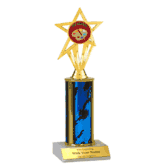
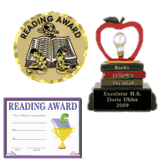
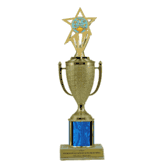
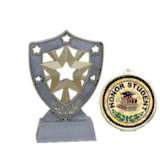
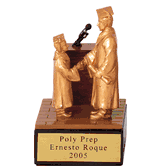
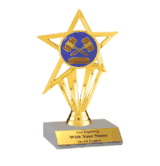
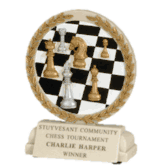
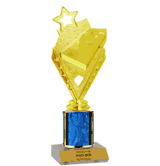
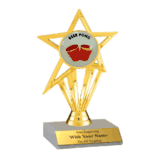
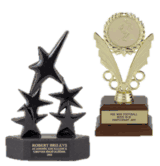
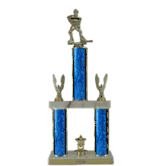
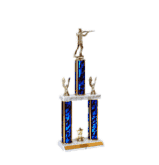
Choosing Awards That Reflect Chess Prestige and TraditionChess has centuries of competitive history and a community that takes its traditions seriously. Award selection for chess recognition should reflect the game's culture of intellectual achievement and competitive respect. Trophies for Championship Recognition: Tournament champions and club champions deserve trophies with visual presence that reflects their achievement. Chess-themed trophy designs featuring knights, kings, and boards communicate clearly what was accomplished and make immediately recognizable display pieces. A well-chosen championship trophy becomes an artifact the recipient keeps for life. Our chess tournament trophies include designs crafted specifically for competitive chess recognition at every level from school clubs to open tournaments. Plaques for Permanent Recognition: Performance awards, sportsmanship recognition, and long-term achievement awards often suit plaques better than trophies because plaques mount permanently on walls in ways that keep recognition visible daily. Chess coaches who receive recognition for program development, club advisors honored for years of service, and players recognized for career achievement over multiple seasons all display plaques in offices, classrooms, and homes where they serve as ongoing reminders of sustained accomplishment. Explore our custom award plaque options for recognition that lasts beyond a single season. Medals for Tournament Participation: Medals work exceptionally well for scholastic chess tournaments where every participant deserves tangible recognition. Medal ceremonies after large school tournaments create communal acknowledgment moments where all participants receive something physical that marks their competitive participation. Medal color and design distinctions between placement finishers and general participants communicate competitive achievement while ensuring nobody leaves empty-handed. Certificates for Milestone and Special Recognition: Achievement milestones, rating crossings, and special performance awards lend themselves to certificate recognition that can be produced in quantity with individual customization. A certificate acknowledging a player's first rating crossing above 1000 with their name, the specific rating achieved, and the tournament where it happened creates a personalized keepsake far more meaningful than a generic award. Pro Tip: Build Recognition Into Club Meeting RhythmThe most effective chess programs do not save all their recognition for end-of-season ceremonies. Clubs that take two minutes at the start of each meeting to acknowledge members who improved their ratings, scored their first win against a higher-rated player, or hit a training milestone create ongoing motivation that carries players through the long weeks between events. It does not need to be elaborate. A simple callout and a round of applause does the job. The point is that players feel seen on a regular basis, not just once a year when trophies come out. Creating Chess Recognition Traditions That Outlast Any Single SeasonThe most powerful thing any chess program can build is recognition tradition that players and families look forward to year after year. Traditions create belonging, communicate what the program values, and give programs the sense of history that attracts serious players who want to be part of something larger than a single season. Annual Hall of Fame Displays: A permanent listing of club champions and outstanding players from every season creates aspirational recognition that current members work toward joining. Displayed in a school hallway or club space, it tells new members this program has a history worth continuing. It also quietly communicates to anyone walking by that chess is taken seriously here, which is its own kind of recruitment tool. Perpetual Championship Trophies: A large perpetual trophy displayed in the school or club space with each year's champion engraved on a new plate creates a living record of program excellence. There is something compelling about a physical object that accumulates history year after year. Players competing for their name on a perpetual trophy are motivated by legacy as much as by the current season, which is a level of investment that no individual seasonal award quite replicates. Year-End Banquets or Celebration Events: Programs that close each season with a dedicated recognition event, separate from tournament day logistics, create space for ceremony that rushed tournament presentations simply cannot provide. A year-end dinner where coaches speak personally about each award recipient, parents attend to watch their kids recognized, and the whole program gathers to appreciate what was accomplished together creates community bonds that bring people back next year. Cross-Year Legacy Recognition: Recognizing when players break program records or achieve something no prior member accomplished creates recognition that connects present players to program history. It also gives the program a sense of living narrative, which is exactly what a chess program deserves. Build a Chess Program Worthy of the GameChess demands more from its players than almost any other competitive activity: patience, precision, continuous learning, and the ability to think clearly when the position is complicated and the clock is not cooperating. Programs that recognize these qualities explicitly, across competitive achievement and personal development alike, build communities where players grow as thinkers and competitors well beyond the board. Whether you are running a local scholastic tournament, coaching a school chess club, or directing a regional open, the right recognition program tells your players that what they accomplish matters and that the people around them are paying attention. That message is worth delivering well. Visit TrophyCentral.com to explore trophies, plaques, medals, and certificates designed for chess tournament and club recognition. Our recognition specialists help programs build award traditions that keep players competing, improving, and coming back for years. Call 1-888-809-8800 to speak with recognition specialists about designing a chess award program for your club or tournament. |

FREE ENGRAVING ON
TROPHIES & PLAQUES

FAST, RELIABLE & SECURE
SHOP WITH CONFIDENCE

FREE ECONOMY SHIPPING OVER $99
ON 1000's OF SELECT TROPHIES & AWARDS

QUALITY CUSTOM AWARDS AT
DISCOUNTED PRICES

4.9 RATING Over 2,300 ★★★★★ Reviews

Trophy, Award & Engraving Experts
Trusted by Schools, Leagues & Businesses Since 1999
Trusted by Schools, Leagues & Businesses Since 1999