

How to Run a Camp Awards Ceremony That Kids Will Never Forget
You spent eight weeks building something with these kids. The right awards ceremony turns all of it into a moment they carry home. The wrong one turns it into twenty-five minutes of shuffling paper under cafeteria lights while someone's mic cuts out twice.
The difference is almost never about the awards themselves. It is about the run of show: the order, the words, the setting, the pauses. Get those right and even a simple ribbon feels like a standing ovation waiting to happen.
This is the ceremony playbook. Everything from the opening line to who hands out what -- and why the order you do it in matters more than most camp directors realize.
Start With the Shape of the Night
A great awards ceremony has a deliberate arc. It builds, it surprises, and it ends on the highest possible note. Most ceremonies fail not because the awards are wrong but because the structure is random -- handed out in whatever order someone wrote them down, with no sense of momentum.
Think of it in three acts. The first act warms the room: lighter, inclusive recognitions that get everyone cheering and comfortable. The second act introduces the weight: individual achievements, cabin honors, the awards that mean something specific to a smaller group. The third act is the payoff: the camp-wide honors that everyone has been quietly anticipating, saved for last precisely because they land hardest in a room that is already emotionally warm.
The One Rule Worth Repeating
Never open with your biggest award. Never close with a logistics announcement. The ceremony should feel like it is building toward something -- because it is. Protect that arc at all costs, even if it means reordering awards that were already printed on the program.
The Run of Show: A Tested Order That Works
Here is a structure that has proven itself across programs of every size. Adapt the specifics to your session, but resist the urge to scramble the sequence.
1. Opening Moment (2–3 minutes)
Not a welcome speech. An opening moment. A single story, a callback to a shared experience from the session, or even just thirty seconds of silence before the first name is called. Signal that this is different from any other assembly. The room will settle immediately.
2. Broad Recognition Round (10–15 minutes)
This is where every camper gets something -- a ribbon, a certificate, a small token that puts a physical object in their hands before the night is over. Do this early. It drops the anxiety in the room for kids who are quietly terrified of going home empty-handed, and it frees the rest of the ceremony to focus on meaning rather than inclusion.
3. Activity and Cabin Awards (15–20 minutes)
Archery, waterfront, arts, color war results -- the category-specific recognitions that matter intensely to the kids who earned them and still land for everyone else because every cabin has a stake in at least one. Spread these across presenters. A counselor who presents their own camper's award always does it better than a director reading from a card.
4. The Surprise Award (2–3 minutes)
Most Improved is the classic candidate. Do not announce this one in advance, do not put it on the printed program, and do not give any hints. The camper who has been quietly grinding all session, who has no idea their name is about to be called -- that moment is worth more than everything else combined. Budget time for the noise afterward.
5. Camp-Wide Honors (5–8 minutes)
Camper of the Year. Spirit Award. Whatever your program's highest recognitions are -- these go last, when the room is already cheering and fully present. Slow down here. Tell the full story. Let the applause run long. This is the emotional peak of the entire summer.
6. Close Without Logistics
End on something that belongs to the campers, not the schedule. A director's one-sentence send-off, a counselor reading something they wrote about the session, a song the whole camp knows. Whatever it is, it should make the last thing anyone feels before leaving be that the summer mattered. Bus departure times can wait five minutes.
Who Should Present What
This is the most underestimated decision in ceremony planning. The right presenter can turn a good award into a great one. The wrong presenter -- usually a director reading a name they barely recognize off an index card -- can drain the energy from the room in under thirty seconds.
Cabin counselors should present cabin awards. Full stop. They have the context, the relationship, and the specific story. A counselor who has spent eight weeks with these kids does not need a script. They need thirty seconds and a microphone.
Activity specialists should present activity awards. The archery instructor presenting the Archery Ace award carries authority that a general director simply does not. The camper hears their name from the person whose opinion on archery actually means something.
Directors should present the camp-wide honors. Camper of the Year, Spirit Award, and any other program-level recognition should come from the person with the widest view of the session. That is the director. Save them for the awards that require that authority.
The Two-Sentence Brief
Before the ceremony, give every presenter a simple format: one sentence about what the camper did, one sentence about why it mattered. "Maya hit a bullseye on her first day. By the end of the session she was coaching the kids who came in after her." That is a complete announcement. More than two sentences and you are writing a speech. Less than two and you are just reading a name.
Setting and Atmosphere: Do Not Waste the Environment
Camp has a built-in advantage over every other awards program on earth: the setting. A campfire circle at dusk, the lodge with the big windows, the amphitheater that gets the last of the evening light. These environments do emotional work that no decoration budget can replicate. Use them.
Outdoors beats indoors every time weather permits. If you have any flexibility, move the ceremony outside. The natural light, the ambient sound, and the simple fact of being in the same environment where the summer happened all amplify the feeling.
If you are inside, control the light. Fluorescent overheads are the enemy. Bring in lanterns, dim what you can, use a spotlight if you have one. The goal is to signal that this is a performance, not a meeting.
Sound matters more than most camps budget for. A single working microphone on a stand is infinitely better than five people shouting. If your venue has questionable acoustics, do a sound check in the actual space, not in the parking lot an hour earlier. One muffled announcement in the middle of a ceremony breaks the spell completely.
Pacing: The Part Everyone Gets Wrong
The single most common ceremony failure is speed. Directors barrel through names and categories because they are watching the clock, and what should feel like a celebration starts to feel like a roll call.
Each award needs three things: the buildup, the name, and the pause. The buildup is the two-sentence story the presenter tells before the name is called. The pause after the name is where the room does its job -- cheering, clapping, laughing at an inside joke that lands perfectly because everyone was there for it. Directors who rush the pause are cutting off the best part of their own ceremony.
A useful benchmark: if your ceremony is running shorter than you planned, you are going too fast. If kids are getting restless, the problem is almost never length -- it is that the energy between awards is dropping. Keep presenters moving briskly to the microphone, keep the transitions tight, and let the actual award moments breathe as long as they need to.
Timing by Program Size
Fewer than 30 campers: 35–45 minutes is right. 30 to 75 campers: plan for 60–75 minutes and split presenters across at least four or five people to maintain energy. More than 75 campers: consider running the ceremony across two evenings split by age group, or structuring the broad recognition round separately from the individual awards. A two-hour ceremony is thirty minutes too long at any camp size.
Handling the Unexpected
Even a well-planned ceremony will throw something at you. Here is how to handle the situations that come up most often.
A camper is absent. Do not skip the award or announce it awkwardly. Present it anyway, note that the camper will receive it separately, and let the cabin cheer on their behalf. Their cabinmates knowing they won is almost as meaningful as being there in person -- and you can make the private handoff its own small moment the next morning.
Two kids feel equally deserving of the same award. Split it before the ceremony, not during. A tie announced on the night feels like a hedge. Two separate awards with two separate stories feel intentional. If your category list is flexible, add one. The budget difference is negligible.
A presenter goes long. Have a signal agreed upon in advance -- a gentle hand signal from someone standing off to the side. Brief presenters before the ceremony that two sentences is the format, and that going long is not a compliment to the camper, it is a drain on the room's attention for every award that follows.
Tears. Let them happen. Do not rush past them, do not make a joke to defuse them, and absolutely do not hand someone a tissue and move on in the same breath. Give the moment its space. The room will wait. A camper crying at an awards ceremony is not a problem -- it is the highest possible compliment to the summer you built.
The Day-After Effect
A ceremony done right does not end when the kids get on the bus. It travels with them. Parents will hear about it on the drive home. It will come up at the dinner table when school starts. Some of those trophies will stay on shelves for years, and every time a kid sees one, the ceremony is what they actually remember -- the moment the name was called, the specific words that were said, the noise the cabin made.
That is the real return on a well-run awards night. Not just a good feeling at the end of the session, but a reason to come back next summer. Campers who feel genuinely recognized want to earn something new. They come back with more to prove and more to give. The ceremony is not the end of the summer. Done right, it is the first moment of the next one.
Ready to Order the Awards to Match?
TrophyCentral has served summer camps and youth programs since 1999. Free engraving on every trophy and plaque, with most orders shipping within 1 to 2 business days. Use the links below to find the right format for each tier of your ceremony.
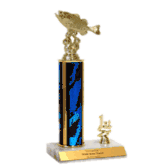
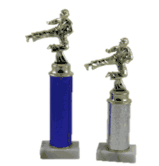
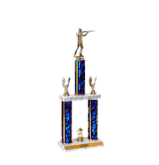
Camp Trophies & Plaques
For your camp-wide honors and highest individual recognitions -- the awards that anchor the end of the ceremony.
Medals for Activity Winners
Perfect for the activity and cabin awards round -- substantial enough to feel earned, practical when you have a lot of categories to cover.
Rosette Ribbons for Broad Recognition
Put something in every camper's hands early in the night. Ribbons in bulk keep the ceremony inclusive without straining the budget.
Need help planning the mix?
Call 1-888-809-8800 for free advice on tiering your awards program across trophies, medals, and ribbons for any program size.
The ceremony is the last thing they will remember about this summer. Make sure it is worth remembering.