
Academic Competition Awards: Recognition Strategies for Science Fairs, Spelling Bees, and Beyond
The gymnasium goes quiet. Sixty students stand at attention, waiting for results. You've spent weeks watching them practice vocabulary words, build robots, or prepare science displays. Now comes the moment that matters: recognizing not just who won, but celebrating every student who had the courage to compete.
Academic competitions are different from everyday classroom achievement. Students volunteer for this pressure. They practice after school, compete in front of judges, and push themselves beyond normal coursework. That voluntary effort deserves recognition that matches the challenge.
The good news? Creating memorable competition recognition doesn't require elaborate ceremonies or massive budgets. With the right approach and smart award choices, you can celebrate competitive achievement in ways that inspire students to keep pushing their limits.
Why Competition Recognition Hits Different
Here's what makes competitive achievement awards distinct from your typical classroom recognition: students chose this. Nobody made them stay after school to build a solar-powered car or memorize the spelling of "chiaroscurist." They wanted the challenge.
That voluntary participation changes the recognition equation. These students already demonstrated initiative. Your awards acknowledge not just performance, but the decision to step into an arena where failure was possible. That takes guts.
Competition recognition also serves a different timeline than classroom awards. While semester recognition celebrates sustained effort over months, competition awards mark specific achievements on specific days. The student who placed third at the regional science fair earned that recognition on February 15th. The immediacy matters.
Plus, competition results are public. When you compete, everyone knows how you did. That makes thoughtful recognition even more critical. The student who didn't place still showed up, competed, and represented your school. They deserve recognition that acknowledges their courage, even when results didn't go their way.
The Recognition Tiers That Actually Work
Smart competition recognition uses a tiered approach that celebrates winners while honoring all participants. The key is making each tier feel genuinely valuable, not like a consolation prize.
Tier 1: Placement Recognition
For your top 3-5 finishers. These are students who placed in competition rankings. First place at the science fair. Top speller at the bee. Championship debate team. Their performance was objectively measured and ranked.
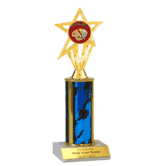
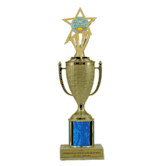
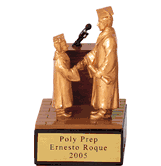
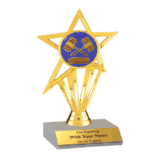
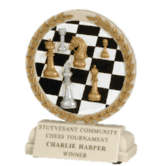
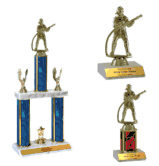
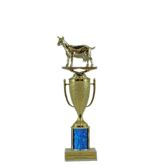
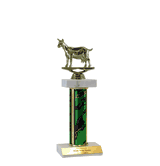
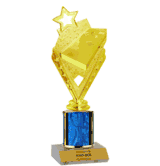
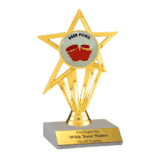
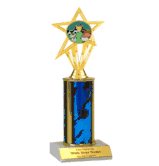
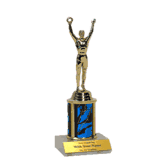
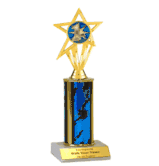
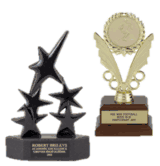
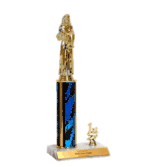
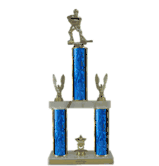
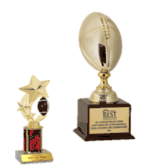
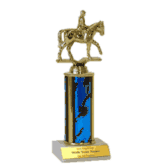
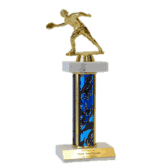
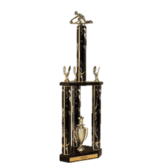
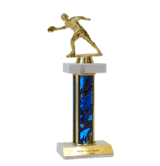
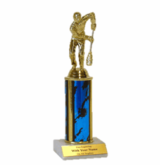
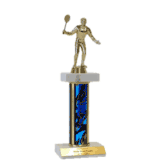
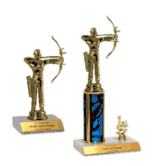
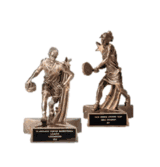
These students earned trophies that match the achievement. Not participation certificates - actual trophies or substantial medals they can display. First place deserves something that feels like first place. A 12-inch trophy isn't excessive when a student beat 40 competitors. It's appropriate.
Budget reality check: A quality single-column trophy runs 8 to 15 dollars. A substantial academic medal costs 3 to 7 dollars. For a science fair with 50 participants where you're awarding the top 5, you're looking at 40 to 75 dollars total for placement awards. That's manageable.
Tier 2: Category Excellence
For students who excelled in specific aspects. Not everyone can win first place, but many students deserve recognition for specific strengths. Best presentation. Most innovative approach. Outstanding research. Excellence in a particular category or grade level.
Category awards solve the problem of talented students who competed well but didn't place in overall rankings. The seventh grader who built an impressive robotics project but competed against eighth graders deserves recognition. The student whose science fair presentation was phenomenal, even though their hypothesis wasn't proven, earned acknowledgment.
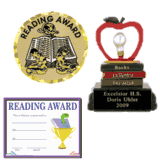
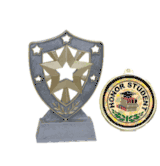
Category excellence typically gets medals or award ribbons. These aren't "less than" placement awards - they're different recognition for different achievements. A medal that reads "Excellence in Engineering" or "Outstanding Scientific Method" celebrates real accomplishment.
Tier 3: Participation Recognition
For every student who competed. This tier is where many schools fumble. Generic participation ribbons that say "Good Job" feel hollow. But participation recognition that names the specific event and year creates a keepsake students actually value.
A ribbon that reads "2025 Regional Science Fair Participant" isn't a consolation prize. It's documentation that this student competed at a regional level. That matters. Twenty years later, that ribbon still tells a story about a kid who tried something hard.
The secret to good participation recognition is specificity. Include the event name, year, and school. Make it a record of the experience, not a generic pat on the head.
Pro Tip: Create a display case or bulletin board specifically for competition achievements. When a student earns a regional science fair medal or spelling bee trophy, photograph them with their award and add it to the school's competition wall of fame. This creates ongoing recognition beyond the initial ceremony and shows future students what's possible. Past winners seeing their photo inspire current students to compete.
Competition-Specific Award Strategies
Different competitions need different recognition approaches. What works for a spelling bee doesn't necessarily fit a robotics competition. Let's break down strategies by competition type.
Science Fairs
Science fairs typically have 30-100 participants, multiple categories, and various judging criteria. Your recognition strategy should reflect that complexity.
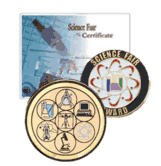
The placement approach: Overall winners (typically top 3) get substantial trophies. Category winners (best in biology, chemistry, physics, engineering, etc.) receive category-specific medals. All participants get ribbons commemorating their involvement.
The smart add-on: Create special recognition for specific achievements beyond placement. "Best Use of Scientific Method." "Most Creative Approach." "Outstanding Research." These awards catch students who did excellent work that didn't result in overall placement. A student whose hypothesis failed but whose methodology was impeccable deserves recognition for that solid science.
Budget consideration: For a 50-student science fair, plan for roughly 100 to 200 dollars total. Three placement trophies (10-20 dollars each), ten category medals (3-5 dollars each), and 50 participation ribbons (1-2 dollars each). Add another 50 dollars if you're including special achievement awards.
Spelling Bees
Spelling bees present a unique challenge: elimination happens publicly. Students get knocked out in front of everyone. Recognition needs to acknowledge both the winners and the courage it took to compete.
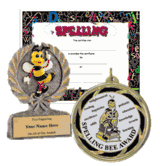
The placement approach: Your top three spellers definitely earn trophies. First place gets the big trophy - this student outlasted everyone. Second and third place deserve significant recognition too.
The participation twist: Consider recognizing each grade level's champion separately. The fourth grader who made it furthest among fourth graders deserves acknowledgment, even if fifth and sixth graders ultimately won overall. This keeps recognition distributed across grade levels rather than concentrating all awards among older students.
The immediate recognition element: Here's what makes spelling bees special: you can recognize students as they're eliminated. Prepare small certificates or ribbons ahead of time labeled by placement (10th place, 9th place, etc.). As students are eliminated, hand them their certificate acknowledging exactly how far they made it. "Congratulations on 12th place out of 60 competitors" means something.
Math Competitions and Academic Olympics
Math leagues, academic bowls, and similar competitions often involve team elements alongside individual achievements. Your recognition strategy should honor both.
Team recognition: Winning teams need something they can share. Consider small matching trophies or medals for each team member. Everyone on the championship math team gets their own medal - not a team trophy they take turns keeping. Individual medals create personal ownership of the team victory.
Individual standouts: Identify individual high scorers or MVP performers. The student who scored highest in geometry or answered the most questions correctly deserves individual recognition beyond the team award.
Improvement awards: Math competitions often happen multiple times per year. Track individual progress and recognize students who improved significantly between competitions. "Most Improved" isn't a consolation prize when backed by actual data showing a student jumped from 45th percentile to 82nd percentile.
Robotics Competitions
Robotics combines engineering, programming, teamwork, and competition. Recognition should reflect those multiple dimensions.
The challenge: Robotics teams are often 4-8 students working together over months. Everyone contributed differently - some programmed, some built, some designed, some presented. Recognition needs to honor those varied contributions.
The solution: Award team placement trophies or medals, but add individual certificates that specify each member's role. "Championship Robotics Team - Lead Programmer." "Championship Robotics Team - Mechanical Designer." This acknowledges both the team victory and individual contribution.
Special recognition: Robotics competitions often include awards beyond placement - best design, best programming, most innovative solution, best teamwork. Pursue all applicable special awards. These matter because they recognize specific excellence that might not correlate with overall placement.
Debate and Speech Competitions
Debate and speech involve performance skills alongside argumentation and research. Recognition should acknowledge the complete package.
Placement awards: Winners absolutely earn trophies. Debate and speech competitions require enormous preparation and performance under pressure. First through third place deserve substantial recognition.
Excellence categories: Consider awards for best argument, best rebuttal, best use of evidence, or most improved debater. Speech competitions can recognize best delivery, most compelling narrative, or most original perspective.
The participation element: Every student who competed gave a speech or argued a position in front of judges and peers. That's vulnerability. Participation ribbons or certificates should emphasize that courage - "Competed in Regional Debate Championship" carries weight.
The Budget Reality for Multiple Competitions
Most schools run several competitions throughout the year. Science fair in spring, spelling bee in winter, math competition in fall, maybe robotics or debate too. Recognition budgets need to cover all of them.
Here's the annual math that actually works: If you're running four major competitions per year, budget roughly 150 to 250 dollars per event, or 600 to 1,000 dollars annually. That covers placement trophies, category medals, and participation ribbons across all events.
Smart strategy: Order in bulk at the start of the school year. Purchase generic academic trophies and medals that work for multiple competitions, then customize with engraving plates that specify the event. A "1st Place Academic Achievement" trophy works for science fair in March and spelling bee in January. Just swap the engraving plate. This bulk approach typically saves 20-30% compared to ordering individually for each event.
Many schools also involve the PTA or parent organizations in competition recognition funding. A parent group that understands the importance of competitive recognition often allocates budget specifically for these awards. If you haven't approached your PTA about competition recognition funding, that conversation is worth having. Check out this comprehensive guide for parent organizations for strategies on building support for academic recognition programs.
Fundraising tie-ins: Some schools fund competition recognition through fundraising that involves students directly. Custom pennants celebrating school achievement make excellent fundraising items that both generate revenue and build school spirit. Sell "Science Fair 2025" or "Spelling Champion" pennants to families, and use proceeds to fund awards.
Presentation: The Ceremony That Makes Awards Matter
How you present awards matters as much as what awards you give. A trophy handed out during announcements hits differently than a trophy presented during an actual ceremony.
The Assembly Approach
For major competitions like science fairs or academic olympics, consider a dedicated awards assembly. Doesn't need to be elaborate - 30 minutes works. But creating dedicated time signals that competitive achievement matters.
The rundown that works: Welcome and context about the competition. Brief remarks about the achievement level required to compete. Recognition of all participants (mass acknowledgment, don't read 50 names individually). Category or special awards with individual recognition. Placement awards with actual description of what each winner accomplished. Closing remarks about next year's competition.
The photo element: Stage a step-up platform (or just use risers you already have) for placement winners. Gold, silver, bronze positions matter psychologically. Take a photo of winners on their platform. This creates a moment that feels significant and gives you content for school communications and social media.
The Classroom Recognition
Not every competition warrants a full assembly. Math competition results or debate tournament outcomes might get recognized in class or during morning announcements.
Even brief recognition should be specific. Don't just say "Congratulations to Sarah on her debate win." Say "Congratulations to Sarah, who placed first in impromptu speaking at the regional debate championship, competing against 45 students from 12 schools." Details create context that makes the achievement meaningful to people who weren't there.
The Take-Home Package
Every award recipient should leave with something substantial they can take home. The obvious piece is the award itself - trophy, medal, or ribbon. But consider adding:
A certificate that includes specific achievement details. A photo from the competition or recognition ceremony. A brief letter congratulating the student and noting specific strengths you observed during competition. This package transforms a trophy from "thing I got" to "record of specific achievement."
Parents love this documentation. That certificate and photo go on the fridge, get shared with grandparents, and become part of the family's record of the child's accomplishments. You're not just recognizing the student - you're creating family memories.
The Recognition That Keeps Them Coming Back
Thoughtful competition recognition doesn't just celebrate current achievement. It motivates future participation.
When a fifth grader sees sixth graders receiving science fair trophies, something clicks. "I could do that next year." When a student who didn't place this time receives meaningful participation recognition, they think "I'll try again." When winners receive substantial recognition that matches their achievement, other students see that competitive success brings real acknowledgment.
That future motivation is why competition recognition matters beyond the immediate feel-good moment. You're building a culture where academic challenge is valued, where pushing yourself intellectually is celebrated, where trying something difficult - even without guaranteed success - earns respect.
Schools with strong competition recognition typically see participation grow year over year. More students try spelling bee. Science fair projects increase. Math competition teams expand. That growth happens because students see peers being celebrated for competitive achievement and think "I want that too."
Recognition Display Strategy: Create a permanent display space for competition achievements separate from regular academic awards. A "Competition Corner" or "Challenge Champions" display case shows current and past competitive achievements. Include photos, past award winners, school records, and upcoming competitions. This visible celebration of competitive achievement keeps it front-of-mind for students throughout the year and builds tradition around academic competition participation.
Common Mistakes to Avoid
Mistake 1: Waiting too long to recognize. Competition recognition should happen promptly - ideally within a week of the event. Three months later, the moment has passed. Strike while achievement is fresh.
Mistake 2: Making participation recognition feel like a consolation prize. If your participation ribbon looks cheaper and feels less valuable than the winner's trophy, you've communicated that participating without placing wasn't really worth much. Participation recognition should feel like genuine acknowledgment, not a pity prize.
Mistake 3: Only recognizing winners. Yes, winners deserve significant recognition. But the student who worked for months on a science fair project that didn't place also deserves acknowledgment. Every competitor showed initiative and courage. Recognize that.
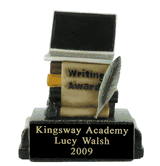
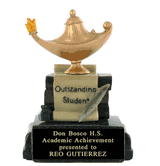
Mistake 4: Generic, impersonal awards. A trophy that just says "Academic Achievement" tells no story. Specific engraving that names the competition, year, and achievement creates meaningful recognition. "1st Place - 2025 Regional Science Fair" is a record of accomplishment, not just a trophy.
Mistake 5: Forgetting the ceremony element. Handing out awards during regular announcements or just giving students their trophy after school misses the point. Recognition needs visibility. Other students should see peers being celebrated. That visibility motivates future participation.
Mistake 6: Inconsistent recognition across competitions. If science fair winners get big trophies but spelling bee winners get ribbons, you've accidentally communicated that some competitions matter more. Maintain consistency in recognition level across different competition types.
Beyond the Trophy: Building a Competition Culture
Awards are tools for building something bigger: a school culture that values intellectual challenge and celebrates students who push themselves beyond required coursework.
Competition history documentation: Keep records of competition results over years. Create a "school records" board showing top performances. When a student beats a previous school record, that becomes an additional recognition opportunity. "Sarah not only won first place, she scored higher than any student in our school's history on the math competition."
Alumni connections: When possible, connect current competitors with alumni who competed in the same events. Past science fair winners mentoring current participants creates continuity and shows students that competitive achievement can open doors long-term. Having a former student come back and talk about how robotics competition led to their engineering career makes the competition feel more significant.
Progressive recognition: Create awards that recognize multi-year participation. A student who competed in science fair all four years of middle school deserves special recognition beyond single-year awards. "Four-Year Science Fair Participant" medals or certificates acknowledge sustained commitment to academic challenge.
For comprehensive strategies on building schoolwide recognition programs that celebrate all types of achievement, explore the complete academic recognition resource hub with expert guidance on creating cultures of excellence across grade levels and achievement types.
The Real Point of All This Recognition
Let's be honest about what competition recognition actually accomplishes. You're not handing out trophies because students need more stuff. You're recognizing achievement because acknowledgment fuels effort.
The student who receives meaningful recognition for science fair participation is more likely to compete again next year. The spelling bee winner whose achievement is celebrated publicly inspires peers to try next time. The robotics team that receives substantial recognition for their championship motivates younger students to join robotics.
Recognition creates cycles of participation and achievement. Students see peers being celebrated, which motivates them to compete, which leads to their own achievement, which earns recognition that motivates others. You're not just celebrating past achievement - you're investing in future participation.
Competition recognition also teaches students that pushing beyond requirements brings acknowledgment. Not every student will win. Not every participant will place. But every student who competes learns that voluntary challenge is valued and noticed. That lesson extends far beyond academic competitions into any situation where extra effort is optional.
Twenty years from now, that trophy on the shelf might be collecting dust. But the lesson it represented - that trying hard things matters, that competitive achievement is celebrated, that pushing yourself brings recognition - that lesson sticks.
Ready to Celebrate Your Competitors?
Browse our complete selection of academic trophies, competition medals, and recognition awards designed specifically for academic competitions.
Need help planning recognition for multiple competitions or choosing appropriate awards for different achievement levels? Our recognition specialists in Michigan and New York understand academic competition requirements and can help you create a recognition strategy that fits your budget while appropriately celebrating achievement. Call 1-888-809-8800 for free consultation on bulk pricing and award selection.
Your students pushed themselves to compete. Let's celebrate that courage and achievement.